What is it about? Starting a business in Dubai means starting your own business in a special economic zone, with tax incentives and strategic location at the crossroads of trade routes. The emirate creates unique conditions for both start-ups and international companies.
What are the advantages? Foreign investors can own 100% of capital in free zones, import goods without duties, and enjoy tax holidays. Developed infrastructure, an English-speaking environment, and simplified administrative procedures facilitate the rapid launch and scaling of projects.
Advantages and Disadvantages of Opening a Business in Dubai
Let's take a look at the advantages and disadvantages of starting a business in Dubai.
Advantages
Disadvantages
Tax system with incentives: Business in Dubai is exempt from tax on capital gains, dividends on shares, and income tax. The profit rate is about nine per cent for annual income of more than 375 thousand AED; this is the lowest rate in the world. Profit tax does not need to be paid if it does not exceed 375,000 AED per year. There are also no taxes for residents of free zones if they meet certain criteria. 5% is the value added tax (VAT) when sales turnover exceeds 375,000 AED. Zero per cent VAT applies when exporting goods to countries outside the Persian Gulf and in a number of other cases. Excise duties are levied on goods that harm health and the environment.
It is necessary to fully report to the state. Tax authorities can inspect any accounting documentation of the company.
You can open a company in free economic zones of the Arab Emirates with 100% foreign ownership.
Registering a business in the Emirates is very expensive. A license is only issued for one year, and renewal requires a new fee.
You can do without regular rental of premises. Use the "Flexible Desk" system when the company works in a shared office.
To open an account, you will have to pass a number of checks lasting several months.
There is no need to provide reporting at the initial stage.
High cost of renting commercial premises.
There are no restrictions on currency transfers and other operations.
Advanced banking infrastructure.
All accounts are safe and confidential.
The specialists speak excellent English.
Low inflation level of 2–5%
Transactions are protected by law and are registered in municipalities.
A large number of economic zones helps to choose the most acceptable conditions for starting a business.
A large number of public services for business are provided online.
As soon as sanctions-related problems arose in Russia, many Russian businesspeople began opening companies in the UAE. This is due to the stable environment and the absence of political tension. Therefore, many Russian investors are becoming relocators. The Emirates authorities are ready to provide the necessary conditions if an entrepreneur convinces them that their activities are economically beneficial to the state.
10 Most In-Demand Areas for Starting a Business in Dubai
Real Estate
One of the most promising areas is the real estate market. In 2022, business in Dubai in this sector grew to 105 billion dollars. The market continues to grow steadily; by 2026, an increase of 12.3% is expected.
Image source: Mer_Studio / shutterstock.com
The real estate market also allows for the development of specialists in the following areas:
Brokers. 88 thousand transactions worth 65 billion dollars were concluded in 2022 in Dubai's real estate sector.
Builders. The average cost per square metre of a flat in Dubai is 11,887 dollars, a villa — 39,038 dollars.
Developers. 44% of all transactions are for residential property under construction. The total value is 22.6 billion dollars.
Management companies. Every year, the demand for property management services increases; by 2026, the increase will be 9 per cent.
IT specialists. For IT specialists' services to always be in demand, the Dubai 10x and Smart Cities strategies are employed.
Interior designers. Specialists in this area earn 5,000–7,000 dirhams per month.
To start this business in Dubai, you need to obtain a licence. This is handled by the Real Estate Regulatory Agency (RERA). To obtain the permission, you need to meet the following requirements: have accredited employees, confirmed experience, and education.
Tourism
The UAE tops the list of countries in terms of revenue from international tourism. Every year, more than 25 million wealthy tourists come to Dubai; in 2022, they spent about 35 billion dollars on holidays there. The government has implemented the Dubai Tourism Strategy, which aims to increase its contribution to GDP to 72 billion dollars by 2027 and attract 40 million tourists annually.
Trade. Dubai boasts a vast number of malls, shopping centres, and other shopping destinations. Its thriving retail scene attracts a huge number of shoppers each year.
Hospitality business. There are many restaurants and hotels to suit every taste and budget. In 2022, the revenue of this sector grew by 28 per cent — that is 5.2 billion dollars.
Tour operators and travel agencies. Guests regularly visit the Arab Emirates every year. Business tourism is also well-developed, because visas are easy to obtain and flights are affordable. Therefore, it is comfortable for foreigners to open a business there.
Transport services. Since the Emirates are frequently visited by wealthy tourists and famous individuals, the demand for elite car rental services is growing; for example, in 2024, it increased by 56 per cent. Taxi services are also in high demand; a record growth of 27 per cent was recorded in 2024.
Food and beverages. The Emirates are striving to become leaders in modern food and beverage development. Annually, more than 50 billion dollars are allocated to the development of the food industry. The market capitalization of this sector will reach 430 billion in 2026.
Event management. Meetings, exhibitions, forums, shows, conferences, trade summits. All of this not only popularises Dubai but also attracts a huge number of tourists.
Almost all of these areas are under constant control of the Ministry of Tourism, traffic police, and other government bodies.
Construction industry
The Dubai government plans to increase the city's population by two and a half times by 2040. The goal is to build new hotels, increasing the development area by 134 percent, and expand commercial areas by 160 square kilometres. All of this will significantly expand development in the emirate.
Image source: Kate Trysh / unsplash.com
The government wants to turn the Emirates into a global business hub, but to achieve this, it is necessary to create a developed infrastructure. Therefore, the UAE is actively building business centres, hotels, exhibition pavilions, bridges, overpasses, and roads. This is being done to attract as many foreign investors, companies, and residents ready to work in the country as possible.
The construction industry is growing in popularity due to the constant upgrading of infrastructure, which attracts financial investment. More and more residential and commercial buildings are being built, increasing demand for finishing and renovation services, including insulation, roofing, landscaping, and gardening.
The construction sector in the Emirates attracts not only local contractors but also those from other countries. All companies compete legally, which influences technological development, improves quality, and encourages the use of modern methods. Local authorities have drafted laws and regulations that allow for comfortable working conditions, so construction and finishing companies are prepared to take on long-term contracts.
All companies act based on their specific needs. They purchase premises, obtain the necessary permits and licences, and coordinate with the construction department.
Logistics sector
Another sector that is growing rapidly. In 2025, logistics attracted more than 25 billion dollars to the Emirates economy. According to forecasts, the sector will grow by about 12 per cent annually. The main driver is the significant growth in international trade and e-commerce.
The government supports these areas, so the sector has not been burdened with corporate taxes and deductions on personal income. Investors from other countries are eager to enter the logistics business of the Arab Emirates.
Today, with traditional supply chains disrupted worldwide, this work is becoming increasingly important. After all, logistics is facing challenging times due to sanctions, border closures, and various administrative obstacles for business. The UAE is not among the countries that refuse to allow their territories to host logistics centers.
The UAE is an excellent location for opening a cargo transport hub, as the country is conveniently located and the government is supportive. Opening a logistics hub makes it possible to deliver cargo to any point in the world without sanctions, if done through the United Arab Emirates.
Which areas of this business in Dubai are relevant:
ship chartering;
packaging and moving;
warehousing and distribution;
freight forwarding;
international transportation;
customs clearance;
warehouse maintenance;
logistics consulting;
cargo insurance;
yacht services;
dangerous goods transportation;
domestic ground freight transport.
Investment and finance
The Emirates is one of the world's leading economic centres where you can easily find reliable investors. A comprehensive legislative framework has been established to protect foreign investors and minimize tax burdens. Doing business in the UAE is relatively safe and straightforward. There is everything necessary to attract financially interested companies from other countries.
Image source: fizkes / shutterstock.com
The number of wealthy world-class investors is growing; they are interested in entering the financial market or setting up a business in Dubai. They keep their savings deposits and conduct their businesses there. In 2025, the number of investors from other countries on Dubai's stock market was 48.6 per cent. Their ownership share in total market value rose to 19.1 per cent.
The Emirates has been a leader in attracting foreign investment for several years now. In 2025, over $32 billion in investments were made and over 95,000 new foreign companies were established across various economic sectors. Leading sectors were transportation, consumer goods, telecommunications, real estate construction, energy, and modern technologies.
Of course, without the political loyalty and advanced economy of the Emirates, it would be impossible to achieve such a high level. Everything is aimed at constantly stimulating business relations and increasing interest in developing international business participation in the country.
The UAE authorities set ambitious goals for the coming years: they want to attract up to 150 billion dollars in foreign investment. The Emirates’ Ministry of Economy is working on the legislative framework to create more comfortable conditions for foreign businesspeople ready to invest in the country's economy.
Manufacturing
Dubai has adopted an industrial development strategy through 2030. It includes 75 points designed to attract approximately 44 billion dollars to the local economy. The document is based on the following postulates: increase manufacturing production, develop new technologies, create a production base that will attract investors from other countries, and implement energy-saving manufacturing.
The Emirates are quite favourably located; they have all the necessary infrastructure and resources. The tax base is very attractive for foreign businesses. At the same time, there is significant demand within the country for their products and services.
The economy is growing at a tremendous rate, which stimulates the opening of new production facilities. Their number is steadily growing. These are companies that produce fabrics, textiles, clothing and footwear, sugar, meat, flour, fish, vegetable oils, cosmetics, household chemicals, medicines, and electronics.
To open such a business in Dubai, you need to obtain an industrial-type licence and permission from the local ministry.
Trade
Trade accounts for 10 per cent of the country's gross domestic product.
The Arab Emirates forms a vast sales market with everything needed for profitable trade. There is no tax pressure, no customs barriers, the economy is stable, and purchasing power is very high due to the relocation of foreign citizens to the country. The UAE is in ninth place in the world ranking in terms of consumer demand, despite the fact that the country's economy is 90 per cent dependent on imports.
The continuous development of exports is linked to the adoption of agreements on a single customs space between the countries of the Cooperation Council for the Arab States of the Persian Gulf. Certain advantages are also provided by agreements with countries that have joined the World Trade Organisation. The UAE has free trade agreements with countries in Europe, Africa, Asia, North America, and Australia.
The UAE allows goods to be imported duty-free, making it the third-most developed re-exporting country in the world. Companies engaged in this sector provide almost a third of revenues to the Emirates’s economy; this helps to establish trade relations with many countries.
The legislative framework in the Emirates allows conducting re-export operations through temporary import and further dispatch of products by alternative routes. This makes it possible to find convenient routes for importing and exporting supplies and conducting procurement activities without participating in sanctions and customs procedures. Border inspection requires basic documentation, so goods are cleared through customs very quickly.
Let us take a look at businesses in Dubai and the Emirates trade sector that are considered the most promising:
Retail trade. Most often, people buy expensive goods: elite cars, jewellery, advanced equipment. There is a favourable tax base there, no customs barriers, the population is constantly growing, and demand for exclusive products is increasing.
Wholesale trade. The sector of import and export of goods has grown significantly due to good logistics, well-developed infrastructure, and investments. The largest share of the Emirates' re-exporters are Saudi Arabia (12.5%), Iraq (9%), India (6.5%), Switzerland (6.4%), and China (5.7%).
Industrial goods. Since construction is constantly being carried out in the state, smart cities are being created, and manufacturing is expanding, meaning the demand for corresponding materials, equipment, and tools is also growing.
E-commerce. This sector regularly grows by 14.2 per cent on average per year; by 2026, it will reach 19 billion dollars. More than 30 per cent of UAE residents order goods and services via the internet.
IT industry
Modern information technology has already become a growing industry in the United Arab Emirates. In fact, Dubai ranks sixth globally in the use of artificial intelligence, and is amongst the leaders in the use of information technology.
The UAE authorities have a positive attitude towards introducing innovations into various spheres of life; therefore, for the development of the industry, the necessary laws are adopted, support is provided at all levels, grants and investments are given, and a tax-free regime operates. The government realises that high demand for purchases requires technical equipment, which allows progressive companies to improve through innovative technologies.
The Emirates aims to integrate IT into all economic sectors, from manufacturing and healthcare to e-commerce and administration. Large-scale digitalisation is being carried out in all vitally important areas; in the business sector, 94 per cent of organisations are already connected to it.
The following areas are considered the most promising:
Trade in IT equipment and smart devices. The volume of imported information technology equipment amounted to more than 27 billion dollars.
IT services. According to forecasts, growth in this sector will be 88% by 2026.
IT production. By 2030, the sector will grow by 18 billion dollars.
Food & Beverage
The Emirates aims to become a leader in this economic sector. Therefore, innovations are actively applied, and more than 50 billion dollars are allocated for the development of the food industry. Revenue in this sector is expected to grow by 13.5% in 2023, and the sector itself will expand by 34%.
The government sets an ambitious goal — to make the food industry in the country safe. At the same time, new players in the food industry regularly enter the market. Demand for work in this sector is growing amongst entrepreneurs from all over the world. Experts believe that in the next three years, the sector will grow by 24%.
Catering is expected to grow by 32% and food delivery by 21%. Local grocery businesses will grow by 20%, and food packaging by 18.4%. Food and beverage spending in the UAE will grow by 7% annually, reaching $41 billion by the end of this year.
Consumers are actively engaged in this sector of the economy. Therefore, any company in Dubai engaged in business related to food and beverages receives large profits and quickly recoups its investment:
catering;
food delivery;
trade in food and beverages;
food trucks and food stalls;
HoReCa;
production of food products and beverages;
packaging;
warehouse storage;
consulting.
Services
Another constantly growing sector in the UAE economy is the services area. Today, services are part of the gross domestic product and account for 40 per cent of the state's economy. Growth is expected to reach 88 percent by 2026. The catering and grocery delivery market is projected to expand by 32% iт 2026; e-commerce will grow by 12.4%; the cleaning industry is expected to grow by 5.3%.
These figures are achieved through an increase in the number of tourists and foreign residents, infrastructure development, and the desire for more comfortable living conditions. Furthermore, the government maintains healthy competition and actively supports businesses. In general, the economic situation in the country is stable, and the tax-free regime attracts more and more entrepreneurs.
The most popular areas of business activity in Dubai and the Emirates in the service sector are:
Translation bureaus, bookkeeping, secretarial services, data and call centre operations.
Pre-school, secondary, and higher education, courses, training, sports clubs.
Cleaning, laundries, tailoring workshops, beauty salons, repair and craft workshops, car services.
Courier services, car sharing, limousine service, yacht rental, goods storage and packaging services.
Event organisation, galleries, entertainment centres, water parks, circuses.
Transport and logistics.
Medical centres, private hospitals, clinics, laboratories, pharmaceutical consultations.
Information security, network setup, office equipment maintenance, software development.
Restaurants, cafés, fast food outlets, farms, crop production, catering.
Project management; managerial, tax, and personnel consulting; specialised recommendations.
Choosing a Company Type for Business Registration in Dubai
If you decide to start a business in Dubai, first decide on the type of jurisdiction. There are Mainland and Free Zone jurisdictions. Each has its own specifics regarding commercial activity, different types of company ownership, tax regimes, and opportunities for cooperation with the government.
Free zone (onshore)
This economic zone of the UAE is divided into 52 sectors. Each has its own governing bodies and is subject to local laws. Before choosing your free zone, determine the type of activity and the place where you want to work. Most free zones operate in the IT, manufacturing, and logistics sectors. Residents in these areas receive unique preferences and concessions.
To become a free zone participant, you must be the sole owner of the company and not work with local investors. In the mainland, there are exceptions. However, keep in mind that to work in a free zone, you need to trade or provide services to customers online.
Offshore company
It can be created to register real estate. At the same time, it is forbidden to open an office, warehouse, or have employees within the Emirates. These companies usually rent out premises.
Mainland
This type is considered a classic mainland company. It allows you to work throughout the Emirates and take on government contracts. Registering such a company is quite complicated, and you also need to attract a local investor. These companies pay only 9 per cent corporate tax on income exceeding 375 thousand dirhams. VAT of 5% is taken if a certain sales turnover limit is reached.
Let us take a look at the specifics of company types that can be established in the Emirates.
Specifics
Onshore (free zone)
Offshore
Mainland
In which part of the UAE is the company registered
In FEZ
In FEZ
On the mainland
Place of conducting business
In FEZ, outside the UAE
In FEZ, outside the UAE
Can work in the UAE throughout the territory
Ownership
The company can be registered in the UAE by a foreign owner
Business in Dubai can be registered by a foreign owner
A share of a UAE citizen in the company's authorised capital may be required
Activity
B2C trade is permitted in any country except the Emirates B2C services can be provided without restrictions
Business activity can only be conducted outside the UAE
Steps to Register a Business in Dubai
Step 1: Register the company name
The chosen company name is registered with the free zone administration or with DED (if the mainland type is chosen). There is a certain set of rules that must be followed, otherwise, company registration may be refused:
It is forbidden to use offensive words.
No references to religion or government bodies are permitted.
Abbreviating the owner's name or using initials is not permitted.
The name must be unique.
You can check whether the same name has already been registered through online services or on the free zone website. Usually, companies are allowed to conduct a free check before submitting an application. You can use either Arabic or English for the name.
On the chosen portal, you need to create a personal account, then fill out a form and pay a fee. Companies that have passed verification receive a letter to their email address or an official reservation certificate. This document allows you to register a company.
Step 2: Gather the documents
The necessary documents include:
A copy of the passport of the director and founders, if any.
Colour photographs of the owner and founders.
A confirmation of residential address, for example, a lease agreement.
Memorandum of association.
A business plan.
A name reservation certificate.
Check the list of documents for your jurisdiction. Sometimes free zones may request additional documents to confirm work in certain fields. For example, certificates of equipment compliance or premises plans indicating production locations may be required; such documents may be required if you work in medicine, construction, or education.
Before opening a business in Dubai, all documents must be translated into Arabic and notarised.
Step 3: Register the company
The documents must be submitted to the authorities of the chosen jurisdiction.
In the free zone, this is handled by the jurisdiction administration. The businessman pays a registration fee depending on the type of licence.
In the mainland, this is handled by DED. It collects the documents for verification and may request additional papers. Everything depends on the specific municipality or type of activity. Additional fees will be required for these documents.
After registration, the entrepreneur is given:
A licence.
Company's constituent documents.
A permission to rent an office or workspace in a co-working area.
You are allowed to start work immediately after obtaining the licence.
Step 4: Apply for a resident visa
Once you have registered your company, you need to apply for a UAE resident visa. This paper allows you to legally live and work in the country for 2–3 years. This includes the following steps:
Obtain an entry permit
Go to the Emirates immigration service portal and submit an application. You can also visit the free zone office. The document allows you to enter the country.
Image source: Mina Rad / unsplash.com
If you are already in the Emirates on a tourist visa, be sure to apply for an entry permit; to do this, submit a request to change status through the immigration service. Prepare your passport, a copy of your current visa, a medical certificate, and company documents in advance.
Undergo a mandatory medical examination
It includes tests for HIV, tuberculosis, and other diseases. If any of the tests gives a positive result, entry will be refused.
Submit biometrics
This is needed to obtain a resident card. As soon as all stages are completed, the businessman receives a plastic Emirates ID card. It allows you to open bank accounts, obtain a driving licence, and gain access to other necessary services.
Step 5: Open a bank account
In the Emirates, it is customary to open a corporate account; funds are transferred to it, payments from clients are received, and salaries are paid from it. You will need a set of documents and submit an application. The list for opening a business in Dubai includes:
A company licence.
Constituent documents.
Copies of passports, visas, and Emirates IDs of all shareholders.
An office lease agreement if available.
A business plan with a description of activities.
A statement from a personal account for the last 3–6 months.
A list of suppliers and clients, three contacts for each area.
Residential address, local phone number, and email address.
Then the bank may spend several days reviewing the documentation. If the application is approved, a multi-currency business account is opened for the company, allowing it to use online banking, issue corporate cards, and process various payments.
Taxation and Accounting for Business in Dubai
Private business in Dubai pays two taxes: corporate and VAT. Reports must be submitted to the Federal Tax Service (for VAT quarterly, for corporate annually).
Corporate tax
Applies to
Mainland companies and Dubai free zone companies.
Charged on
Net accounting profit.
Tax registration
The company needs to register for corporate tax purposes and obtain a tax registration number (TRN).
Current obligations
Conduct accounting and prepare annual financial statements to determine taxable profit.
Deadline for submitting tax return
No later than nine months after the end of the reporting financial year.
Tax payment
Simultaneously with submission of tax return.
VAT
Applies to
Dubai resident companies conducting operations that are subject to VAT
Charged on
Operations involving the supply of goods or provision of services, as well as the import of goods into the UAE
VAT registration
The company must register for VAT and obtain a TRN for VAT purposes if it has not exceeded permissible taxable operations.
Current obligations
Issue and receive invoices and store documents related to taxable operations.
Deadline for submitting VAT tax return
Within 28 days after the end of each tax period (three months).
Tax payment
Simultaneously with submission of tax return.
Dubai companies submit annual financial statements in accordance with International Standards. Tax authorities can request data within the specified period at any time.
Who must prepare audited financial statements:
Companies whose revenue exceeds 50,000,000 dirhams (about 13,615,000 US dollars) for the corresponding tax period.
Qualified free zone residents (these are companies operating in free zones; they have qualified income and do not pay corporate tax if they comply with certain conditions).
Frequently Asked Questions about Business in Dubai
Do you need to learn Arabic to start a business in Dubai?
Today, more than 90 per cent of the Emirates' residents are foreign citizens. Usually, they use English for business negotiations; you can also conduct correspondence with partners, conclude contracts, and form commercial proposals in English.
Arabic is needed for contacting government bodies. Requests are sent in the official language, but entrepreneurs can use the services of a translator.
Which Russian companies are currently operating in Dubai?
There are more than 4 thousand Russian companies in the Emirates. Their number grows every year. Businessmen are attracted by low taxes and favourable incentives from the government. One prominent example is the Dodo Pizza company. Its owner, Fyodor Ovchinnikov, appeared on the Emirates market in 2023. Before that, the company bought one pizzeria in Dubai and opened Dodo in its place. In April, the pizzeria’s revenue already reached 260 thousand dirhams.
Another well-known company from Russia that entered the Emirates market is PRHub. The agency promotes brands through launching advertising on social networks and publishing materials in the media. In 2022, it began cooperating with popular Emirates magazines.
How can a company renew business registration in Dubai?
To do this, you need to regularly renew the business licence, which is valid for only one year, and pay the licence fees. Also, the company owner must renew the immigration card and lease agreement. Keep in mind that the company must have confirmation of having an office in the UAE and a corporate bank account.
What needs to be followed to work in Dubai:
rules of economic presence;
laws and rules for certain types of activity;
labour legislation, including workers' rights;
rights to intellectual property objects;
sanitary norms and safety requirements;
immigration rules;
consumer protection regulations.
Today, Dubai allows foreign citizens to establish companies that take into account local economic conditions. Of course, at first, bureaucratic red tape may initially discourage a novice entrepreneur. It is important to understand that the government will provide all kinds of support to foreign businesses, but in addition to this, it is also worth engaging professionals to handle all the necessary paperwork.
Which desert surrounds Dubai? Where the desert is located and how to get there? The best places for photo shoots in the desert. Entertainment and activities in the desert. FAQ.
Abu Dhabi bus system. Hafilat card: payment and use. Fares and tariffs. Free buses and special services. Practical tips for using public transport. FAQ.
Specifics of Dubai developers. Criteria for choosing a developer in Dubai. Top 10 Dubai developers. Russian developers in Dubai. Frequently asked questions about Dubai developers.
Climate and weather in Dubai in summer. Advantages of a summer holiday in Dubai. Summer activities and entertainment. Practical tips for a comfortable holiday. Comparing the summer and winter seasons...
History and development of the UAE armed forces. Strength and structure of the UAE Army. Military service in the UAE: specifics and requirements. Armament and technical equipment. UAE Army in world ra...
Basic dress code rules in Dubai: what every tourist needs to know. Dress code for women in Dubai: a detailed guide. Climate and clothing in Dubai: how to dress for the weather. Where to wear what: a d...
UAE bank terms and conditions, and how to meet them. Step-by-step instructions for opening a bank account: from documentation to receiving the services. Best UAE banks: a comparison of conditions for ...
Specifics of property rights types in the UAE. What is freehold? What is leasehold? Usufruct and musataha. Pros and cons of different forms of ownership in the UAE. Frequently asked questions about ty...
Shopping centres in Sharjah: are they worth visiting? 5 best shopping centres in Sharjah. 5 tips for shopping in Sharjah. Frequently asked questions about shopping centres in Sharjah.



 Image source: Mer_Studio / shutterstock.com

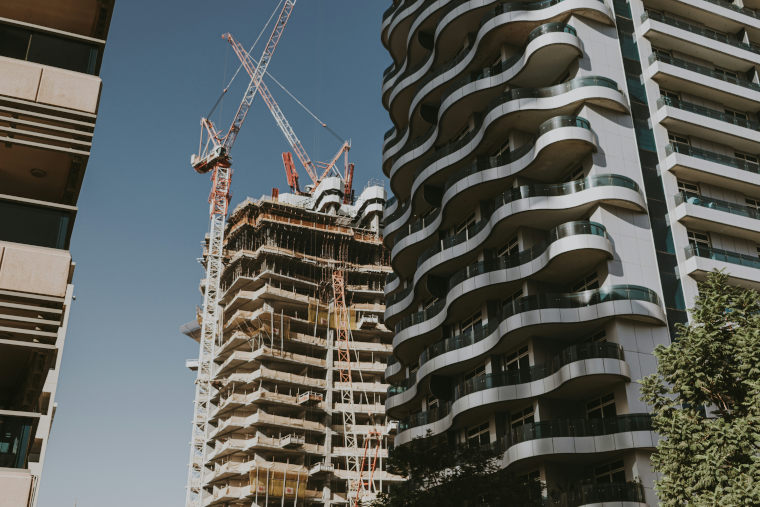 Image source: Kate Trysh / unsplash.com

 Image source: fizkes / shutterstock.com


 Image source: Mina Rad / unsplash.com