Form of Government in the UAE: A Detailed Look at its Uniqueness
Save the article:
What is it? The UAE has a unique form of government: it is a federal monarchy. It combines modern principles of governance with traditional monarchical foundations.
What does this mean? The country is a federal union of seven emirates, each of which is an absolute monarchy headed by an emir and has its own local authorities. This form of government evolved over the years, so to understand it, it's worth looking back at the history of the UAE.
General Information about the UAE
The United Arab Emirates (UAE) is a country of contrasts, that has emerged in the harsh sands of the Arabian Desert. Today it is known as a centre of ultra-modern urbanism, oases, luxurious resorts and developed tourist infrastructure, attracting millions of guests from all over the world.
The state consists of seven emirates, each with its own unique features and achievements. The form of government in the UAE is a federal absolute monarchy with a hereditary emir in each emirate.
The UAE is located in the east of the Arabian Peninsula and is part of the Middle East region. It shares land borders with Saudi Arabia to the south and west, and Oman to the east, and Iran and Qatar across the Persian Gulf. This strategic position and access to key sea routes make the UAE an important player on the international stage.
Image source: David Rodrigo / unsplash.com
The country’s shores are washed by both the Persian Gulf and the Gulf of Oman, which gives it an advantage in global trade. The area of the UAE is about 83,600 square kilometres, and its population is rapidly growing. All these features define the UAE, its capital, and its form of government, creating a unique federal structure.
Everything that exists today in the United Arab Emirates appeared thanks to income from oil production and export. Desert lands have been transformed into green parks, artificial lakes and fountains, becoming symbols of luxury and progress. However, maintaining this green illusion requires enormous expenditure: daily watering of one palm tree costs 50 dollars.
The Emirates occupy an area of 83.6 thousand square kilometres and consist almost entirely of land. There are no natural lakes or rivers, only dry beds of temporary streams called wadis. Most of the country is located in the Arabian Desert. From the east it is washed by the Indian Ocean, and from the north — by the Persian Gulf. The terrain is mainly flat, with the exception of the eastern Hajar Mountains, which reach elevations of up to 1,200 metres.
Most cities and villages are concentrated along the coastline of about 600 km. The low-lying shores are adorned with coral reefs, small islands and shoals, creating a unique ecosystem.
As one moves away from the coast, the landscape becomes increasingly monotonous: the plains transition into endless sand dunes, part of the famous Rub' al Khali desert, which occupies the southern part of the Arabian Peninsula.
Oases are scattered in the desert expanses of the United Arab Emirates. The largest and most picturesque of them is Al Ain in the Emirate of Abu Dhabi. This oasis amazes not only with its size but also with its natural beauty.
The population of the UAE exceeds 10 million people, but native residents account for only about 15%. The rest are migrant workers and entrepreneurs. Their labour and contribution are vital for the Emirates' economy.
Every year, thousands of foreign guests come to the UAE: businessmen, tourists and travellers from all over the globe.
Form of Government in the UAE
The United Arab Emirates is a unique federation of absolute monarchies, unparalleled in history, and the form of government of the UAE state is based on the hereditary rule of the emir in each emirate.
The United Arab Emirates consists of seven emirates: Abu Dhabi, Dubai, Sharjah, Ajman, Ras al Khaimah, Umm al Quwain and Fujairah.
Abu Dhabi is the economic and political centre with large oil reserves. Dubai is a global tourist destination with unique skyscrapers. Sharjah is famous for its cultural heritage. Ajman is known for its tranquillity. Ras al Khaimah attracts with its beaches. Umm al Quwain has desert landscapes. Fujairah is the only emirate with access to the Gulf of Oman.
Each emirate is headed by an emir with absolute power. His rule is hereditary and lifelong. The seven emirs form the Federal Supreme Council — the highest authority determining the country's development and making key political and economic decisions.
Oil became the foundation for the formation and development of the UAE. Large hydrocarbon deposits created an economic base and a unique political system where each emirate manages its own resources, determining its influence and weight in the federation.
Abu Dhabi dominates in the UAE. Its territory occupies approximately 87% of the country's total area and most of the oil reserves are concentrated on its territory. This emirate plays a central role in the country's economy and politics.
Representatives of the ruling Al Nahyan family have held the presidency for many years, which emphasises Abu Dhabi's special status and reflects the form of state government in the UAE.
The UAE's system of government reflects the balance between the economic and political influence of each emirate. For example, the ruler of Dubai, Sheikh Mohammed bin Rashid Al Maktoum, is simultaneously the prime minister and minister of defence. This reflects the significance of Dubai as the second most important emirate, a major business centre and a key hub of international trade.
Image source: Leon Macapagal / unsplash.com
The Federal National Council, a 40-member advisory body, ensures balance between the emirates. Abu Dhabi and Dubai each have eight members, Sharjah and Ras Al Khaimah have six each, and Ajman, Umm Al Quwain, and Fujairah have four each. This system helps preserve the unity and stability of the federation.
Historical Specifics of Governance in the UAE
All ruling dynasties of the Emirates trace their origins to specific Bedouin tribes that once forcibly seized coastal settlements. Their efforts contributed to the development of trade routes and control over pearl industry, which ensured economic prosperity even before the discovery of oil fields.
Oil, of course, significantly increased wealth but did not change the tribal-based power structure. The state structure and form of government in the UAE continues to preserve these historical traditions.
The tribe that gave rise to the modern rulers of the UAE and Dubai controlled the Al Liwa oasis until 1793. Then its capital was moved to Abu Dhabi, where it remains today.
In the Arab world, genealogy is highly valued, which is reflected in cultural heritage. This is evident in a deep interest in traditional poetry, equestrian arts, falconry and Bedouin sandals — symbols of generational continuity and respect for one’s origins.
At the beginning of the 19th century, Great Britain established a protectorate over the territory of today's United Arab Emirates after a series of clashes. The two sides concluded a treaty that was neither equal nor burdensome for the Arabs. This allowed the sheikhs to avoid expenses on defence and foreign policy, while Britain gained strategically important ports on the route from India to Europe.
British influence in the region was minimal. The sheikhs maintained control over their territories and income from the pearl trade. The lands remained sparsely populated and economically underdeveloped. Therefore, Britain was guided by geopolitical considerations rather than economic interests.
By the middle of the 20th century, enormous oil reserves were discovered in the area of the future United Arab Emirates. This event significantly changed the global political map. The era of direct colonial control ended. British companies renounced military force and received concessions to develop oil fields.
In the late 1960s, Great Britain announced plans to abandon its overseas colonies. The rulers of the emirates faced the question of their future, as they did not want to become easy prey for their neighbours. As a result, a decision to unify was made.
Negotiations on creating the union were difficult and lasted several years. Initially, it was planned to unite nine territories, including Bahrain and Qatar, but these countries decided to develop independently.
In 1971, a union of six emirates was created, and later a seventh, Ras al Khaimah, joined it. The founder and main inspiration for this unification was the Emir of Abu Dhabi, Zayed bin Sultan Al Nahyan. He is still called the “Father of the Nation”. Zayed managed to convince the leaders of the emirates that only a union could ensure stable development.
Thus emerged the United Arab Emirates, a new independent state. Despite its sovereignty, the influence of the British protectorate remained. The Emirati elite continued to send their children to London for education, turned to British consultants and financial institutions, and maintained close ties with the former metropolis.
The history of the UAE's creation left its mark on the country's geography. Due to treaty-based borders and long-standing territorial disputes, unique political puzzles appeared on the map. For example, in Sharjah there is an Omani enclave, within which lies another small Emirati enclave. All these nuances once again vividly reflect the form of government and administrative-territorial structure of the UAE.
The Structure of the UAE’s Government
The significance of the Federal Supreme Council in governing the UAE
In the UAE, the Federal Supreme Council resolves important state issues. It consists of the heads of the seven emirates. This body determines national policy and oversees the work of the Council of Ministers. It can also change the structure of government and approve the chairman of the Council of Ministers. This helps balance the interests of the emirates and maintain government stability.
The Council operates as follows: a congress is held annually in October, and every two months – plenary sessions. If necessary, the chairman can convene an emergency meeting. Decisions at the congress require a minimum of five members, including representatives from Abu Dhabi and Dubai. The meetings are held behind closed doors.
Functions of the President in the UAE governance system
The Emir of Abu Dhabi is the head of the United Arab Emirates. The UAE is an absolute monarchy, and power is hereditary within the ruling dynasty. The President commands the armed forces and chairs the Higher Defence Council. He signs decrees and decisions adopted by the council, and also approves regulatory acts endorsed by the Council of Ministers.
In addition, the President appoints diplomats, civil and military officials, declares amnesty and confirms death sentences, which emphasises the uniqueness of the monarchical form of government in the UAE.
The UAE also has the position of vice-president, appointed by the Federal Supreme Council, whose term of office is five years.
Functions of the Council of Ministers in the UAE state governance system
Executive power in the United Arab Emirates is vested in the Council of Ministers. It is headed by a Chairman, who is appointed by the President and approved by the Supreme Council. The Council of Ministers drafts laws and the federal budget, adopts regulatory acts, monitors the execution of judicial decisions, ratifies international treaties, and also appoints and dismisses federal officials.
Functions of the Federal National Council in the UAE governance system
In the United Arab Emirates, legislative power is vested in the Federal National Council. This council is composed of members representing all seven emirates of the country. The constitution determines the number of seats in the council, which can change depending on the demographic situation or other factors. Members of the national council are elected according to rules established in each emirate.
The Federal National Council cannot introduce bills and does not function as a full-fledged legislative body. It reviews laws proposed by the Council of Ministers and makes suggestions for their revision.
Image source: Anirudh Gaur / unsplash.com
Final decisions on the adoption of laws are made by the President after approval by the Supreme Council. Such a structure makes the activity of the National Council primarily advisory and reflects the form of government in the UAE at the present time.
Frequently Asked Questions about the Form of Government in the UAE
What does the image on the UAE coat of arms symbolize?
A yellow falcon is depicted on the coat of arms of the United Arab Emirates. This bird symbolises the independence and sovereignty of the country, a significant part of which is covered with deserts. Seven feathers on the falcon's tail emphasise the unification of seven emirates.
Until 2008, there was a red circle on the falcon's breast, which symbolised courage and independence. Against the background of azure waves glided a wooden dhow, a traditional vessel of Arab pearl divers and sea pirates. In the modern version of the coat of arms, a shield with the national colours of the UAE state flag is depicted on the falcon's breast.
Which authority exercises judicial power in the UAE?
The Federal Supreme Court of the UAE is the key judicial body of the country. It is headed by a chairman and four independent judges, who are appointed by the President.
The court oversees the interactions between the emirates and the Federal Supreme Council, as well as relations between federal and local authorities. Other cases are heard by local courts in each emirate.
How are emirs chosen in the United Arab Emirates?
In the United Arab Emirates, power is passed on by inheritance. Usually an emir inherits the position from his father. But sometimes a ruler can appoint a successor from among his relatives. There are no strict rules of succession. A candidate for the post of emir can only be a Muslim, a UAE citizen and a member of the ruling family, born within the boundaries of his emirate.
Representatives of the Bedouin aristocracy have successfully integrated into the global financial system and the world of cyber technologies. They have developed and implemented a unique model of state governance.
Article header image source: Marcel L. / unsplash.com
Description of the Jumeirah district in Dubai. Real Estate and Investments in the Jumeirah District. Availability of Education in the Jumeirah district in Dubai. Frequently Asked Questions about the J...
Advantages of studying at Dubai universities. Requirements for applicants to Dubai universities. Obtaining a visa for studying in Dubai. Top 3 universities in Dubai. Frequently Asked Questions about u...
Main features of Creek Harbour, Dubai. Infrastructure of Creek Harbour. Advantages and disadvantages of the Creek Harbour district. Transport accessibility of Creek Harbour. Luxury real estate in Cree...
Types of educational institutions in Dubai. Popular educational programmes in Dubai. The process of admission to educational institutions. Cost and financing of education in Dubai. List of the best nu...
Specifics of Dubai developers. Criteria for choosing a developer in Dubai. Top 10 Dubai developers. Russian developers in Dubai. Frequently asked questions about Dubai developers.
General cost of living and recreation. Housing and accommodation prices. Food: restaurants, cafes and groceries. Transport and travel. Entertainment and attractions. Shopping and purchases. Additional...
The History of Bluewaters Dubai. Advantages and Infrastructure of Bluewaters Dubai. Entertainment at Bluewaters Dubai. Investment Appeal of Bluewaters Dubai. Frequently Asked Questions about Bluewater...
Overview of Ras Al Khaimah. Districts of Ras Al Khaimah. Advantages of buying property in Ras Al Khaimah. Interesting facts about Ras Al Khaimah. Frequently asked questions about Ras Al Khaimah.
What Umm Suqeim is like. Real estate in Umm Suqeim. Features of residential real estate in Umm Suqeim. What affects commercial real estate prices? Entertainment in Umm Suqeim. Frequently asked questio...



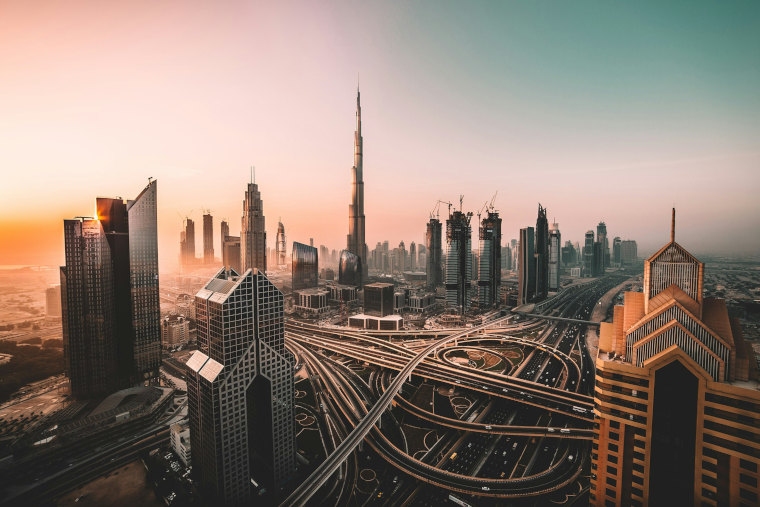 Image source: David Rodrigo / unsplash.com

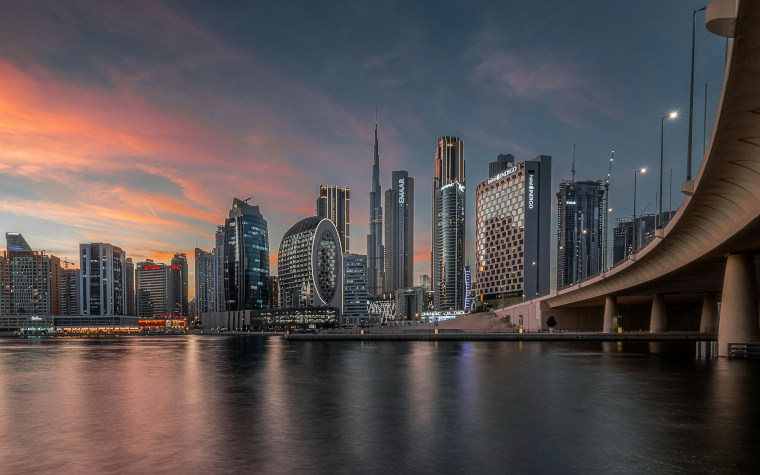 Image source: Leon Macapagal / unsplash.com


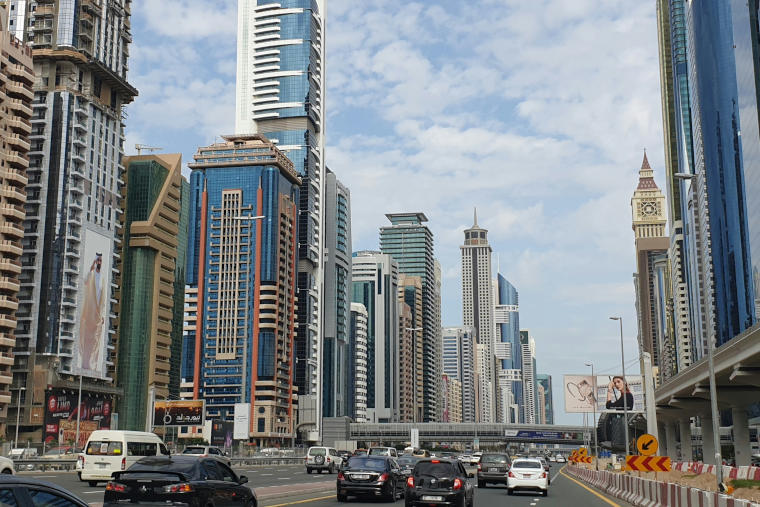 Image source: Anirudh Gaur / unsplash.com