Home/Cities of the UAE/How Old is Dubai: From an Ancient Village to a Modern Megalopolis
05.03.2026
Cities of the UAE
907
Reading time: 12 minutes
How Old is Dubai: From an Ancient Village to a Modern Megalopolis
Save the article:
How old is Dubai? The city was officially founded in 1833, which means it is 193 years old today. The history of Dubai is a unique example of rapid development. Understanding the pace of the city's growth helps tourists appreciate the scale of its achievements, investors assess its potential, and researchers study the phenomenon of urbanisation.
How many years did it take to build the city? The modern megalopolis took shape over the past 50 years, transforming from a fishing village into a global hub.
Ancient History and the Founding of Dubai
The area of modern Dubai bears traces of human activity stretching back to the distant past. Archaeological studies have uncovered artefacts that are more than 4,000 years old, indicating that the shores of the Persian Gulf attracted people with their rich fisheries and strategic location on the trade routes between Mesopotamia and the Indus Valley Civilisation.
The first settlements on the shore of the Persian Gulf
The ancient inhabitants of this region engaged in fishing, shellfish gathering, and rudimentary trade. In the area of modern Dubai, archaeologists have uncovered the remains of Bronze Age settlements, ceramic artefacts, and tools dating back to 3000–2000 BC. These finds confirm that the area was inhabited long before the modern city came into existence.
The climatic conditions and geography of the area created ideal prerequisites for the development of maritime industry. The natural Dubai Creek inlet provided a sheltered berth for small vessels, and the proximity to fresh water made the area attractive for permanent settlement.
The migration of the Al Maktoum tribe in 1833
The pivotal moment in the history of Dubai's creation was 1833, when the Al Maktoum tribe migrated from Abu Dhabi. This event is officially considered the founding of the modern city. Sheikh Maktoum bin Buti bin Suhail Al Maktoum, who led approximately 800 members of the Bani Yas tribe, made the decision to leave the Liwa oasis in Abu Dhabi due to internal political disagreements.
Image source: Armands Brants / unsplash.com
The choice of location for the new settlement was strategically sound. Maktoum bin Buti recognised the advantages of the natural harbour at Dubai Creek, which provided convenient access to the sea and shelter from storms. The geographical position at the crossroads of trade routes between Asia, Africa, and Europe made this place promising for the development of commercial activity.
The traditional occupations of the first inhabitants
After the settlement was established, the inhabitants of Dubai focused on three main activities. Fishing formed the basis of the local population's subsistence — the rich waters of the Persian Gulf teemed with various species of fish, including tuna, mackerel, and prawns.
Pearl diving became the main source of income and trade. Dubai's pearl divers were renowned for their skill throughout the region. The diving season lasted from May to September, when hundreds of boats set out into the waters of the gulf. High-quality pearls were exported to India, Persia, and even Europe, bringing substantial profit to local merchants.
The trade flourished thanks to the favourable location of the settlement. Dubai's merchants traded in spices, fabrics, gold, and other goods, using traditional sailing vessels — dhows. By the 1850s, the small settlement already had approximately 1,200 residents and was actively developing as a trading hub on the eastern coast of the Arabian Peninsula.
Thus, the history of Dubai spans thousands of years of human presence, but the modern city counts its origins from 1833 — the date that determines how old Dubai is as an organised settlement under the rule of the Al Maktoum dynasty.
Key Stages of the City's Development
Dubai's transformation from a small settlement into a modern megalopolis took place in stages, each period characterised by unique achievements and challenges. The history of Dubai encompasses several key eras, each of which contributed to shaping the city's appearance.
The pearl trading era (1833–1930)
After its official founding in 1833, Dubai rapidly became an important trading hub in the Persian Gulf. The Al Maktoum family, having come to power, focused on developing trade and creating favourable conditions for merchants. Pearl diving became the city's primary source of wealth — at the beginning of the 20th century, more than 7,000 divers were employed in the industry.
Dubai's history of emergence as a trading centre is linked to the wise policies of its rulers, who abolished many taxes and created a free-trade zone. This attracted Persian, Indian, and Arab merchants, contributing to the city's cultural diversity. By 1908, Dubai had a population of around 10,000 — a significant number for the time.
The British protectorate and economic hardships (1892–1966)
In 1892, the emirate became part of the British protectorate, which provided protection for trade routes but limited its foreign policy independence. The period from the 1930s to the 1950s was one of the most difficult in the city's history. The global economic crisis, the emergence of cultivated Japanese pearls, and the Second World War dealt a severe blow to the economy.
Image source: Aftab Khan / unsplash.com
The population fell by almost half, and many merchants left the city. However, it was during this very period that alternative economic sectors began to develop — the re-export of gold to India and trade with neighbouring countries. These directions laid the foundations for Dubai's future transformation into an international trading hub.
The oil era and the beginning of modernisation (1966–1971)
The discovery of oil in 1966 radically altered the trajectory of the emirate's development. The first oil revenues amounted to $13 million, which enabled Sheikh Rashid bin Saeed to launch large-scale infrastructure projects. In 1967, Dubai Airport was constructed, and in 1969, Dubai Creek was deepened to accommodate larger vessels.
Sheikh Rashid understood that oil reserves were finite, and so he immediately directed revenues towards diversifying the economy. His vision was to create a modern trading and logistics centre that could prosper even after the oil fields were exhausted.
The formation of the UAE and Sheikh Rashid's reforms (1971–1990)
On 2 December 1971, the formation of the United Arab Emirates was proclaimed, starting a new chapter in Dubai's development. Rashid bin Saeed, who became Vice-President and Prime Minister of the UAE, initiated an unprecedented modernisation programme.
Over the two decades of his rule, Dubai's main modern infrastructure was built — including how many years did it take to build it: Port Jebel Ali (1979), the World Trade Centre (1979), and the tunnel beneath Dubai Creek (1975). The population grew from 59,000 in 1968 to 419,000 in 1985. Sheikh Rashid bin Saeed laid the foundations of the modern economic model based on trade, tourism, and financial services.
The modern era under Sheikh Mohammed's leadership (1990–present)
From 1990, when Sheikh Mohammed became Crown Prince, an era of Dubai's global positioning began. The city's transformation accelerated: free economic zones were created, and megaprojects such as the Palm Islands and Burj Khalifa were launched.
The financial sector developed rapidly — in 2002, the Dubai International Financial Centre was opened. By 2020, the population had reached 3.4 million, and the emirate's GDP was $108 billion. Modern Dubai has become a global hub connecting East and West, embodying the vision of its founders to create an international trading centre.
Modern Dubai: Achievements of Recent Decades
The past four decades have been a period of unprecedented transformation for Dubai. What was still a small trading port with a population of around 300,000 people in the 1980s has today become a cosmopolitan megalopolis with more than 3.5 million inhabitants. Modern Dubai in its current form did not exist before the launch of Sheikh Rashid Al Maktoum's sweeping reforms in the 1970s and 1980s.
Economic zones as a catalyst for growth
The creation of the Jebel Ali Free Zone in 1985 was a turning point in the city's history. This initiative gave rise to the development model that transformed Dubai into an international trading hub. Today, more than 30 specialised zones operate in the emirate, including the Dubai International Financial Centre (DIFC) and Dubai Internet City, which have attracted thousands of international companies.
The financial sector has delivered impressive results: the assets of Dubai's banking system exceed $400 billion, making it the largest financial hub between London and Hong Kong. The DIFC serves a region with a population of more than 2 billion people and a GDP of over $7 trillion.
The tourism revolution
Dubai's transformation into a global entertainment centre began in the 1990s with the construction of luxury hotels and shopping centres. The Burj Al Arab, opened in 1999, became the symbol of the new Dubai and set the standard for world-class luxury. The Dubai Mall, one of the largest shopping centres on the planet, receives more than 100 million visitors annually.
The artificial islands of Palm Jumeirah and The World Islands demonstrate the emirate's engineering achievements. Palm Jumeirah, completed in 2006, extended Dubai's coastline by 520 kilometres and became home to 65,000 residents and 40 luxury hotels.
Demographic transformation
Dubai's population has grown twelvefold since 1980, making it one of the most cosmopolitan cities in the world. Today, more than 200 nationalities are represented there, with expatriates making up around 85% of the population. Ethnic diversity has become a key factor in Dubai's transformation into an international symbol of tolerance and innovation.
Leadership in Innovation
Dubai actively positions itself as the Middle East's centre of innovation. The Dubai Future Foundation coordinates more than 30 initiatives in the fields of artificial intelligence, blockchain, and sustainable development. By 2030, it is planned that 25% of all transportation in the city will be carried out by autonomous vehicles.
The Dubai 2071 strategy envisages transforming Dubai into the world's best city for living by the centenary of the UAE. Investments in renewable energy, smart technologies, and sustainable development confirm the leadership's ambitious plans to create the city of the future.
How old is Dubai now as a modern megalopolis? The answer is just around 40 years of active development, which makes its achievements all the more impressive against the backdrop of the region's thousand-year history.
Construction Pace and Architectural Records
The phenomenon of construction in Dubai astonishes even experienced architects and engineers with its pace. Over the past two decades, the emirate has set numerous world records, proving that ambitious projects can be delivered within the shortest possible timeframes when properly organised and adequately funded.
Burj Khalifa: a record for height and speed
Burj Khalifa — the world's tallest building — has become a symbol of the architectural possibilities of the 21st century. The construction of the 828-metre skyscraper took 6 years (2004–2010), which is considered a record pace for a structure of this scale. Up to 12,000 workers worked on the construction site daily in three shifts, enabling round-the-clock operations.
The tower comprises 163 floors and required 330,000 cubic metres of concrete. The unique construction system allowed for the simultaneous building of the foundation and the above-ground structure, reducing the overall timeframe by 2 years compared to traditional methods.
Architectural masterpieces built at record pace
Burj Al Arab hotel, which has become the hallmark of Dubai, was built in 5 years (1994–1999). The seven-star hotel on an artificial island, standing 321 metres tall, long remained the tallest building used exclusively as a hotel.
Image source: Mo / unsplash.com
The artificial archipelago Palm Jumeirah was constructed over 8 years (2001–2009). The project required the displacement of 94 million cubic metres of sand and 5.5 million cubic metres of rock. The island extended Dubai's coastline by 520 kilometres.
Dubai Mall, the world's largest shopping centre by area, was built in 4 years (2004–2008). The complex, with a floor area of 502,000 square metres, comprises more than 1,200 shops and receives over 100 million visitors annually.
The secrets behind rapid construction
How many years did it take to build Dubai's modern districts? The answer lies in the unique project delivery model. The emirate employs the principle of parallel planning: whilst one facility is under construction, the next is already being designed. The use of modular structures and prefabricated elements reduces timeframes by 30–40%.
Round-the-clock construction, international teams of specialists, and unlimited financing allow projects to be delivered 2–3 times faster than global standards. For instance, the construction of one floor of Burj Khalifa took only 3–4 days.
Ambitious plans for the future
By 2040, it is planned to complete Dubai Creek Tower — a tower more than 1,000 metres tall that will surpass Burj Khalifa in height. The Mohammed Bin Rashid City project will create a new urban district covering 54 square kilometres over 15 years.
The artificial islands The World and The Universe will extend the coastline by a further 232 kilometres, with construction taking 12 years. These projects confirm that Dubai continues to set new standards of speed and scale in global architecture.
FAQ
How old is Dubai as a modern city?
Modern Dubai began to take shape in the 1970s with the discovery of oil fields and the commencement of large-scale infrastructure projects. Thus, Dubai's age as a modern megalopolis is approximately 50 years, although the city itself was founded in 1833 and has 193 years of history.
What was in place of Dubai before it was founded?
Before the modern settlement was established, the area was inhabited by nomadic tribes who engaged in fishing and trade. Archaeological finds attest to human presence in this region more than 4,000 years ago. The shores of the Persian Gulf attracted people owing to their rich maritime resources and the convenient geographical position for trade routes.
How many years did it take for Dubai to become a financial centre?
The transformation into an international financial centre occurred over the past 20–25 years. The pivotal moment was the creation of the Dubai International Financial Centre (DIFC) in 2004.
Image source: snaptheframe / shutterstock.com
Thanks to a liberal economic policy and the creation of free economic zones, the city rapidly attracted the world's largest banks and financial institutions.
When did the construction of Dubai's famous skyscrapers begin?
The era of skyscrapers began in the 1990s with the appearance of the first high-rise buildings. The real boom came in the 2000s, when the foundations were laid for such projects as Burj Khalifa and the Dubai Marina complex. Most architectural records were set between 2005 and 2015.
How quickly is Dubai's population growing?
Since the 1980s, the population has grown more than tenfold — from 300,000 to 3.5 million. A particularly intense influx of residents was observed between 2000 and 2010, when the annual increase amounted to approximately 200,000–300,000 people. Today, more than 85% of the population are foreigners from various countries around the world.
Specifics of property rights types in the UAE. What is freehold? What is leasehold? Usufruct and musataha. Pros and cons of different forms of ownership in the UAE. Frequently asked questions about ty...
Geographical features of the UAE. Key resources of the UAE. Investments in the resource sector and other sectors of the UAE. Frequently asked questions about UAE resources.
11 official festivals in Dubai and the UAE. Non-muslim festivals celebrated in the UAE and Dubai. Other festival celebrations in Dubai and the UAE. Frequently asked questions about festivals in Dubai.
Overview of Ras Al Khaimah. Districts of Ras Al Khaimah. Advantages of buying property in Ras Al Khaimah. Interesting facts about Ras Al Khaimah. Frequently asked questions about Ras Al Khaimah.
Specifics of working in Abu Dhabi. Popular industries in Abu Dhabi. Places to search for jobs in Abu Dhabi. Obtaining a work visa in Abu Dhabi. Salary range in Abu Dhabi. Frequently asked questions ab...
Description of the Al Barsha district. Real estate in Al Barsha. Nurseries and schools in Al Barsha. Investment feasibility and development prospects of Al Barsha. Frequently asked questions about Al ...
Why you need a local SIM card in Dubai. Is the free SIM card in Dubai worth using? Differences between a regular SIM card and an eSIM. Choosing a mobile operator for an eSIM in Dubai. Frequently asked...
Main features of Creek Harbour, Dubai. Infrastructure of Creek Harbour. Advantages and disadvantages of the Creek Harbour district. Transport accessibility of Creek Harbour. Luxury real estate in Cree...



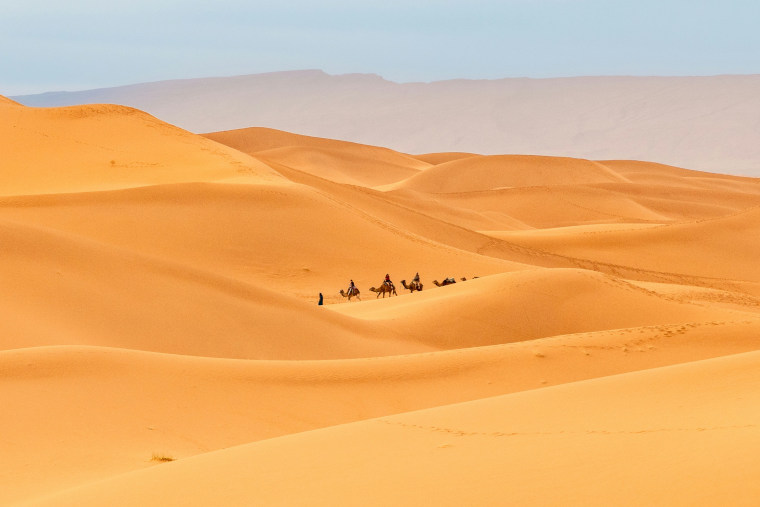 Image source: Armands Brants / unsplash.com

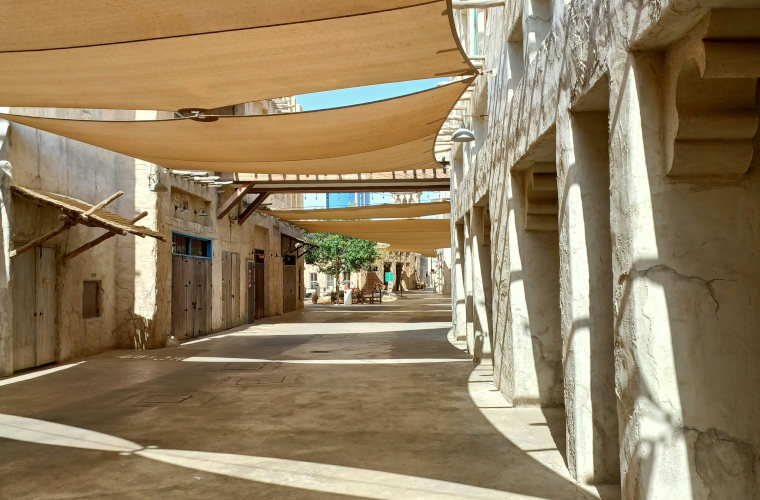 Image source: Aftab Khan / unsplash.com

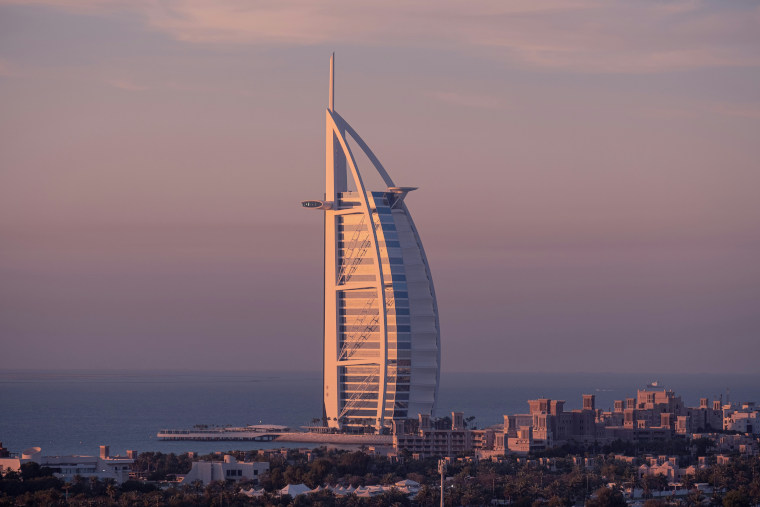 Image source: Mo / unsplash.com

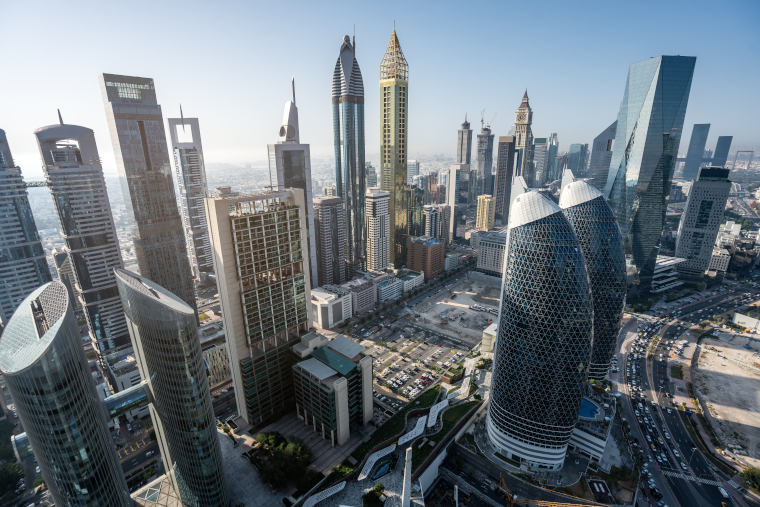 Image source: snaptheframe / shutterstock.com