Home/Cities of the UAE/Where is Dubai Located: Everything about the Location and Development of the Pearl of the East
27.01.2026
Cities of the UAE
1366
Reading time: 11 minutes
Where is Dubai Located: Everything about the Location and Development of the Pearl of the East
Save the article:
Where is Dubai located? The city is located in the south-western part of Asia, on the Arabian Peninsula. Dubai is part of the United Arab Emirates (UAE) and is the capital of one of the seven territories with the same name.
What are the advantages of its location? Thanks to access to the gulf and a fortunate location between Europe, Asia and Africa, Dubai has become a global aviation and maritime hub. Some of the largest air and water ports in the world are located there. But the city is famous not only for this.
Where is Dubai Located
Dubai on the world map is the largest metropolis of the United Arab Emirates (UAE) and one of the most recognisable cities. To understand where and in which country Dubai is located, one needs to know that it is spread out on the coast of the Persian Gulf, being the capital of the emirate of the same name.
This city has become famous for ultra-modern skyscrapers, man-made archipelagos, fashionable hotels and grandiose shopping centres. Every year, millions of travellers strive to find out where the city of Dubai is located, in order to see with their own eyes the unique fusion of Eastern traditions and advanced technologies.
Many mistakenly believe that Dubai is the capital of the UAE. However, this status belongs to Abu Dhabi. It is important to emphasise that this is one of seven entities constituting the federal state of the UAE.
Where on the country's map is the emirate of Dubai located relatively to other territories of the country? It borders Abu Dhabi to the south and the other emirates — Sharjah, Ajman, Umm Al Quwain, Fujairah and Ras Al Khaimah — are located to the northeast of Dubai. At the same time, Dubai is the most densely populated and economically active centre.
Dubai is the main economic centre of the country. The headquarters of large corporations and financial institutions are concentrated there. International exhibition complexes and large ports are also located there. The economy is diversified and rests not only on oil, but also on trade, tourism, financial services and the real estate market.
The symbol of this prosperity is the tallest skyscraper in the world, the Burj Khalifa, located in the very heart of the Downtown business district.
The tourism infrastructure of Dubai is at a high level. The international airport is one of the largest air hubs on the planet. It is located in the eastern part of the metropolis and connects the UAE with dozens of destinations. The question of where in Dubai Al Maktoum Airport is located is relevant for those arriving in the southern districts of the emirate.
It is convenient to move around the metropolis thanks to the metro, bus routes and modern highways. Among the most visited places are the artificial archipelago Palm Jumeirah, theme parks, and large shopping complexes.
Image source: PureSolution / shutterstock.com
The city is popular for its beaches: Dubai is situated by the Persian Gulf, so the question of what sea is there, where Dubai is located, has the answer: the city has access to the waters of the Indian Ocean.
If one considers Dubai on the scale of continents, then it is important to understand on which continent Dubai is located. The city is located in Asia, in the Middle East.
Brief information
Emirate of Dubai:
one of the seven territories of the UAE;
ruled by its own emir;
area — about 4.1 thousand km²;
population size — approximately 3.28 million people;
local residents are called Dubaites;
official currency — dirham;
state language — Arabic;
dominant religion — Islam;
the coast of the emirate is washed by the waters of the Persian Gulf of the Indian Ocean.
City of Dubai:
the largest metropolis (by population size) in the emirate and the country;
population — over 3 million people;
the main economic and tourist centre of the region.
History and Development of Dubai
The first information about the locality where the city of Dubai is located dates back to 1095 and is encountered in the "Book of Geography" by the Andalusian-Arab scholar Abu Abdullah al-Bakri.
The next mention refers to 1580, when the Venetian merchant Gasparo Balbi described this region in his diary as a centre for pearl diving. But as a permanent settlement, the fishing village was formed only at the beginning of the 18th century, when the Bani Yas tribe arrived, acknowledging the authority of Sheikh Tahnun bin Shakhbut from Abu Dhabi.
An important impetus for development occurred in 1822, when local rulers concluded a maritime truce with Great Britain. This opened new trade routes and contributed to economic growth.
Archaeological finds testify that the first settlements on the territory where Dubai is located on the world map today existed as early as 3000 BC. In the pre-Islamic period, local residents worshipped the deity Bajir, and later the region experienced a flourishing under the control first of the Sassanid, and then the Byzantine empires.
A turning point in history came in 1833, when Maktoum bin Butti of the Bani Yas tribe led his tribesmen to the Shindagha peninsula and founded a settlement at the mouth of Dubai Creek, proclaiming independence from Abu Dhabi. It is from this event that the rule of the Al Maktoum dynasty begins, whose representatives lead the emirate to this day.
Over time, a small fishing village turned into a large metropolis, known to everyone who is interested in where Dubai is located and which country developed it to its current level.
Image source: Pavlovich Viktor / shutterstock.com
It is also interesting that today the name of the dynasty is firmly associated not only with the ruling family, but also with the place where Al Maktoum Dubai is located — the largest international airport.
The young city was not bypassed by a series of disasters either. In 1841, a smallpox epidemic broke out, forcing the residents to relocate further east. In 1894, a powerful fire destroyed the greater part of the houses. However, the advantageous position — especially if one looks at which continent Dubai is located and through which routes trade passed — continued to attract merchants and entrepreneurs from various regions.
Although today Dubai is known as an oil-producing region, reserves of "black gold" were discovered there only in 1966. Thanks to the far-sighted policy of Sheikh Rashid bin Saeed Al Maktoum, revenues from this asset began to be actively invested in infrastructure.
The ruler understood that for a sustainable future it was necessary to diversify the economy, and purposefully strengthened the reputation of the city as an international centre of free enterprise.
The middle of the 20th century became a time of an influx of merchants from Iran, India and Europe. But back in the 1920s, the city's population did not exceed 10,000 people. The main source of income was the export of pearls, but in the 1930s Japanese farms for growing it crashed the market. The inability to compete with mass production, the consequences of World War I and the Great Depression led to a massive outflow of the population to other regions.
In 1937, Sheikh Saeed, striving to stabilise the economy, concluded an agreement on oil exploration with the British company Petroleum Concessions Limited. It received exclusive rights for 25 years in exchange for a one-time payment and guarantees of financial support in the event of the discovery of oil deposits.
At the same time the Sheikh sought alternative sources of income. To attract foreign merchants, taxes were significantly reduced, which prompted many merchants to move to Dubai from Sharjah — the main trade hub of the region at that time. This became an important step in transforming the emirate into one of the world centres of re-export.
Relations between Dubai and Abu Dhabi were historically tense, and in 1947 their conflict grew into a border war. Hostilities were successfully stopped thanks to British mediation and the creation of a buffer zone.
The discovery of oil in 1966 caused a massive influx of foreign labour, mainly from India and Pakistan. The result of the demographic explosion: from 1968 to 1975, the city's population grew almost fourfold.
The formation of a federal state on December 2, 1971 — the United Arab Emirates, which included six emirates, including Dubai — became the most important political event. A year later, the seventh emirate joined the federation — Ras Al Khaimah.
Culture and Architecture of Dubai
The cultural life of the United Arab Emirates is deeply rooted in Arab and Islamic traditions, which are passed down through generations. This heritage finds reflection in all spheres — from music and national dress to cuisine and daily routine.
A vivid example is traditional Islamic architecture, elements of which can be seen in the design of mosques and many buildings. Religion is an important aspect of the life of local society: the five-time prayer sets a clear rhythm of the day. Moreover, festivals dedicated to its heritage are regularly held in the country, which emphasises the value of traditions in modern society.
The architectural appearance of Dubai is distinguished by stylistic diversity. In the Arab world, and especially in Dubai, a real flourishing of modern Islamic architecture is observed. Innovative projects and active construction contribute to this. Leading local and international design bureaus, including companies from New York and Chicago, work on creating the new face of the city.
Thanks to this cooperation, Dubai has reached incredible heights in the construction of skyscrapers. Record-breaking buildings in terms of height were erected there, like the famous tower Burj Khalifa in the business heart of the metropolis, as well as the luxurious Burj Al Arab.
However, Dubai is not only ultra-modern high-rises. The city carefully preserves its identity, based on Arab customs.
Heritage and traditions of Dubai
Historical district Al Fahidi (formerly Al Bastakiya)
This district with its narrow streets and traditional houses equipped with wind towers will show how Dubai lived before. To understand how a metropolis grew from a modest settlement, it is worth visiting the Dubai Museum in Al Fahidi Fort.
Sheikh Mohammed Centre for Cultural Understanding (SMCCU)
This institution offers to immerse deeper into local customs and try authentic Emirati cuisine. This is the ideal place to feel the true spirit of Dubai's hospitality.
Local art and design
Dubai possesses a bright creative side as well:
The art district Alserkal Avenue in the Al Quoz area has become the epicentre of artistic life. Numerous galleries and studios are concentrated there, and master classes are held.
The art of Arabic calligraphy finds a new embodiment in the modern urban space, for example, in the futuristic design of the Museum of the Future building.
Districts of Dubai
The territory of Dubai consists of several large zones and each of them has its own image. The central city, which is also called the Golden Metropolis, is associated with the glitter of shop windows, ultra-modern neighborhoods and record-breaking skyscrapers. Iconic objects are concentrated there — from the Burj Khalifa to huge shopping centres and fashionable hotels that set a high bar for hospitality.
Image source: ZQ Lee / unsplash.com
Besides the main urban part, the emirate includes Abu Hail, Al Awir, Al Barsha, Al Mamzar and Al Mizhar. These locations represent a mixture of new residential districts and traditional environments. Markets, family cafes, modern parks, unusual buildings — each neighborhood has its own atmosphere.
Tourists often head to the artificial archipelagos Palm Jumeirah and The World. These islands have become symbols of Dubai's ambitious construction.
The city is conditionally divided into six districts:
Bur Dubai. The historical part of the city with a museum and traditional markets.
Deira. A district famous for the Gold Souk, the Clock Tower, fragrant oriental perfumes and the Dubai Creek embankment with grounds for yachting and golf.
Jebel Ali. A centre for family entertainment, where Legoland, Motiongate and the Dubai Parks & Resorts complex are located. The project of a new mega-airport is also developing there.
Jumeirah. A prestigious zone where the Burj Al Arab hotel and the island of Palm Jumeirah are located.
Hatta. A natural area with mountains, forts, zones for kayaking sports and popular camping locations.
Suburban territories. These are residential zones for comfortable family living.
The creek Khor Dubai divides the city into two sides. On one side of it Bur Dubai is located, on the other — Deira. Several transport crossings operate between the banks: the Al Garhoud and Al Maktoum bridges, as well as the Shindagha Tunnel, which runs under the mouth of the creek and is considered one of the impressive engineering objects of the region.
Frequently Asked Questions about the Location of Dubai
Where is Dubai Mall located?
The main shopping and entertainment complex of the emirate is located in the heart of the city — in the Downtown Dubai district, literally at the foot of the Burj Khalifa. This is a gigantic centre, which has become one of the calling cards of Dubai thanks to its impressive scale and an exceptionally convenient location.
Inside, hundreds of shops, recreation zones and famous attractions await the visitors: a huge oceanarium Underwater Zoo, as well as famous waterfalls with transparent figures of pearl divers that decorate several floors of the gallery.
Where is Dubai airport located?
The main international air hub of the city — DXB — is located in the Al Garhoud district, just a few kilometres away from the old centre.
Where is the Burj Khalifa located in Dubai?
The tallest skyscraper on the planet is located in the centre of Dubai on Mohammed Bin Rashid Boulevard, next to Dubai Mall and the singing Dubai Fountain.
Where to find Old Dubai?
The historical part of the city is located in the north of the metropolis and is divided by the Dubai Creek into two large districts: Bur Dubai on the western bank and Deira on the eastern. Traditional markets, ancient buildings and architectural monuments have been preserved there, as well as the famous Al Bastakiya with its narrow streets and buildings characteristic of the region.
How to find the Dubai Marina district?
It is located on the western outskirts of the city and stretches along an artificial canal connecting to the Persian Gulf. This district is located between the island of Palm Jumeirah and Bluewaters Island.
Where can one find the observation wheel in Dubai?
Ain Dubai — the largest observation wheel in the world — is located on Bluewaters Island. It towers over the coastal zone of Jumeirah Beach Residences (JBR) and is one of the most recognisable objects of the city. Ain Dubai allows one to survey the metropolis from a height, opening a panorama of Dubai, the Persian Gulf and famous artificial island projects.
Image source: Nelemson Guevarra / unsplash.com
Dubai is more than just a metropolis. It acts as a vivid example of rapid development and openness to the world. Located on the coastline of the Persian Gulf, the city combines centuries-old heritage, technological progress and a powerful economic base.
Such a combination of cultural traditions, tourist attractiveness and business activity makes Dubai one of the most sought-after locations on the world map both for travellers and for international investors.
What Bur Dubai is like. Pros and cons of the Bur Dubai district. Living amenities in Bur Dubai. Accommodation options in Bur Dubai. How to get around Bur Dubai. Frequently asked questions about Bur Du...
Where to invest money in the near future? Where to invest money in the UAE? Attractiveness of investing money in the UAE. Investment directions in the UAE. Investing in UAE real estate. Investment obj...
Types of work visas in the UAE and Dubai. How to find work in Dubai? The process of obtaining a work visa in Dubai. Frequently asked questions about work visas in Dubai.
Main features of Mohammed Bin Rashid City. Infrastructure of Mohammed Bin Rashid City. Housing in Mohammed Bin Rashid City. Transport accessibility of Mohammed Bin Rashid City. Frequently asked questi...
Overview of Ras Al Khaimah. Districts of Ras Al Khaimah. Advantages of buying property in Ras Al Khaimah. Interesting facts about Ras Al Khaimah. Frequently asked questions about Ras Al Khaimah.
Visa-free entry to the UAE for citizens of Russia. Required documents for entry to the UAE. Travelling to the UAE with children and minors. Payment methods and finances in the UAE for Russians. Custom...
The creation and development of the World Islands. Infrastructure of the World Islands. Location and transport accessibility of the World Islands. Real estate on the World Islands. Frequently Asked Qu...



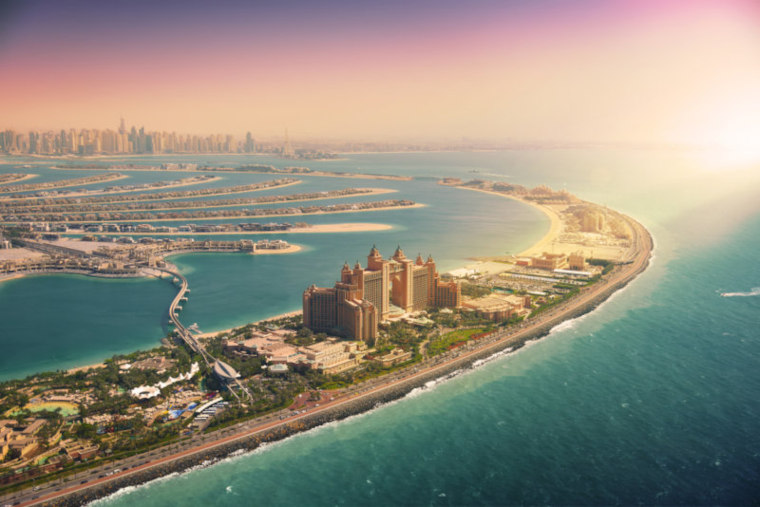 Image source: PureSolution / shutterstock.com

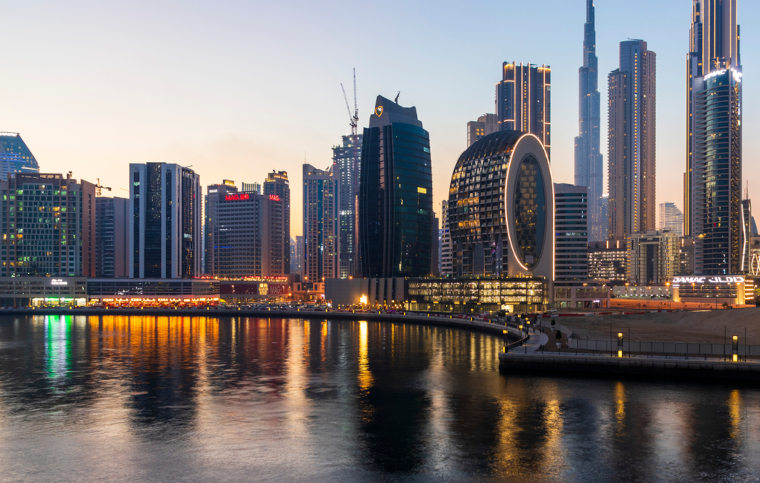 Image source: Pavlovich Viktor / shutterstock.com


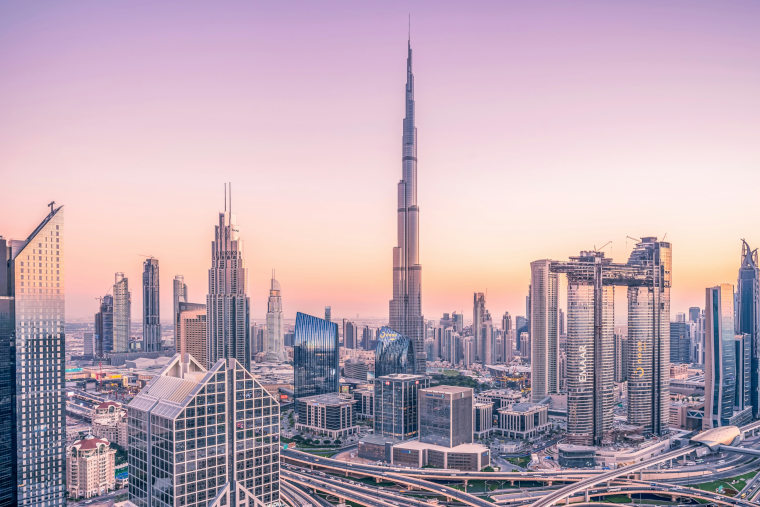 Image source: ZQ Lee / unsplash.com

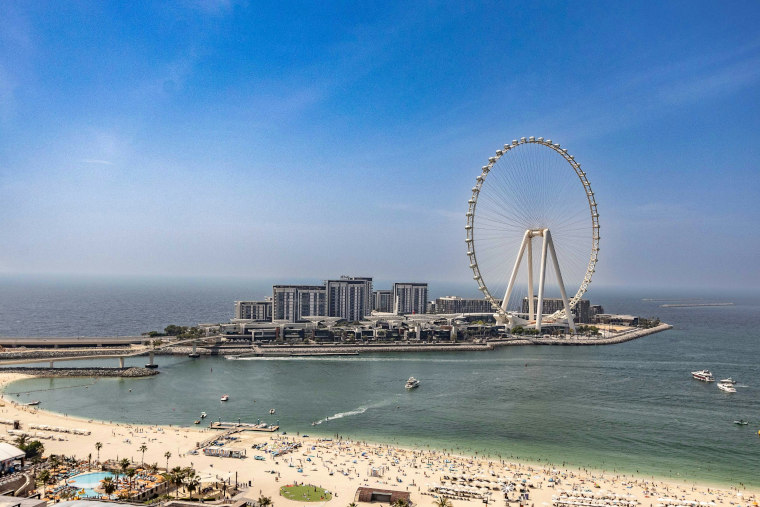 Image source: Nelemson Guevarra / unsplash.com