What makes them remarkable? The islands in Dubai are artificial and were built relatively recently. The construction of the first palm island began in 2001. Currently, this man-made archipelago is considered one of the most expensive places for leisure and real estate investment.
What to consider? Several islands are planned for creation in Dubai, but the plans were adjusted due to financial crises. Some archipelagos are frozen due to lack of funding, while those that are completed are actively seeking investors for development of the reclaimed land.
The History of Artificial Island Construction in Dubai
Dubai is famous worldwide for its unique features: tall skyscrapers, enormous fountains, modern water parks, and even ski resorts on the hot desert sands. Moreover, the artificial islands, which began construction in the mid-2000s, are also among the symbols of this city.
In recent years, the UAE has been developing rapidly due to oil production. This incredible source of income has allowed the state to implement ultra-modern, popular, and incredible projects costing billions of dollars. Beyond prestige, there were also practical goals. The UAE wanted to attract more tourists and buyers interested in luxury real estate.
The idea of building artificial islands in the coastal waters of Dubai had pragmatic considerations as well. The coastline of the Dubai emirate is only about 72 km long, and most tourists and wealthy people buying apartments want to live by the sea. An apartment with a sea view in the centre of a resort would be ideal.
The Sheikh financed the construction of artificial islands to increase the length of the coastline and beaches. The interesting shape of the islands was designed to create a new coastline up to 1,500 kilometres long and attract tourists, as well as provide opportunities for new bungalow construction.
The three palm-shaped islands in Dubai were to be connected to the mainland. The other archipelagos are also very distinctive: one in the shape of a world map (The World archipelago), another resembling the outlines of the Milky Way and Solar System.
Mohammed bin Rashid even established a state company, Nakheel Properties, to build the archipelagos. It was planned that upon completion of the construction, a certain portion of the land and islands would be sold to private developers, while hotels, villas, and shopping centres would be built on the remaining territory.
The sand in the desert was unsuitable for creating the islands as it was fine-grained, loose and extremely easy to be washed away by water. Because of this, it was decided to construct specialised marine vessels to extract soil from the bottom of the Persian Gulf. To prevent the new land from being eroded by storms, breakwaters approximately two metres high made of rock were built around the archipelagos.
Since the constructions disrupted the natural water circulation, the designers had to artificially enhance it to prevent algal blooms in the created bays (especially between the “branches” of the palms). This somewhat helped improve the situation. However, tourists visiting the constructed palm of Jumeirah still occasionally complain about unpleasant odours coming from the water.
The provision of modern utilities for residents was well-planned, but this was only achieved on Palm Jumeirah. Owners of several islands built in the World Archipelago in Dubai have to use diesel generators and resolve sewage issues themselves.
The Plan of artificial island development in Dubai immediately sparked objections from ecologists. They were concerned about excessive human impact on nature in the Persian Gulf, warning that the entire ecosystem could be destroyed due to changes in ocean currents, water temperature increase and significant alterations to the seabed topography. The authorities are trying to find a compromise that would satisfy everyone.
Description of Islands in Dubai
Palm Jumeirah
Palm Jumeirah is the hallmark of Dubai and a symbol of its economic power. This Dubai island shaped like a giant 16-frond palm tree is surrounded by a second island in the form of a crescent and breakwaters on the other side. Its construction took six years and cost the developer Nakheel Properties 12 billion US dollars.
Image source: Andrew Ring / shutterstock.com
An interesting fact: no metal or concrete blocks were used in construction; the island's foundation was entirely laid with stones, and then sand and soil from the seabed were placed on top.
The artificial island in Dubai is very popular among celebrities and the global elite. On the fronds of Palm Jumeirah, there are various five-star hotels, stunning villas, luxury apartment complexes, as well as numerous entertainment options, from amusement complexes for children and teenagers to a unique dive-in cinema for parents.
Palm Jumeirah is part of the Palm Islands archipelago in Dubai together with the neighbouring islands of Palm Jebel Ali and Dubai Islands. We will tell you about them as well.
Palm Jebel Ali
Construction of this island began in 2002. Palm Jebel Ali was supposed to be twice as large as Palm Jumeirah and become another hub for elite infrastructure.
However, this never happened as construction was suspended in 2008 due to the global financial crisis and the project was put on hold indefinitely in 2009. Nevertheless, recently investors have shown renewed interest in the project, and it appears to have “risen from the ashes”.
The current plans for the second “Palm” are even more impressive. The master plan for the island includes over 80 resorts and no fewer than 1,700 residential units, with the main highlight being the colossal MOON project — a business and commercial centre featuring an enormous replica of the Moon 229 metres wide and 305 metres high.
Access to the island will be via the magnificent Gateway Bridge, and water transport will be the primary mode of transportation in Jebel Ali. It is expected that upon completion, the project will not only become a new island of the emirate but also a unique landmark in Dubai's real estate market.
Dubai Islands
In 2004, the company Nakheel launched the third project in the Palm Islands series in Dubai — Palm Deira. According to initial estimates, it was supposed to be eight times larger than Palm Jumeirah and become the largest artificial island in the country. However, the 2008 crisis led to further revisions, and the project was put on hold along with Palm Jebel Ali.
In 2013, Nakheel changed the concept of the project. Instead of giant palms, an archipelago of three islands called Deira Islands emerged. After rebranding, construction resumed, and by August 2023, one of the three islands had already been commissioned. Recently, the developer conducted another rebranding and gave the archipelago a different name — Dubai Islands.
Currently, a large shopping complex is being constructed on the first island, but the completion date has not yet been determined. A marina for yachts, an art district with museums and exhibitions, as well as residential buildings will also be built there. On the other islands, five-star hotels, a golf course, water sports palace, and several luxury developments will be constructed.
The World
The World project is one of the largest in Dubai's history. It consists of a group of 300 artificial islands that replicate the outlines of the continents. The project attracted attention by offering investors the opportunity to purchase “any part of the globe” and develop it as they wish. Construction began in 2003, and all the islands are now complete.
The archipelago is located 4 km away from the coastline. Access is possible only by water, providing additional privacy and security. Most of the islands are still empty, but some are fully operational, such as Lebanon Island, which features a beach club with a restaurant, a pool, and a bar.
In the near future, the Heart of Europe project will be launched — a luxurious hotel and residential complex recreating the atmosphere of iconic locations in mainland Europe. A European setting will be recreated using artificial rain, real snowfields, and, of course, architecture.
Bluewaters Island
Bluewaters Island is not overly large but quite cosy, situated in bustling Dubai Marina. This time there was no dramatic story: construction began in May 2013 and was completed in November 2018 without any critical issues. By August 2023, Bluewaters Island was fully ready for occupancy and became home to many residents.
Image source: Captured Blinks / shutterstock.com
The island has five zones: residential, hotel, beach, retail, and entertainment. The residential zone features a large collection of freehold apartments, while the retail zone offers all necessary amenities and over 200 shops, cafés, and restaurants. The symbol of the project is Ain Dubai, a Ferris wheel standing at 274 metres tall, which claimed the title of the world’s largest in 2021.
The island is directly connected to the important Sheikh Zayed Road highway and the popular Beach district.
Whether to Buy Islands in Dubai or Not
The main and most discussed disadvantages of artificial islands in Dubai are their hypothetical fragility (they are built on sand) and the possibility of flooding (global warming is causing a constant rise in the global sea level, and in the near future the Gulf may “swallow up” all developed areas).
The reliability of the constructions and islands can be judged by Palm Jumeirah, which was built in the mid-2000s and is still standing.
Image source: автор / shutterstock.com
As for the other concern, it can only hypothetically be assumed that flooding will occur in 800 years according to optimistic estimates and approximately 50 years according to pessimistic ones, but even if this negative forecast comes true, investors will have doubled or even tripled their investments by that time (the approximate payback period in Dubai is 15 years, and for projects located at sea — even less).
Due to artificial reefs and the specific shape of Palm Jumeirah, many complain that water between the “branches” of the palms stagnates and has an unpleasant odour. However, since the Dubai Islands is not palm-shaped, such problems will not arise, and water will not accumulate in narrow passages.
Should You Buy Islands in Dubai?
Real estate companies believe that the islands in Dubai are among the most promising areas of the emirate at present.
Low initial prices offer the opportunity to make good profits on invested funds when reselling, as well as on the secondary market. After all, tenants will find the location appealing — the sea, equipped and comfortable beaches, hotels, entertainment, and the necessary infrastructure for living, all just 20 minutes away from Downtown.
Frequently Asked Questions about Islands in Dubai
Who monitors the condition of the islands?
To properly manage coastlines and their impacts, Dubai relies on a coastal monitoring programme established in 1997, which initiated baseline bathymetric (measuring water depth in seas and oceans) and topographic surveys along the Jumeirah coastline in Dubai.
Additional data has been collected thanks to technological advancements such as remote coastal video surveillance in Dubai, sediment sampling and analysis, wave and shoreward current recording, and intensive measurements at selected locations using Acoustic Doppler Current Profiler (ADCP) equipment. This allows for continuous monitoring of constantly changing environmental conditions along Dubai's coastline.
What do locals think about the islands?
The islands are considered a kind of “countryside” for Dubai residents, as they provide a place to relax on weekends without having to travel too far for that purpose.
The World islands are intended to become a retreat for those seeking complete relaxation and who do not wish to visit the city frequently. However, if the need arises, a ferry regularly operates from the resort, delivering tourists to the Palm in just 20–30 minutes.
Which countries are represented on The World island?
The United Arab Emirates is an Arab-Muslim state, so it is no surprise that most Arab and Muslim countries in the region are depicted on the map.
Jordan, Syria, Saudi Arabia, Turkey, Qatar, Oman… Only Kuwait and Bahrain are missing. However, Palestine is included, despite the fact that it is not yet fully formed as a state and is not recognised by all countries.
Since their creation, the artificial islands of Dubai have sparked much debate among financiers, ecologists, and the public. Nevertheless, they have become a symbol of the emirate and home to some of the most expensive real estate in the world.
Specifics of mobile communication in the UAE. Roaming conditions in the UAE from Russian operators. How to activate roaming in the UAE. Alternatives to roaming in the UAE. Frequently asked questions a...
Main features of Sharjah City Centre. What’s for sale at Sharjah City Centre? Entertainment for children at Sharjah City Centre. Restaurants at Sharjah City Centre. Cultural events at Sharjah City Cen...
The History of Bluewaters Dubai. Advantages and Infrastructure of Bluewaters Dubai. Entertainment at Bluewaters Dubai. Investment Appeal of Bluewaters Dubai. Frequently Asked Questions about Bluewater...
Moving to and living in Dubai attracts many people. This is not surprising: high level of comfort and almost absolute security, first-class healthcare and excellent education system, low taxes.
Benefits of obtaining a Dubai residence visa. Ways to obtain a Dubai residence visa. Documents required for a Dubai residence visa. Process of obtaining a Dubai residence visa. Frequently asked questi...
Why you need a local SIM card in Dubai. Is the free SIM card in Dubai worth using? Differences between a regular SIM card and an eSIM. Choosing a mobile operator for an eSIM in Dubai. Frequently asked...



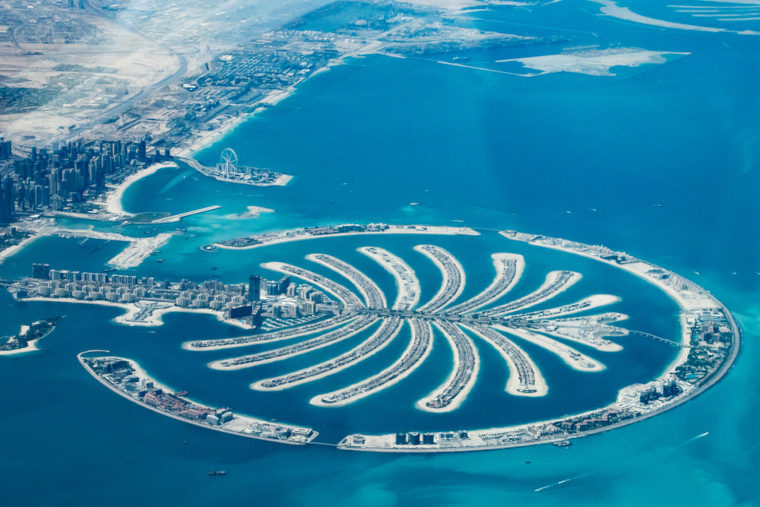 Image source: Andrew Ring / shutterstock.com

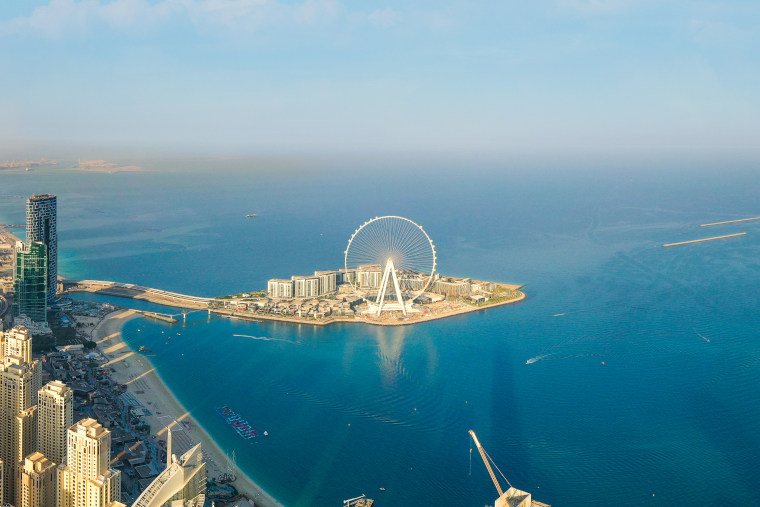 Image source: Captured Blinks / shutterstock.com
 Image source: автор / shutterstock.com