Oil in Dubai: Production Volumes, Reserves, and Economic Significance
Save the article:
What is this about? Oil in Dubai played a key role in the historical development of the emirate, providing the financial foundation for large-scale modernization. However, hydrocarbon reserves there are significantly smaller than those of neighboring Abu Dhabi.
How has the economic model changed? The share of the oil and gas sector in Dubai’s GDP has fallen to less than 5%, giving way to tourism, trade, and financial services. Strategic diversification has created a sustainable economy that is largely independent of fluctuations in energy prices.
History of Oil Production in Dubai
In the 1940s, Sheikh Saeed bin Maktoum ruled Dubai. He believed it was important to develop the external economy, and during his reign the port of Dubai became the largest on the coast, while the population increased several times.
Oil had already been discovered in the Persian Gulf, and Dubai’s own field was found in 1966. With the start of extraction and processing, investor interest in Dubai surged, and the influx of foreigners wishing to earn money increased. This led to higher revenues for both the emirate and its population.
Thanks to a more favorable tax policy, Dubai became a magnet for businessmen. The 1990–1991 Gulf War allowed Dubai to earn significant profits from selling various petroleum products to the armed forces of other countries.
In the 1990s, where people now live in luxury, there was an ordinary city with low-rise buildings. It was from that period that the active economic development of the emirate began and has not stopped since — and its strategic advantage lies not even in oil.
Image source: Fredrik Öhlander / unsplash.com
After Sheikh Saeed’s death, the ruling family continued to follow the course he had set, so the emirate’s economic development did not stop.
Volumes and the Significance of Oil for Modern UAE and Dubai
Oil and gas production accounts for roughly one-third of the country’s GDP. This includes oil refining, export of oil and gas, sales of petroleum products, etc. However, natural resources are mainly extracted in the capital emirate of Abu Dhabi, which holds 94% of all known reserves.
As for the share of oil in Dubai, it has only 4% of the reserves. Other emirates have even less “black gold.” That is why, specifically for Dubai, oil extraction and sales contribute only 3–5% of GDP and are not among the main sources of income.
From 2020 to 2022, the government increased production volumes, but then stopped doing so. In November 2022 and May 2023, production was significantly reduced. In August, daily production was 2.896 million barrels of oil. At that level, annual crude oil production was approximately 145 million tonnes, meaning the UAE was displaced from the top 10 oil exporters by other countries such as Brazil, sanctioned Iran, and Kuwait.
As for how much oil the UAE (including Dubai) had in 2023, proven reserves at that time amounted to 111 billion barrels. At the current production rate, this would last for 105 years. While it is a fairly long period, the government ordered a reduction in production volumes and continued exploration for new fields.
Let’s take a look at how the production was reduced.
The leading oil emirate, Abu Dhabi, following Dubai’s example, is actively developing a post-industrial economy. A free-trade zone has been opened, legislation is being liberalized in certain sectors, tourist facilities are being built at a rapid pace, and infrastructure is being developed.
Under Sheikh Mohammed bin Zayed Al Nahyan, a course has been taken toward diversification of both the energy sector and the economy as a whole. A network of solar power plants is being developed, the large-scale Al Barakah nuclear power plant has been launched, and the first driverless taxi in the Emirates is already operating.
From April 2025, the UAE began a planned increase in oil production by 300,000 barrels per day. According to the OPEC+ communiqué, this increase is scheduled to be completed in September 2026.
In addition, OPEC+ countries agreed to extend the overall production level until the end of 2026. Russia, in accordance with its quota, will continue to produce 9.95 million barrels per day (excluding production adjustments).
TASS, citing a source, reported that there are plans for further extension of quotas. Voluntary cuts of 1.65 million b/d initiated by OPEC+ will continue until October 2026. Cuts of 2.2 million b/d were extended until the first quarter of 2025, although originally they were set to expire at the end of 2024.
It is quite possible that Abu Dhabi will repeat Dubai’s success. The emirate receives huge profits from oil, which it invests in diversification. Active construction is underway on Saadiyat and Yas islands, new projects have been launched on Maryah and Reem islands, and construction is underway on a branch of the Guggenheim Museum and the Sheikh Zayed National Museum.
The entire emirate has essentially turned into one giant construction site. In the near future, many facilities will be completed, and people and money will flow there.
Major Oil-Producing Companies of the United Arab Emirates
Extraction and exploration are carried out mainly by three leading joint ventures with the participation of the state company ADNOC.
ZADCO (Zakum Development Company)
This is a joint venture. ADNOC holds 60%, ExxonMobil — 28%, ODCO — 12%. Oil is produced from the Umm Al-Dalkh, Upper Zakum, and Satah fields. In 2010, these fields produced 22.7 million tonnes.
In the long term, annual production at Upper Zakum is planned to increase from 25 million tonnes to 60 million tonnes.
ADMA-OPCO
This joint venture includes ADNOC as well as JODCO, BP, and Total (Western oil companies). Production is carried out at the Umm Shaif and Lower Zakum fields. In 2010, approximately 26 million tonnes were produced annually, with plans to increase volumes to 49 million tonnes and higher.
ADCO (Abu Dhabi Company for Onshore Oil Operations)
The main onshore oil company working with continental fields of the UAE — Asab, Bu Hasa, Sahil, and others. In 2010, the company produced 56.5 million tonnes, although its capacity allowed up to 65 million tonnes per year.
Frequently Asked Questions about Oil in Dubai
What are the main export destinations for oil from Dubai and other emirates?
Almost all oil produced in the UAE is exported. It is transported by sea from terminals located in the Persian Gulf waters off the UAE coast, where major shipping ports are also situated. Tankers deliver “black gold” mainly to Japan, China, India, the USA, European countries, and Asia-Pacific nations.
The UAE produces less natural gas than required for domestic needs, yet some is still exported. The domestic consumption-to-export ratio is approximately 10 : 1.
Image source: freepik / freepik.com
Liquefied natural gas (LNG) is produced by ADNOC LNG from offshore fields in the Persian Gulf. The main buyers are Japan and India, as well as China, Pakistan, and Taiwan.
What did the Emirates and Dubai do before oil was discovered?
Before oil was found in Dubai and the UAE in general, back when the region was partially under British control, the economy was based on pearl diving and fishing. The population lived in extreme poverty — no skyscrapers, just small buildings without electricity or running water.
The emirates were fragmented and dependent on British rulers, so independent economic development and foreign policy were impossible.
How long will the oil reserves in the UAE and particularly in Dubai last?
Although the country is currently developing largely thanks to oil, many believe this cannot last forever — the reserves are expected to begin declining by 2040. The rulers understand the risk of impoverishment, so since the late 20th century they have been thinking about what the economy will rely on when oil runs out.
That is when fabulous tourist cities began to appear. The bet on tourism has paid off: skyscrapers built with oil money now attract over 1.5 million visitors annually.
Oil currently accounts for 30–35% of the UAE’s GDP, but the plan is to reduce this share to 20% and fill the treasury through tourism, services, trade, and financial instruments.
What are the main oil fields in the UAE?
Most of the UAE’s oil reserves are located not in Dubai but offshore in the Persian Gulf, which has a major impact on the country’s economy.
The largest offshore fields:
Upper Zakum
Umm Shaif
Lower Zakum
Umm Al-Dalkh
Arzanah
The largest onshore fields:
Bu Hasa
Asab
Murban Bab
Sahil
These fields form the backbone of the country’s oil industry.
Abu Dhabi holds the overwhelming majority of reserves and is rightly called the energy heart of the nation. Oil production volumes in Dubai are much more modest, and some emirates have no production at all. The sustainability and stable development of the UAE are the result of thoughtful state policy and competent resource allocation.
In global energy, the UAE oil sector continues to play an important role due to large reserves and well-functioning extraction and export industries.
To remain competitive on the global market, the Emirates are expanding production capacity and developing new technologies. With plans to increase production and exports, the country may soon occupy an even more significant place in the global oil industry.
Which desert surrounds Dubai? Where the desert is located and how to get there? The best places for photo shoots in the desert. Entertainment and activities in the desert. FAQ.
Dubai as a city attractive to crypto investors. Types of crypto banking accounts that can be opened in Dubai. Specifics of cryptocurrency exchange in Dubai. Crypto zones in Dubai. Cryptocurrency regul...
Healthcare in the UAE for foreigners. Medicines prohibited in Dubai. Procedure for importing controlled medicines to Dubai. Medicines available in Dubai pharmacies. Frequently asked questions about me...
Types of educational institutions in Dubai. Popular educational programmes in Dubai. The process of admission to educational institutions. Cost and financing of education in Dubai. List of the best nu...
Barsha Heights Dubai is a district located in the centre of Dubai, offering easy access to the metropolis's business and entertainment establishments. Barsha Heights is not as noisy as Downtown, featu...
Can you use a Russian driving licence in Dubai? How to obtain a driving licence in Dubai? Specifics of obtaining a driving licence in Dubai. Cost of a driving licence in Dubai in 2025. Getting a licen...
General characteristics of the UAE economy. The oil and gas industry as the basis of the economy. Diversification of the economy and key industries. Innovations and digital technologies. Investment en...
A mall in Abu Dhabi, as in other cities, is a large shopping centre that unites dozens and hundreds of boutiques, entertainment venues and business attractions under one roof. The capital of the UAE c...



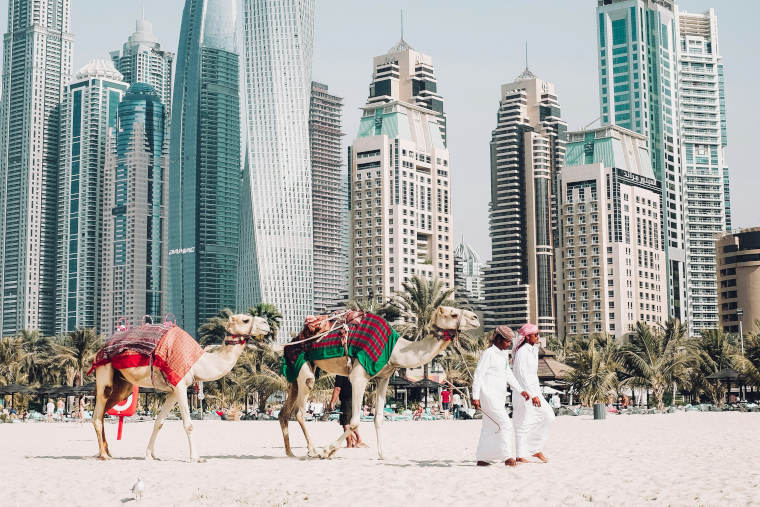 Image source: Fredrik Öhlander / unsplash.com


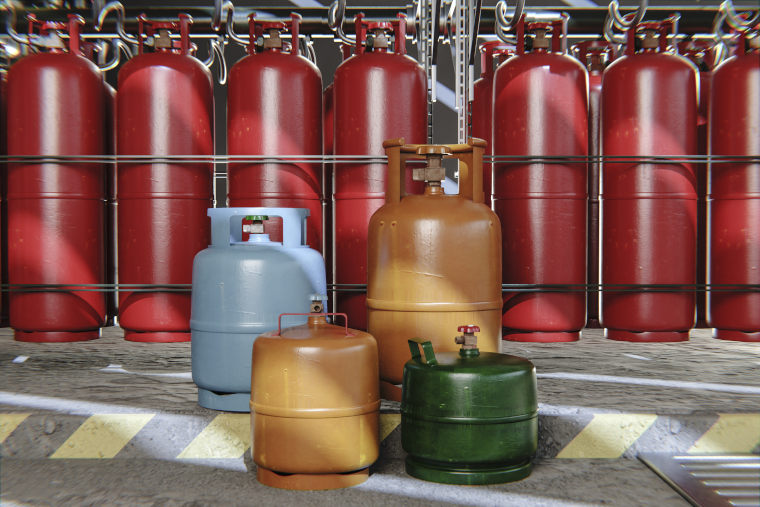 Image source: freepik / freepik.com