What is an emirate? If briefly, it is a region. The United Arab Emirates represents a federal state consisting of seven independent emirates. Each of them retains significant autonomy in internal matters, but transfers some powers to federal authorities.
How is the system structured? The supreme ruler of the country is the emir of Abu Dhabi, and the head of government is the emir of Dubai. Such division of power ensures political stability and consistency of the UAE's economic development.
What is an Emirate
An emirate is what a country governed by an emir is called. It can be either an independent state (for example, Kuwait) or part of an association, a federation of equal states. What are the Arab Emirates? This is the shortened name for the federal state United Arab Emirates (UAE) with its capital Abu Dhabi. It unites seven emirates: Abu Dhabi, Dubai, Fujairah, Sharjah, Ras Al Khaimah, Umm Al Quwain, Ajman.
At the head of each emirate stands its own royal dynasty. The country is headed by a president, who is also the emir of Abu Dhabi. The emir of Dubai performs the duties of prime minister.
Thanks to advertising brochures and videos, we imagine the UAE as a country of luxury, modern skyscrapers, expensive hotels, restaurants, and magnificent beaches. All this is true. But let us consider what the United Arab Emirates is from a socio-demographic point of view.
The native population constitutes a minority — 15%. And it is precisely this category of the country's citizens that enjoys all the benefits and luxury. These are people who are socially secured by right of birth.
The richest regions of the UAE are the emirates of Abu Dhabi, Dubai, and Sharjah. The remaining emirates are far from the enticing advertising pictures in appearance and live ordinary lives. Tourists visit those emirates less frequently, and everyday life there is generally much more modest than in the wealthy emirates.
The majority of the population (85%) are expats from the poorest countries: India, Pakistan, Bangladesh, and the Philippines, attracted by the good wages. These expats perform all the work ensuring a high standard of living for the wealthy.
Life in the other four emirates is more provincial, closer to nature. Everything looks much more ordinary there than in the advertising pictures. Away from the capital's noise, there is also developed tourist infrastructure, and many prefer a calm idyllic holiday away from the centre.
Given this contrast, the tourists have the opportunity to choose the type of vacation they prefer. They can spend time exploring the bustling life of a luxurious metropolis or relax by the ocean and forget all their troubles in the tranquility of nature.
History of the Arab Emirates
In the 7th century, the powerful Arab Caliphate dominated the region. This state captured the lands of local sheikhs and united them under the banner of Islam. This time marks the beginning of the history of Dubai, Sharjah, and Fujairah.
Image source: Pascal van de Vendel / unsplash.com
Centuries passed, and the Caliphate's former influence faded. The forcibly annexed sheikhdoms grew increasingly independent. There were always many claimants to the lands of the Arabian Peninsula. Its history abounds with rises and falls of countless conquerors.
In the 15th century, Portugal, at the time one of the most influential and powerful countries in Europe, arrived there. It controlled the island of Bahrain, the city of Julfar, and the Strait of Hormuz. These Eastern lands experienced a strong cultural influence from Europe.
In the 18th century, competition between Arabs and the British fleet for maritime cargo transportation began, and Great Britain drove local merchants out of the maritime trade routes, depriving the population of its main source of income. The Arabs were attacking East India Company ships, for which the British considered them pirates.
To maintain power, Great Britain established military bases on the peninsula. There was no peace and unity among local princes, and they were unable to organize a unified resistance to the colonizers. However, the presence of invaders could not influence Arab religious and cultural views and traditions. They retained their authenticity, ancient foundations and mentality.
The most numerous people on the peninsula were the Bani Yas, who had lived there since time immemorial and occupied the area of the Liwa and Al Ain oases. At the beginning of the 19th century, the Maktoum family from the Bani Yas tribe left their settled lands and moved to Dubai. Thus arose the Emirate of Dubai, which was ruled by the Maktoum family. Their descendants still govern the emirate today.
In the early 1920s, the peoples of the peninsula began the struggle to liberate themselves from British rule and regain independence. It soon became clear that the peninsula's subsoil contained enormous oil reserves. This made the region potentially very rich, but large-scale development began only in the 1950s. Before this, pearls remained the main export.
British colonisation of the region continued, although changes were already overdue. Oil extraction began, bringing unprecedented profit to the region. In 1964, the League of Arab States declared its right to independence. Four years later, Great Britain announced its decision to send troops, which occurred in 1971.
In December of the same year, a federation of six Arab countries was created — the United Arab Emirates. A year later, the emirate of Ras Al Khaimah joined it.
Since then, the southern coast of the Persian Gulf has significantly changed. Thanks to oil deposits and skilful policy aimed at achieving prosperity, the seven emirates, united under a federation into the single state of the UAE, have become one of the world's richest regions.
Image source: Advantageous Digital / unsplash.com
The federation's economy experienced unprecedented growth and remains one of the strongest in the world. Industry, agriculture, finance, citizens' welfare — everything demonstrates success and stability.
Abu Dhabi, Dubai, Sharjah, Ajman, Fujairah, Ras Al Khaimah, Umm Al Quwain, which are part of the UAE federation, are classical monarchies in their structure. The ruling emir is hereditary and possesses great power. Each of the emirates preserves its cultural and historical characteristics and distinct customs.
The UAE is led by a president, the emir of the largest emirate, Abu Dhabi. The Council of Ministers is the executive body under him. The death penalty is in force in the UAE. The article that stipulated the death penalty for alcohol consumption was recently abolished. Overall, the criminal code is very strict.
In May 2022, emir of Abu Dhabi Mohammed bin Zayed Al Nahyan became president of the UAE. He belongs to the Al Nahyan dynasty, whose members have inherited the throne of the emir of Abu Dhabi for more than 250 years.
Interesting Facts about the Emirates That You Probably Didn't Know
Interesting facts that you most likely didn't know:
Desalinated water is the liquid used today in the UAE for both household and industrial needs. Desalination is an extremely energy-intensive sector of the country's economy.
The country's natural landmark that attracts many tourists is the Wadi Bih canyon in Ras Al Khaimah in the middle of the desert. During the rainy season, it becomes quite dangerous: water rushes into the canyon in a furious stream.
On the territory of Umm Al Quwain there is an uninhabited island of Al Siniyah, surrounded by a warm lagoon. It is a sanctuary of pristine marine life. This unique island is covered in mangroves, and you can admire flocks of flamingos and see entire colonies of cormorants there.
A falcon is depicted on the UAE's currency and coat of arms. This bird is revered in the country. It served the desert dwellers, helping them hunt. Training falcons is an art brought to perfection there. In Abu Dhabi, there is even a special hospital for falcons.
A crocodile skull aged 8 million years was found by scientists in the Al Gharbia desert (Abu Dhabi). This find provided a glimpse into the history of the peninsula, which was then incredibly rich in natural resources.
The smallest emirate of the UAE is Ajman. It is a true paradise: beaches, palm trees, sea. The locals are incredibly welcoming, and the hotels are cozy.
The United Arab Emirates is a tourist paradise. The country possesses both natural and man-made treasures that are truly breathtaking. Each time you visit the UAE, you discover new unique landmarks.
Meaning of the Names of the Arab Emirates
Abu Dhabi — ابوظبي
Abu Dhabi translated from Arabic means “father of the gazelle”. The name comes from an 18th-century legend. There was a hunter who wounded a dhabi (gazelle). He chased after the animal, got lost and died of thirst. His body was found, and not too far from it there was a spring, which was named Abu Dhabi. It still exists to this day.
Image source: shahd / unsplash.com
“Abu” also means “father” and “rich”. According to another version of the legend, people discovered the spring while observing gazelles; so the name of the emirate may also mean “a place of many gazelles”.
Dubai — دبي
The word “dubai” is a diminutive of “dibba”, which means “locust”. Since this territory was home to countless locusts, the emirate was named after this insect. There is a district in the city called Bur Dubai, which translates as “locust well”, and the name of the Dubai district Deira means "district, settlement."
Sharjah — الشارقة
“Sharjah” means “rising sun”. Arabs pronounce it as “sharqa”. Two hundred years BCE, the Greek scholar Ptolemy marked this name on a map.
Ajman — عجمان
According to one version, this is the name of a valiant tribe of warriors. According to another, “ajm” translates as “non-Arabs”, “Persians”, “foreigners”, that is, “unfriendly, non-Arab place”.
Umm Al Quwain — ام القيوين
Umm Al Quwain means “place of two lowlands” in the local dialect, which perfectly matches the geological landscape of the peninsula and the city itself.
Ras Al Khaimah — رأس الخيمة
According to a legend, the local ruler pitched a tent on the top of a cape, visible from afar. “Ras Al Khaimah” means “top of the tent”. They say the Queen of Sheba herself stopped there for the night.
Fujairah — الفجيرة
Most likely, the name comes from “fajara” (“to gush, to overflow”).
The emirate is indeed home to the famous Fujairah spring, which has provided water to people since ancient times. Several settlements drew water from it.
Frequently Asked Questions about the Emirates
What does the UAE flag mean?
The symbolism of the UAE flag corresponds to the national idea of the country. Red, black, white, green are the colours of eras and ruling families. The vertical red stripe at the flagpole means unity (a symbol of the Islamist movement).
The lower horizontal black stripe is a symbol of the Prophet Mohammed and wealth. The white stripe means neutrality and is also the colour of the ancient state of the Umayyad Caliphate (661–750). The green stripe is the universally accepted colour of Islam, and also the colour of the Fatimid dynasty.
What is the climate like in the UAE?
The climate is typical of a desert at tropical latitudes. It is very hot and dry most of the year, with sandstorms. Summer temperatures in the desert reach 50–55 degrees Celsius. Along the coast, they reach 40–42 degrees Celsius.
Image source: safa _made / unsplash.com
The Russian summer gives an idea of the Arabian winter. Temperatures range from 23–26 degrees Celsius, but sometimes drop to 20 degrees Celsius. The swimming season is year-round: water temperatures in the Persian Gulf reach 36-38 degrees Celsius.
Is it possible to obtain citizenship of the United Arab Emirates?
UAE citizens may be envied in many respects. They enjoy free healthcare and education, even if they seek treatment or study abroad. With 20 years of work experience, they retire at 49. 170 countries accept UAE citizens visa-free.
The rules for obtaining UAE citizenship are set out in the laws Federal Law 17 (1972) “On Nationality and Passports”, Federal Law 10 (1975) “Amendments to Federal Law 17 of 1972”, Federal Decree-Law No. 16 (2017) “Amendments to Federal Law 17 of 1972”. UAE citizenship can be obtained by investors, professionals, and individuals with exceptional talents.
While in the 1970s the Emirates relied solely on pearl diving, today the country boasts one of the most developed economies and a high standard of living. The UAE continues to build and develop at a rapid pace. A visit to the United Arab Emirates will be a treat for any tourist.
Article header image source: Sahil ibn Sarafudeen / unsplash.com
The History of Bluewaters Dubai. Advantages and Infrastructure of Bluewaters Dubai. Entertainment at Bluewaters Dubai. Investment Appeal of Bluewaters Dubai. Frequently Asked Questions about Bluewater...
Specifics of property rights types in the UAE. What is freehold? What is leasehold? Usufruct and musataha. Pros and cons of different forms of ownership in the UAE. Frequently asked questions about ty...
Advantages of Dubai for living and investment. The best business districts of Dubai. Top 3 districts of Dubai for living. Frequently asked questions about Dubai districts.
Dubai as a city attractive to crypto investors. Types of crypto banking accounts that can be opened in Dubai. Specifics of cryptocurrency exchange in Dubai. Crypto zones in Dubai. Cryptocurrency regul...
Shopping centres in Sharjah: are they worth visiting? 5 best shopping centres in Sharjah. 5 tips for shopping in Sharjah. Frequently asked questions about shopping centres in Sharjah.
Does voice communication via messengers work in the UAE? Main telecommunication operators in the UAE. 3 telecommunication operators in the UAE with eSIM support. How to activate an eSIM for communicat...
Specifics of mobile communication in the UAE. Roaming conditions in the UAE from Russian operators. How to activate roaming in the UAE. Alternatives to roaming in the UAE. Frequently asked questions a...
UAE Oil Industry. What makes Arab oil famous? Major oil deposits in the UAE. Current state of the oil and gas industry in the UAE. Frequently asked questions about oil in the UAE.
The official language of the United Arab Emirates. English language in the United Arab Emirates. Useful Arabic phrases for communication in the UAE. Frequently asked questions about the language of th...



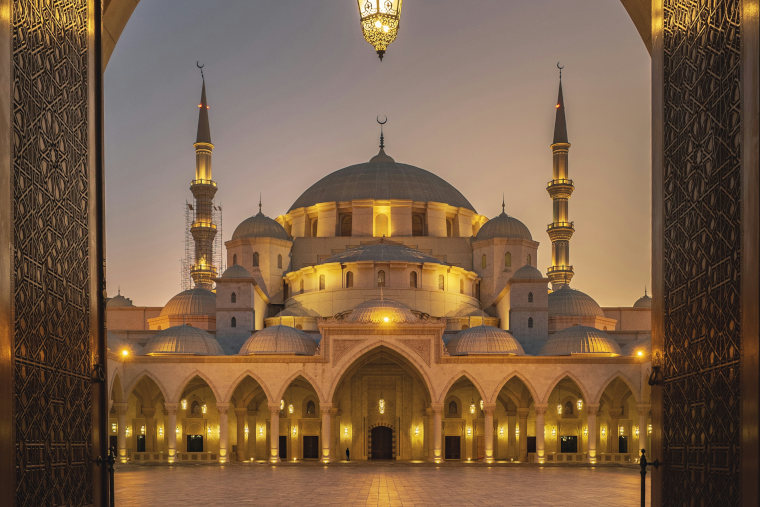 Image source: Pascal van de Vendel / unsplash.com

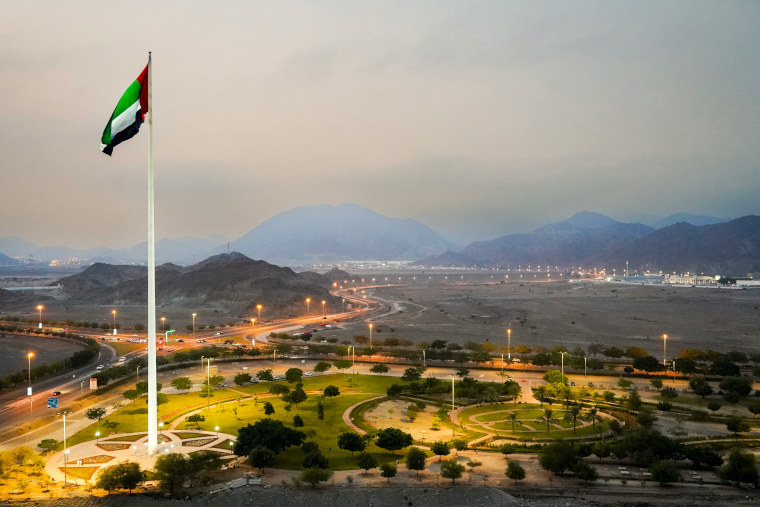 Image source: Advantageous Digital / unsplash.com
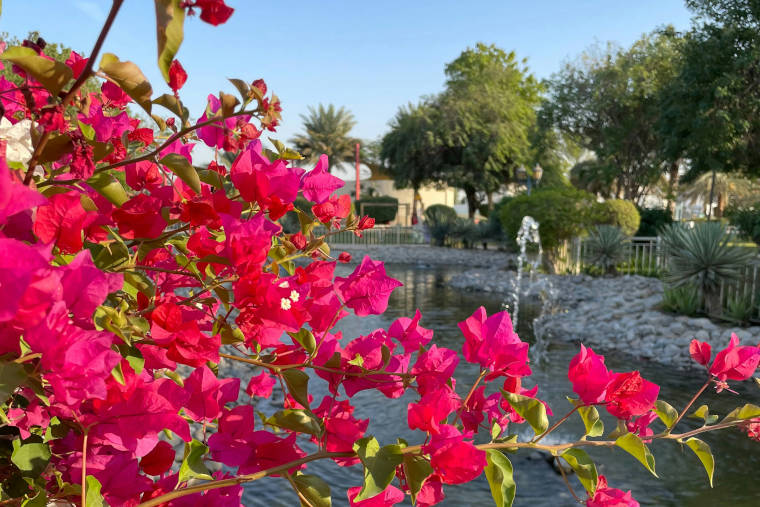 Image source: shahd / unsplash.com

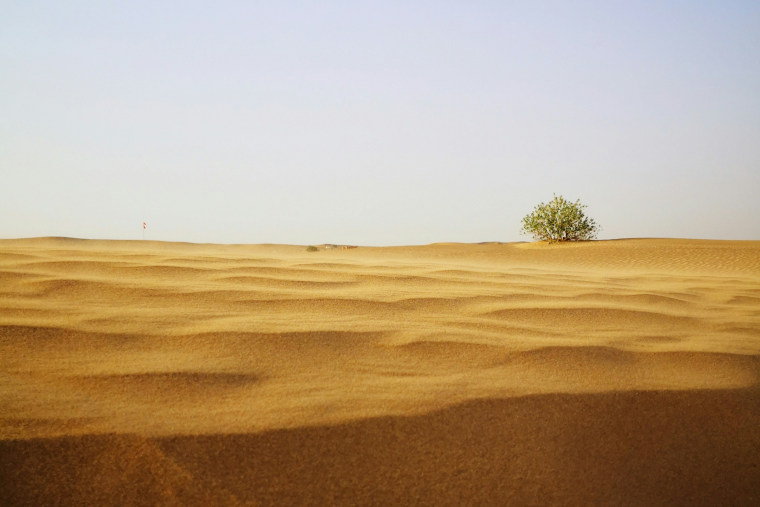 Image source: safa _made / unsplash.com