Home/Cities of the UAE/Mosques in Dubai: A Tourist Guide — Where They are, How to Visit and What You Need to Know
20.05.2026
Cities of the UAE
1010
Reading time: 10 minutes
Mosques in Dubai: A Tourist Guide — Where They are, How to Visit and What You Need to Know
Save the article:
Is it worth going to Dubai for the mosques or are they merely a beautiful backdrop for photographs? Dubai is a city where ultra-modern skyscrapers stand alongside magnificent mosques. Of the emirate's more than 700 mosques, very few are accessible to non-Muslims. This article will tell you which places you can actually visit, how to get there, and what you need to know in advance.
Who will find this information particularly useful? Those visiting the UAE for the first time who want to experience Islamic architecture without making any mistakes. You will learn about dress-code requirements, opening hours, route options and practical tips to ensure your visit goes smoothly.
How Many Mosques are There in Dubai and Which Ones are Open to Tourists
Dubai has more than 700 mosques. The majority are intended exclusively for worshippers — non-Muslims are not permitted to enter. Only a handful of them offer non-Muslims the opportunity to experience Eastern religious culture from the inside. Mosques are just as integral a part of the city as the skyscrapers, the beach and the Gold Souk.
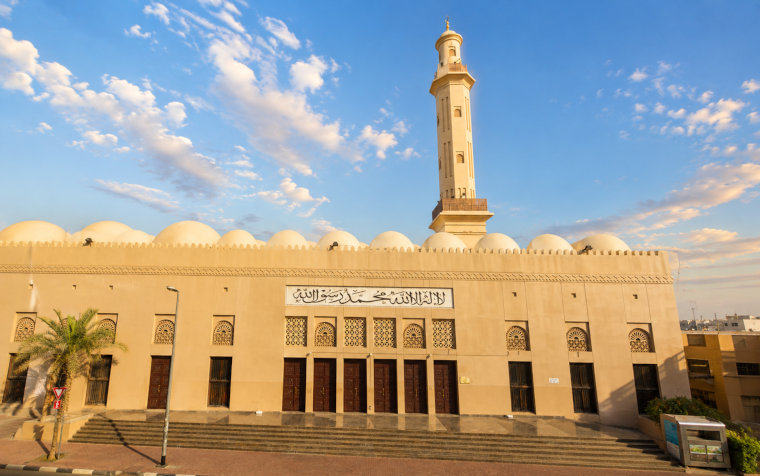
Jumeirah Mosque is officially open to tourists and accepts organised tours for guests of any faith. The Grand Mosque of Dubai is one of the oldest in the city — an active place of worship in the historic Bur Dubai district, close to the Dubai Museum.
The building has 45 domes and a tall minaret. Tourists can view the façade and courtyard from the outside; access to the interior is restricted, as the mosque is intended primarily for Muslims and worshippers.
The image was generated using AI technologies
Many travellers include Sheikh Zayed Mosque in their itinerary. It is located in the neighbouring emirate of Abu Dhabi, approximately 130 km away from Dubai. This is one of the largest mosques in the world, listed in the Guinness Book of Records. It is open to tourists of all faiths. The majority of UAE tours include it as an essential stop.
Jumeirah Mosque in Dubai: The Main Mosque for Tourists
Jumeirah Mosque is one of the few mosques in Dubai officially open to non-Muslims. Its motto is "Open minds, open doors." The building is admired for its traditional Islamic beauty and is considered one of the city's main attractions.
In the evening the mosque is illuminated — a glowing, snow-white silhouette against the night sky. The best time to photograph it from the outside is at sunset or just after.
History and architecture of Jumeirah Mosque
The mosque was built in the 1970s and rebuilt in 1978. The architectural style is Fatimid Islamic. White marble and stone, two slender minarets and a large central dome create a distinctive silhouette against the urban backdrop. The façade is adorned with carved decorative elements. In front of the entrance is a small pool in which the dome is reflected.
The mosque is among the largest in Dubai. The interior of the prayer hall is captivating — austere and solemn at once. Adjacent to it is a well-kept courtyard, a pleasant place to stroll after the tour. For many travellers, this is their first encounter with Islamic art and the architecture of the modern UAE — a unique experience that is difficult to find in other mosques.
Tours of Jumeirah Mosque: schedule and admission
Tours for non-Muslims are held according to a set schedule. These are usually morning sessions from Saturday to Thursday — Friday is excluded as the day of prayer. The ticket price includes a guided tour, refreshments, and, if necessary, appropriate attire in accordance with the dress code.
Advance booking is recommended, especially during the high season from October to April. Schedules and reservations are available in advance on the mosque's official website.
How to get to Jumeirah Mosque
The mosque is located on Jumeirah Beach Road, in the Jumeirah district — the address is easy to find on a map. From the city centre it takes approximately 15–20 minutes by taxi. It is also possible to get there by bus, though the route may require transfers. Tourists staying in hotels in the Jumeirah area or in Dubai Marina often make the journey by taxi in 10–15 minutes. The Jumeirah Beach Hotel serves as a useful landmark.
Sheikh Zayed Mosque in Abu Dhabi: The Most Famous Mosque in the Region
Sheikh Zayed Grand Mosque is located in Abu Dhabi, approximately 130–140 away km from the centre of Dubai. The journey takes around 1.5 hours. Entry for tourists is free and the mosque is open to visitors of all faiths.
It is one of the largest mosques in the world and the main attraction of the UAE capital — its splendour draws millions of travellers every year. At night the mosque is particularly breathtaking: the snow-white domes glow in the darkness like a fairytale palace.
History of construction
The mosque is named after the founder of the UAE — Sheikh Zayed bin Sultan Al Nahyan. His mausoleum stands nearby. Construction took more than ten years and the mosque was inaugurated during the month of Ramadan. The cost of construction exceeded 600 million euros. Craftsmen from Italy, Germany, Morocco, India, Iran and other countries took part in the construction.
Architecture and records
The entire building is clad in high-quality white marble. Eighty domes, four minarets approximately 115 metres tall, more than a thousand marble columns. The inner courtyard, covering approximately 17,000 sq m, is laid with a mosaic of floral patterns made from different varieties of marble.
Image source: Sheila C / unsplash.com
Fountains in the courtyard complete the composition — their reflection in the polished floor creates a special atmosphere. The décor incorporates 24-karat gold, lapis lazuli, amethysts, natural pearls and rock crystal.
The mosque impresses with its scale and detail. Several achievements are listed in the Guinness Book of Records: one of the world's largest carpets and one of the world's largest chandeliers.
The prayer hall: carpet, chandeliers and the Qibla wall
The main prayer hall accommodates thousands of worshippers. The carpet, covering 5,627 sq m and weighing 47 tonnes, was created by 1,200 weavers and contains more than two million knots. Seven gilded chandeliers were crafted in Germany: the largest is approximately 10 metres in diameter and approximately 15 metres in height.
The Qibla wall — 23 metres tall and 50 metres wide — is decorated with the 99 names of Allah, rendered in Quranic verses in Kufic calligraphy.
How to get from Dubai to Sheikh Zayed Mosque
The distance from the centre of Dubai is approximately 130–140 km. There is no direct public transport, so it is worth selecting a convenient mode of travel in advance.
Taxi — approximately 1.5 hours in transit; convenient for a small group.
Shuttle — booked in advance, with the driver meeting you at your chosen location.
Car hire — the most flexible option: roads are excellent and navigation is straightforward.
Excursion from Dubai — includes transport, a guide and other Abu Dhabi attractions.
It is best to allow a full day for the trip — factoring in the journey and the visit itself.
Dress Code and Rules of Conduct in UAE Mosques
The clothing requirements are the same for all mosques in the UAE. Shoulders and knees must be covered. Shorts, vest tops, beachwear and form-fitting clothing are prohibited. Shoes are removed before entry, so flip-flops are the most practical option.
Loud conversation, embracing and kissing on mosque grounds are prohibited. During prayer times, tourists are asked to leave the prayer hall. Women are required to cover their heads with a scarf or shawl.
Below is a summary table of requirements by visitor category.
Who
Clothing requirements
Note
Men
Long trousers, a sleeved shirt, closed shoes or socks
Shorts and vest tops are not permitted
Women
Covered shoulders and knees, head scarf, loose-fitting clothing
An abaya and scarf are provided at the entrance if required
Children
The same requirements as for adults
Children are permitted; quiet behaviour is recommended
Important! Failure to comply with the dress code is grounds for refusal of entry. It is better to check your clothing in advance rather than at the mosque gates.
At Sheikh Zayed Mosque and Jumeirah Mosque, staff at the entrance will provide a shawl or scarf if needed. Nevertheless, it is better to arrive already prepared — this will save time and spare you unnecessary inconvenience.
Practical Information and Excursions
Opening hours and visiting conditions vary for each site. Jumeirah Mosque admits tourists according to a set schedule during morning hours from Saturday to Thursday — admission is paid and advance booking is recommended.
Sheikh Zayed Mosque is open daily and admission is free; however, it is closed to visitors during the five obligatory prayer times. On Fridays a special schedule applies. Visiting on weekdays is preferable, as the number of tourists is noticeably lower.
Below is a comparison table for the three main mosques.
Mosque
Opening hours
Admission
For tourists
Note
Jumeirah Mosque
Sat–Thu, morning hours
Paid
Open, guided tour
Advance booking recommended
Sheikh Zayed Mosque
Daily, except during prayer times
Free
Open to all
Special schedule on Fridays
Grand Mosque of Dubai
No restrictions outside
Free (outside)
Outside — freely accessible
Internal access is restricted
For those who prefer an organised format, group and individual tours are available, some of which are conducted in Russian. Day trips from Dubai to Abu Dhabi typically include Sheikh Zayed Mosque, Qasr Al Watan palace and the Corniche waterfront — a full-day itinerary that allows you to appreciate the character and grandeur of the UAE capital.
During the high season — from October to April — places fill up quickly, so it is best to book well in advance. Popular routes often also include walks through historic neighbourhoods and a visit to the local bazaar — for souvenirs and atmosphere.
Conclusion
The mosques of Dubai and Abu Dhabi are more than religious sites; they are architectural masterpieces in the very heart of the United Arab Emirates, open to tourists from all over the world. Jumeirah Mosque offers the opportunity to admire traditional Islamic architecture and learn about UAE customs right in Dubai.
Sheikh Zayed Mosque in Abu Dhabi is worth a dedicated trip — its splendour leaves an unforgettable impression that stays with you long afterwards.
Preparing properly takes minimal effort: suitable clothing, advance booking and an understanding of the schedule, and your visit should proceed without any difficulties. The United Arab Emirates welcomes tourists openly; it is enough to show respect for local traditions.
Frequently Asked Questions
Can non-Muslims enter a mosque in Dubai?
Yes, but only Jumeirah Mosque — it is officially open to tourists of any faith. All other mosques in Dubai are closed to non-Muslims. Sheikh Zayed Mosque in Abu Dhabi also admits all visitors.
Is it necessary to book a visit to Jumeirah Mosque in advance?
Advance reservation is strongly recommended. During the high season — from October to April — places are taken quickly. Tours are held according to a set schedule during morning hours from Saturday to Thursday.
What should a woman wear when visiting a mosque in the UAE?
Clothing must cover the shoulders, arms and knees. A head covering is mandatory. At the entrance to Jumeirah Mosque and Sheikh Zayed Mosque, an abaya and scarf are provided if needed. It is better to arrive already wearing appropriate clothing — this will save you from waiting at the desk.
How long does the journey from Dubai to Sheikh Zayed Mosque take?
The journey one way takes approximately 1.5 hours. It is worth setting aside a full day for the trip, taking into account travel in both directions, the visit to the mosque itself, and, if desired, other attractions in Abu Dhabi.
Is entry to Sheikh Zayed Mosque paid?
No. Entry for tourists is free. The mosque is open daily, except during the five obligatory prayer times. On Fridays a special schedule applies — it is best to check the timetable in advance.
Can children visit the mosque?
Yes, children are permitted at Jumeirah Mosque and Sheikh Zayed Mosque. Dress-code requirements apply to them as well. Inside, quiet behaviour is expected.
Article header image source: Bo Zhang / unsplash.com
Can you use a Russian driving licence in Dubai? How to obtain a driving licence in Dubai? Specifics of obtaining a driving licence in Dubai. Cost of a driving licence in Dubai in 2025. Getting a licen...
How many airports are there in Dubai? Dubai International Airport. Al Maktoum Airport in Dubai. Choosing an airport in Dubai. Services at Dubai airports. Useful tips on choosing Dubai airport. Frequen...
General situation regarding safety in the UAE for tourists. Safety of women in the UAE. Rules of conduct for tourists in the UAE. How safe is public transport in the UAE for tourists? What is prohibit...
Salalah: location and when to visit. How to get to and where to stay in Salalah? What to see and do in Salalah? What to eat and what to bring back from Salalah? Tips for tourists: safety and rules of ...
Oman as a beach holiday destination: everything you need to know. The best seaside resorts in Oman. Comparing resorts: how to choose based on your priorities. Oman hotels and holiday budget. Frequentl...
The Arabian Peninsula before the formation of the Saudi state. The first and second Saudi states. The creation of the modern Kingdom of Saudi Arabia. The development of Saudi Arabia in the 20th–21st c...
Types of Dubai visas. Entry rules to Dubai from Russia. The process of passing passport control. Dubai residence visa requirements. Frequently asked questions about the need for a Dubai visa.



 The image was generated using AI technologies

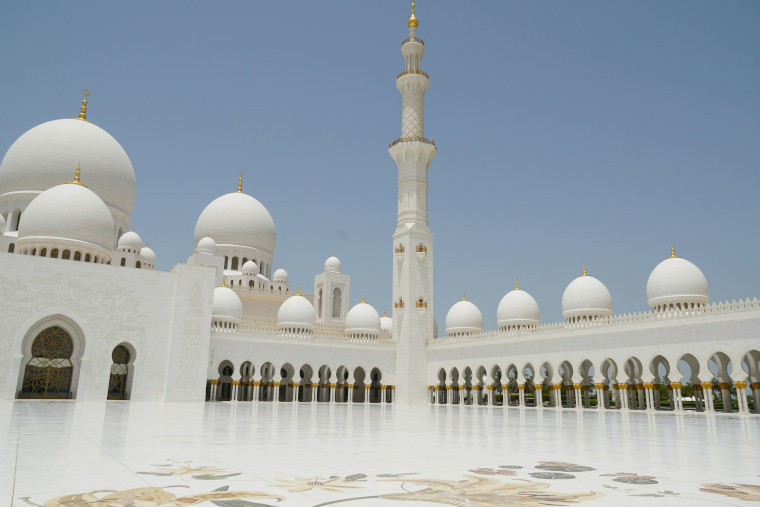 Image source: Sheila C / unsplash.com