Home/Cities of the UAE/Sheikh Zayed Grand Mosque in Abu Dhabi: Visiting Rules and Dress Code
04.05.2026
Cities of the UAE
1219
Reading time: 12 minutes
Sheikh Zayed Grand Mosque in Abu Dhabi: Visiting Rules and Dress Code
Save the article:
Are you planning to visit Sheikh Zayed Grand Mosque in Abu Dhabi but worried about how to behave and what to wear? These concerns are entirely natural — the white mosque in Abu Dhabi is not only the UAE's foremost tourist attraction, but also a functioning religious centre with strict visiting rules. Many tourists feel uncertain before visiting a sacred site, fearing they might violate Islamic traditions or appear disrespectful towards the local culture.
What do you need to know to make your visit to the mosque in Abu Dhabi an unforgettable and comfortable experience? In this article, you will find comprehensive information about the rules for visiting the mosque in Abu Dhabi, a detailed dress code with specific clothing examples, a step-by-step plan for exploring the mosque, and practical photography tips. We will explain how to dress for Sheikh Zayed Grand Mosque, which rules of conduct to follow, what time is best to visit in order to avoid crowds, and share insider tips that will help you fully immerse yourself in the atmosphere of this architectural masterpiece.
Sheikh Zayed Grand Mosque: The Main Attraction of Abu Dhabi
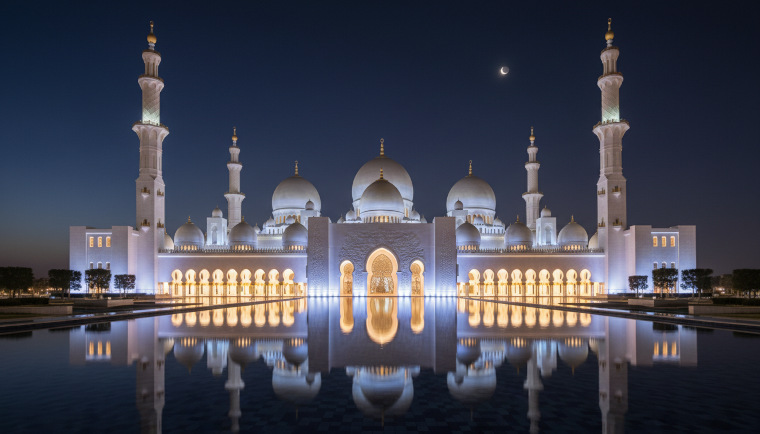
Sheikh Zayed Grand Mosque is rightly considered an architectural masterpiece of the 21st century and the main symbol of the United Arab Emirates. This magnificent structure, whose construction lasted 11 years from 1996 to 2007, combines the finest traditions of Islamic architecture with modern technology. The white mosque has become not only the spiritual centre of the emirate, but also one of the most visited tourist attractions in the world.
The history behind the architectural masterpiece
The idea for the construction belonged to the first President of the UAE, Sheikh Zayed bin Sultan Al Nahyan, after whom the mosque is named. The project was developed by an international team of architects led by Syrian architect Youssef Abdelke. Masters from 38 countries took part in the construction, symbolising Islam's unifying power and the UAE's openness to the world.
Only the finest materials were used to create this architectural wonder: white marble from Macedonia, semi-precious stones from India, and gold and silver for the decorative elements. The total cost of the project amounted to more than 545 million US dollars, making it one of the most expensive mosques in the world.
Records and unique features
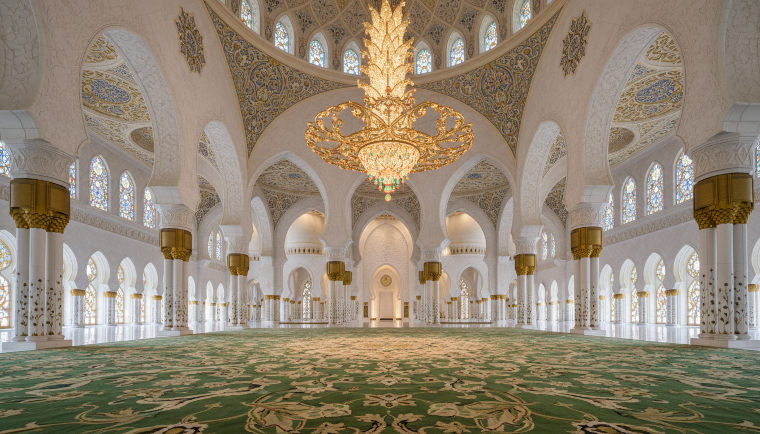
The largest mosque in the capital of the UAE has entered the Guinness Book of Records in several categories. The main hall is adorned with the world's largest hand-knotted carpet, covering an area of 5,627 square metres and weighing 47 tonnes. It was created by 1,200 craftsmen from Iran over the course of two years, using the finest New Zealand wool and Iranian silk.
The image was generated using AI technologies
Seven chandeliers featuring Swarovski crystals have also set world records. The central chandelier weighs 12 tonnes, measures 10 metres in diameter and 15 metres in height, is decorated with millions of crystals, and is coated in 24-karat gold. The mosque's lighting system can produce a variety of colour effects, reflecting the phases of the moon and different periods of the day.
Architectural features and dimensions
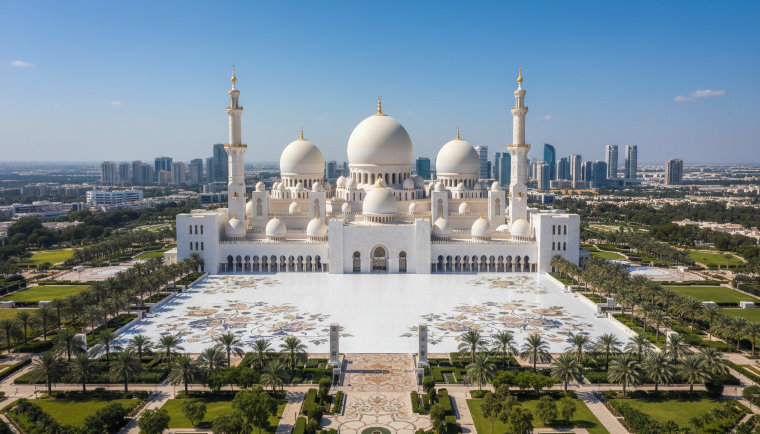
The Sheikh Zayed Grand Mosque is staggering in its scale: the complex is 290 metres long and 420 metres wide. The mosque can accommodate up to 55,000 worshippers simultaneously: 9,000 in the main hall, 1,500 in the women's section, and 44,500 in the outdoor areas. The architectural ensemble includes 82 domes of varying sizes, the largest of which reaches 85 metres in diameter.
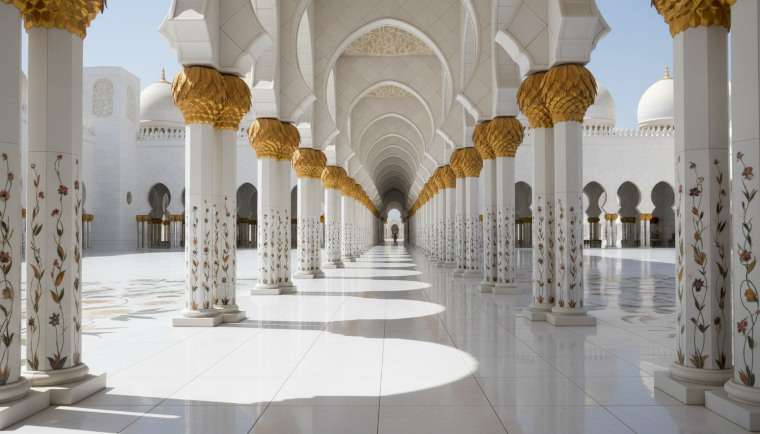
Four minarets, each 107 metres tall, are decorated with traditional Islamic ornamentation and are visible from any point in the capital. More than 1,000 white marble columns support the structure, each inlaid with semi-precious stones — lapis lazuli, amethyst, red jasper, and mother-of-pearl.
Symbolic significance and cultural role
Sheikh Zayed Grand Mosque symbolises the UAE's tolerance and openness to the world. It is the only mosque in the country officially open to visitors of all faiths. More than 5 million tourists from 200 countries visit it annually, making it one of the most popular tourist destinations in the Middle East.
The mosque's architecture combines elements from various Islamic schools: the Mamluk, Ottoman, and Fatimid traditions. The white colour of the marble symbolises purity and peace, while the use of natural materials underscores the connection with nature — something of particular importance in Islamic culture. Many guides note that visiting this sacred place leaves an indelible impression on tourists.
Engineering solutions and technologies
Innovative technologies were employed during construction to protect against sandstorms and the extreme temperatures of the desert. The air-conditioning system is capable of maintaining a comfortable indoor temperature even when the outside temperature reaches 50°C. A special coating on the marble protects it from fading and preserves its snow-white colour for decades.
A unique acoustic system allows everyone inside the mosque to hear the imam without the use of loudspeakers. The reflective surfaces of the domes and the specially designed shape of the columns create ideal acoustics for prayers and the recitation of the Quran.
Tour guides often recount that tourists from Dubai and other UAE cities make special trips to experience this acoustic wonder. Visitors are also captivated by the architecture of the interior spaces, where every element has been thought through to the finest detail. Professional guides lead tours, explaining the features of this grand architectural complex, which attracts a great many pilgrims and tourists.
Visiting Rules and Dress Code
Visiting Sheikh Zayed Grand Mosque requires strict adherence to Islamic traditions and the dress code. The rules for visiting the mosque in Abu Dhabi apply to all tourists regardless of their religious affiliation and are in effect year-round. Violation of the clothing requirements may result in being denied entry, so it is important to prepare for your visit in advance.
Dress code for women: detailed requirements
The dress code for the mosque in Abu Dhabi is at its most strict for women. Clothing must be modest and loose-fitting, fully covering the body from the wrists to the ankles. Wearing a hijab or headscarf is mandatory; it must cover the hair, neck, and neckline. The scarf may be tied under the chin or secured with pins.
Tight-fitted clothing, sheer fabrics, low necklines, and short sleeves are prohibited. Trousers must be long and loose, and skirts must be maxi-length. Any footwear is permitted, but it must be removed before entering the prayer hall. Make-up should be modest — bright lip colours and eye shadow are discouraged.
Requirements for men's clothing
How to dress for the mosque in Abu Dhabi: the rules for men's attire are less strict but nonetheless obligatory. Clothing must cover the body from the shoulders to the ankles. Long trousers and long-sleeved shirts are permitted. Shorts, vests, T-shirts, and open-toed footwear are strictly prohibited.
A head covering is not required for men, but a traditional kufiya or a simple cap is welcome. Clothing must be clean and presentable; light colours are preferred. Jeans are acceptable provided they are not too tight and have no tears or worn patches.
Where to obtain traditional clothing
A free traditional clothing distribution point operates at the mosque entrance for tourists. Women are provided with long abayas (black robes) and hijabs in various sizes. Men may obtain long dishdasha shirts if their clothing does not meet the requirements.
Clothing for the mosque in Abu Dhabi is issued upon presentation of an identity document. Items must be returned upon exit in the same condition. It is advisable to arrive dressed appropriately, as queues for traditional garments can be lengthy, especially during peak hours.
Rules of conduct inside the mosque
Strict rules of conduct, based on Islamic traditions, apply inside the mosque. Conversation should be quiet and respectful; loud talking and laughter are not permitted. It is not acceptable to point a finger at architectural elements or people — an open palm should be used instead.
Touching the Quran and religious items is forbidden, as is sitting or lying on the carpets in the prayer area. Women and men should maintain a distance from one another. Shoes must be removed when walking through the space, and visitors should move across the marble floor barefoot or in socks.
Photography and restrictions
Photography inside Sheikh Zayed Grand Mosque is permitted in most areas, but with important restrictions. Architecture, interiors, chandeliers, and carpets may all be photographed. Selfies and group photos are permitted in specially designated areas marked with appropriate signage.
The image was generated using AI technologies
It is strictly forbidden to photograph people at prayer, religious ceremonies, or mosque staff without their consent. Flash and tripods may not be used. Drone photography is prohibited throughout the entire grounds. Commercial photography requires special permission from the administration.
Conduct during prayers
During the five daily prayers, tourist access to the main prayer hall is restricted. Prayer times vary according to the season: Fajr (dawn), Dhuhr (midday), Asr (afternoon), Maghrib (sunset), Isha (night). The schedule is posted at the entrance and updated monthly.
Tourists may observe prayers from specially designated viewing areas, maintaining complete silence. Walking in front of those praying, talking, or taking photographs are not permitted. Mobile phones must be set to silent mode. After the prayer concludes, access to the hall resumes after 10–15 minutes.
Practical tips for a comfortable visit
Plan your visit for early morning or late evening, when the temperature is more comfortable, and ensure your clothing is made from natural, breathable fabrics. Bring socks, as walking barefoot on marble can be uncomfortable. A small bag or rucksack is permitted but will be subject to inspection at the entrance.
Study the mosque's layout in advance to make the most of your visit. Toilets and ablution facilities are located in separate buildings near the main entrance. Drinking water is available free of charge at several points throughout the complex.
Practical Information for Visitors
Sheikh Zayed Grand Mosque is open to visitors daily from 9:00 AM to 10:00 PM, and entry is completely free for all tourists. However, it is important to bear in mind the prayer periods, during which access to the prayer halls is temporarily restricted — this typically occurs five times a day for 30–45 minutes.
If you plan on visiting the mosque in Abu Dhabi, check the prayer timetable on the official website in advance to avoid disappointment.
Opening hours and time restrictions
The white mosque operates without days off, but its schedule may be adjusted on religious holidays. Prayer times vary according to the season: morning prayer (Fajr) begins at dawn, midday prayer (Dhuhr) at noon, afternoon prayer (Asr) in the second half of the day, evening prayer (Maghrib) at sunset, and night prayer (Isha) after sundown. On Fridays from 11:30 AM to 3:00 PM, the mosque is closed to tourists due to Jumu'ah — the main weekly prayer.
The image was generated using AI technologies
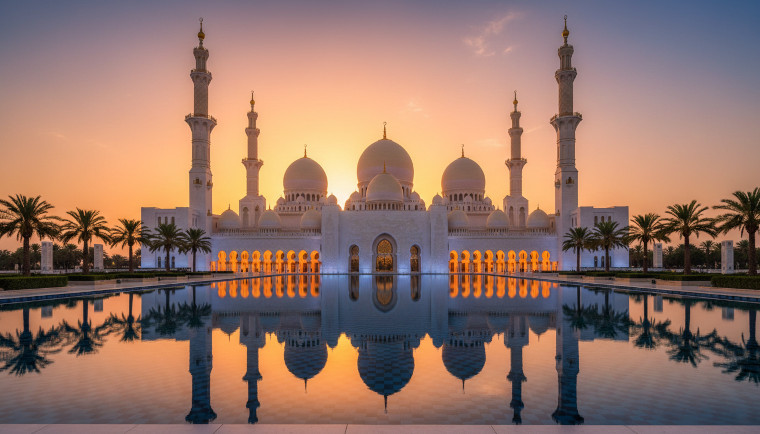
The best time for a photo session is the hour before sunset, when the white walls of the mosque take on a golden hue, and the evening hours after 7:00 PM, when the architectural illumination is switched on. For a peaceful visit without crowds of tourists, it is recommended to arrive on weekdays in the morning before 11:00 AM or after 8:00 PM.
How to get there from Dubai
The distance from Dubai to the mosque is approximately 150 kilometres; the journey by car or taxi takes 1.5–2 hours depending on traffic. A taxi from the centre of Dubai costs 300–400 dirhams one way, which makes this option quite expensive for budget travellers.
A more budget-friendly option is the flydubai bus service, which runs between Dubai and Abu Dhabi airports several times a day. A ticket costs approximately 25 dirhams, but an additional journey by public transport or taxi from the bus station to the mosque will be required.
Many tourists opt for organised tours from Dubai costing 200–300 dirhams per person, which include a transfer and the services of a guide.
Transport within Abu Dhabi
If you are staying in Abu Dhabi, you can reach the mosque by bus No. 54, which departs from the central bus station every 15–20 minutes. The journey takes approximately 45 minutes, and the ticket costs 2 dirhams when paid with a Hafilat card. The bus stops directly at the mosque entrance, which is very convenient for tourists with children or elderly visitors.
A taxi from the centre of Abu Dhabi to the mosque will cost 40–60 dirhams, and the journey takes 20–30 minutes depending on traffic conditions. The popular Careem and Uber apps operate in the city around the clock and frequently offer more competitive fares than street taxis.
Duration of visit and guided tours
It is best to allow 2–3 hours for a thorough visit to the mosque — this will give you enough time to walk through all accessible areas, take photographs, and soak up the atmosphere of this sacred place. The mosque grounds are quite extensive, encompassing several courtyards, galleries, and viewing areas, so a hurried visit will not give a full impression of the grandeur of the architectural complex.
The mosque offers free guided tours in English and Arabic, held daily at 10:00 AM, 11:00 AM, 5:00 PM, and 7:00 PM. Tours last 45–60 minutes, and groups assemble at the main entrance 15 minutes before the start. Audio guides are available in 13 languages, including Russian, and may be obtained free of charge upon presentation of an identity document at the information centre.
For a deeper understanding of Islamic architecture and the history of the mosque, it is recommended to use the Sheikh Zayed Grand Mosque mobile application, which contains interactive maps, audio commentary, and additional information about the decorative artistic elements.
The application works in offline mode and greatly enriches the experience of the visit. Specialised tours for groups and individual tours with professional guides are also available upon prior booking.
What Else to See in Abu Dhabi
A visit to Sheikh Zayed Grand Mosque will be even more memorable if combined with a tour of other iconic attractions in Abu Dhabi. The capital of the UAE offers a unique blend of cultural, historical, and entertainment destinations that ideally complement the spiritual experience of visiting the emirate's main mosque.
Qasr Al Watan Palace: the rulers' residence
Qasr Al Watan Palace is an active presidential residence that has been open to tourist visits since 2019. This architectural masterpiece in the traditional Arabian style is breathtaking in scale — the complex covers an area of 380,000 square metres. Inside the palace, visitors can view a collection of rare manuscripts and historical artefacts, and learn about the UAE's political system through interactive exhibitions.
The Grand Hall, with its 60-metre dome adorned with Swarovski crystals, deserves special attention. The Palace in Motion evening light show transforms the visit into an unforgettable spectacle.
Louvre Abu Dhabi: art beneath a starlit dome
The Louvre Abu Dhabi museum, which opened in 2017, became the first universal museum on the Arabian Peninsula. The famous dome, 180 metres in diameter, creates a unique interplay of light that evokes the palm groves of an oasis. The museum's collection spans works from ancient civilisations to contemporary art, including pieces by Picasso, Monet, and da Vinci.
The museum is located on Saadiyat Island, making it possible to combine a cultural programme with a day at the beach. It is recommended to allow at least 3–4 hours for the visit.
Emirates Palace: luxury in the Arabian style
The Emirates Palace hotel is considered one of the most luxurious in the world and is a true palace complete with gilded domes and marble columns. Even if you are not staying at the hotel, it is worth visiting to admire the interiors and sample the famous gold-infused coffee at Le Café.
The hotel's grounds include a private beach stretching 1.3 km and gardens covering 85 hectares. A photo session against the backdrop of the golden domes makes a wonderful addition to photographs taken at the mosque.
Yas Island: world-class entertainment
Yas Island offers a contrast to the spiritual impressions of the mosque — it is home to world-class theme parks. Ferrari World Abu Dhabi is renowned for the Formula Rossa roller coaster, the world's fastest, which accelerates to 240 km/h. Yas Waterworld offers water rides, whilst Warner Bros. World offers encounters with beloved cartoon characters.
The island is also home to the Yas Marina Circuit Formula 1 track, where the Abu Dhabi Grand Prix is held annually.
Combined sightseeing programmes
Many tour operators offer combined excursions that include a visit to the mosque alongside other attractions. The popular "Cultural Abu Dhabi" route combines Sheikh Zayed Grand Mosque, Qasr Al Watan Palace, and the Louvre Abu Dhabi in a single day. For families with children, the "Mosque + Yas Island" programme is ideal, combining spiritual and entertainment experiences.
Do you know how many mosques there are in Abu Dhabi? More than 200 mosques, but Sheikh Zayed Grand Mosque remains the foremost attraction for tourists, making a perfect complement to a cultural programme exploring the capital of the UAE.
Frequently Asked Questions
How much does entry to Sheikh Zayed Grand Mosque cost?
Entry to Sheikh Zayed Grand Mosque in Abu Dhabi is completely free for all visitors. No tickets need to be purchased and no prior registration is required — simply arrive during opening hours, from 9:00 AM to 10:00 PM. However, it is worth noting that a small fee may be charged for parking on the mosque grounds. Free admission makes the white mosque in Abu Dhabi accessible to tourists of all budgets.
What should I do if I am not dressed appropriately?
A traditional clothing distribution point operates at the mosque entrance, where women can obtain an abaya free of charge, along with additional coverings. Men are provided with long trousers and long-sleeved shirts if their clothing does not meet the requirements. The entire process takes no more than 10 minutes, but it is better to arrange appropriate clothing in advance.
Bear in mind that the rules for visiting the mosque in Abu Dhabi are strictly enforced, and staff may refuse entry in cases of serious dress-code violations.
Is photography permitted inside the mosque?
Photography inside Sheikh Zayed Grand Mosque is permitted throughout all areas open to tourists, including the main prayer hall and inner courtyards.
The image was generated using AI technologies
Photography is only prohibited during prayer times and in specially marked zones. The use of flash is discouraged out of respect for the sacred place. Selfies and group photos are also permitted, but it is important to remain quiet and avoid disturbing other visitors.
What happens during prayer time?
During the five daily prayer times, tourist access to the main prayer hall is temporarily restricted for 30–45 minutes. During this time, visitors may remain in the outer galleries and courtyards and admire the mosque's architecture. Prayers take place at dawn, midday, in the afternoon, at sunset, and in the evening — the precise timetable changes depending on the season. Visitors are required to maintain complete silence and show respect towards the worshippers.
How long does a visit to the mosque take?
Visiting the mosque in Abu Dhabi takes between 1.5 and 3 hours, depending on your interest in the architecture and photography. A basic tour of the main halls and courtyards can be completed in an hour. Examining the décor in detail, visiting the library, and taking leisurely photographs will require 2–3 hours. It is advisable to allow additional time for possible queues and waiting for prayers to conclude.
What is the best time to visit the mosque?
The optimal time to visit is early morning from 9:00 AM to 11:00 AM or late evening from 7:00 PM to 9:00 PM, when there are fewer tour groups. For photography, the golden hour before sunset is ideal, when the white marble takes on warm tones.
The image was generated using AI technologies
Avoid Fridays after 11:00 AM, as this is when the main weekly prayer takes place, drawing large numbers of worshippers. In summer, evening hours are preferable due to the more comfortable temperature.
How do I get there from Dubai?
The most convenient way to travel from Dubai is by car via the E11 highway; the journey takes approximately 1.5 hours. RTA buses run between the two cities every 30–40 minutes, with ticket prices of 25–30 dirhams. A taxi will cost 150–200 dirhams one way but is the most comfortable option. Many hotels in Dubai offer organised tours to the mosque in Abu Dhabi, including a transfer and a guide.
Article header image was generated using AI technologies
Specifics of the administrative structure of the UAE. History of Abu Dhabi. Description of Abu Dhabi. Frequently asked questions about the capital of the UAE.
Qatar: essential facts before your trip. What to see in Doha: the main attractions. Attractions outside Doha. Practical tips: itineraries, food, and shopping. Frequently asked questions.
General information about alcohol consumption rules in Dubai. Alcohol-related fines in Dubai. Places where you can buy alcohol in Dubai. Popular restaurants and nightclubs in Dubai licensed to sell al...
Principal prohibitions and rules of conduct in Dubai. Dress code and clothing requirements. Alcohol and prohibited substances. Photography and social media. Special rules during Ramadan. Frequently as...
Where is Dubai located? History and development of Dubai. Culture and architecture of Dubai. Districts of Dubai. Frequently asked questions about the location of Dubai.
Benefits of starting a company in Dubai. Nuances of starting a company in Dubai. What is required to start a company in Dubai? How to start a company in Dubai as a foreigner in 2026? Relocation of exi...
How the car market in Dubai works? How car dealerships work in Dubai? The largest car market in Dubai. Car auctions in Dubai. How to buy a car at the car market in Dubai? Frequently asked questions ab...
Climate and weather in Dubai in summer. Advantages of a summer holiday in Dubai. Summer activities and entertainment. Practical tips for a comfortable holiday. Comparing the summer and winter seasons...
Significance of import and export in the UAE. Main items of UAE export and import. Specifics of UAE import and export with Russia. Rules for export from the UAE to Russia. Rules for import from Russia...



 The image was generated using AI technologies

 The image was generated using AI technologies

 The image was generated using AI technologies


 The image was generated using AI technologies
 The image was generated using AI technologies