Where Ajman is Located: The Emirate's Location in the UAE
Save the article:
Are you planning a trip to the UAE and not sure where Ajman is on the map of the emirates? This smallest of the Emirates is often overshadowed by its better-known neighbours — Dubai and Sharjah — even though it is situated just 30 kilometres away from Dubai city centre. Many tourists and business travellers miss the opportunity to visit this charming spot on the Persian Gulf simply because they have no idea of its geographical position and do not realise how easy it is to get there.
What changes once you know exactly where the city of Ajman is in the UAE? You will be able to plan your route through the northern emirates properly, allocate your time between locations optimally, and even consider Ajman as an alternative base for daily commutes to Dubai. In this article you will find a detailed map of the emirate's location, learn the exact distances to key cities in the UAE, and all available transport connections, and understand why Ajman's geographical position makes it an ideal starting point for exploring the northern part of the country.
Geographical Position of Ajman
Ajman is located on the north-eastern coast of the United Arab Emirates. The emirate's coordinates are 25°24′ N and 55°26′ E. This smallest emirate of the UAE, with a total area of just 260 square kilometres, represents a unique territorial entity comprising three separate parts.
Borders and neighbouring emirates
The main territory of Ajman borders the emirate of Sharjah to the north, south, and east, forming a kind of enclave within its larger neighbour. To the west, the emirate is washed by the waters of the Persian Gulf, which grants it access to the sea and a 16-kilometre coastline with magnificent beaches for leisure.
The uniqueness of this geographical position lies in where Ajman is located in relation to other major cities of the region. The emirate is just 30 kilometres away from Dubai city centre as the crow flies, or 45 minutes by car. The distance to Dubai International Airport is 35 kilometres, making Ajman a convenient base for travellers planning tours around the UAE and holidays on the finest beaches.
Coastal location
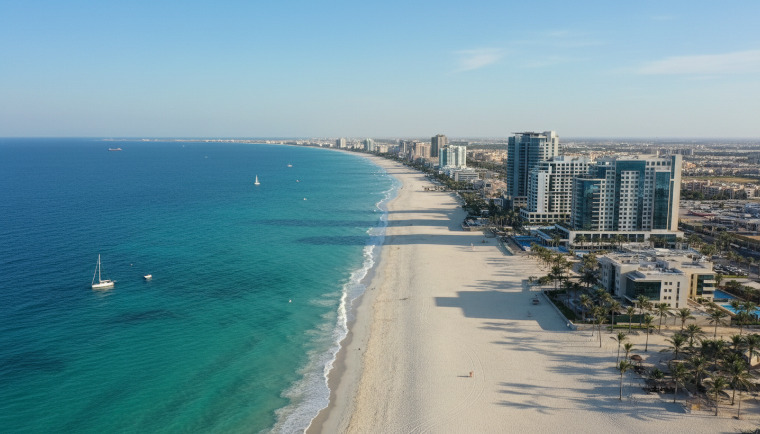
Ajman's coastline stretches for 16 kilometres along the Persian Gulf, offering picturesque sandy beaches and a modern waterfront for comfortable leisure.
The emirate's coastal zone is characterised by shallow bays and natural lagoons, which were historically used for fishing and trade. This is where the emirate's main port and principal tourist attractions for visitors can be found.
The image was generated using AI technologies
The waterfront location provides Ajman with a moderate maritime climate and milder temperatures compared to the inland areas of the UAE. Constant sea breezes create comfortable conditions for rest and living throughout the year, whilst clean beaches attract tourists from around the world seeking a high-quality holiday.
Three-part territorial structure
The territory of the emirate of Ajman consists of three separate parts, making it geographically unique among all the emirates of the UAE. The main part encompasses the city of Ajman and the coastal zone, where the bulk of economic and tourist activity is concentrated. Approximately 90% of the emirate's population lives there, and all the principal administrative buildings and attractions are located in that area.
The Manama exclave lies 60 kilometres to the east of the main city of Ajman, in mountainous terrain on the border with Oman. This territory, covering 110 square kilometres, is known for its hot springs and traditional agriculture. The second exclave, Masfut, is located even further to the east, 110 kilometres away from Ajman city centre, amongst the Hajar Mountains.
Transport accessibility
The strategic location provides Ajman with excellent transport links to the other emirates. The main E11 highway (Sheikh Mohammed Bin Zayed Road) runs through the emirate, connecting it with Dubai and the northern emirates.
The distance to Abu Dhabi, the capital of the UAE, is 170 kilometres, or approximately 2 hours by car. The nearest major city, Sharjah, is only 15 kilometres away, which makes daily commuting between the cities for work or study perfectly feasible.
This proximity to Dubai and other major cities, whilst retaining its own identity, makes Ajman attractive to those seeking a balance between urban dynamics and peaceful leisure on the region's finest beaches.
Many tour operators include Ajman in their itineraries as the most convenient option for exploring the attractions of the northern emirates and the cities of the UAE, offering a variety of tours for a well-rounded holiday.
How to Get to Ajman
Getting to Ajman from any point in the UAE is easier than it might seem at first glance. Thanks to the compact size of this remarkable country and its well-developed transport infrastructure, this small emirate is easily accessible by various means of transport. The distance from Dubai to Ajman is just 39 kilometres, making the journey between these two cities quick and comfortable.
Nearest airports and air connections
The nearest international airport to Ajman is in Sharjah, just 15 kilometres from the city centre. The taxi journey takes 20–25 minutes, and the fare ranges from 25 to 35 dirhams. Sharjah Airport serves a large number of budget airlines and charter flights, making it a popular choice for cost-conscious travellers.
Dubai International Airport is located 45 kilometres away from Ajman. A taxi ride will take 45–60 minutes depending on traffic conditions, and the fare will be 80–120 dirhams. Al Maktoum Airport in Dubai is further away — approximately 70 kilometres — but may be convenient for certain routes between cities in the UAE.
Travelling by car and car hire
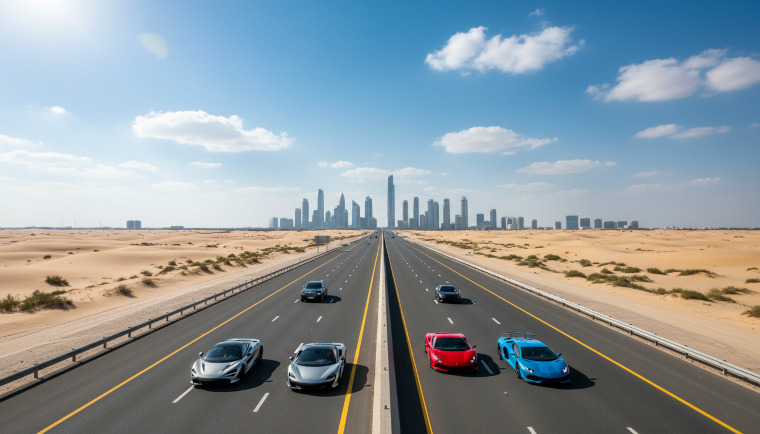
The most convenient way to get to Ajman is by car on the modern motorway network. The main route from Dubai runs along the E11 highway (Sheikh Mohammed Bin Zayed Road) and then onto the E311. The journey takes 35–45 minutes in normal traffic and up to an hour during peak hours.
Car hire is available at all major airports and cities throughout the UAE. An international driving licence is valid for 30 days for tourists. The cost of hiring an economy-class car starts at 80 dirhams per day. Parking in Ajman is usually free of charge, which is a significant advantage over other cities in the Emirates.
Public transport between the emirates
The public transport system between the cities of the UAE is moderately developed. There is no direct bus service between Dubai and Ajman, but it is possible to travel with a transfer via Sharjah. The route involves taking a bus to Sharjah (buses E306, E307) and then transferring to local transport to Ajman.
A more convenient option is the inter-city buses operated by the RTA, which run between major shopping centres and transport hubs in various cities. A ticket costs 5–8 dirhams, but the total journey time can be 1.5–2 hours, including transfers and waiting time.
Taxis and ride-hailing services
Taxis remain the most popular means of travel between the emirates. Official taxis in Dubai and Sharjah operate on a metre, and a ride from Dubai to Ajman will cost 80–120 dirhams. The Uber and Careem apps are also available and often offer fixed fares for inter-city journeys.
For group trips, it is cost-effective to book minivans or seven-seater vehicles. Many hotels offer transfer services to Ajman, especially for guests planning to visit local attractions or beaches. Upmarket hotels often offer private transfers with comfortable vehicles, whilst budget hotels may arrange group transfers to keep costs down.
Practical tips for travel
The best day to travel to Ajman is a weekday, when traffic is at its lightest. The ideal time of day is before 8:00 in the morning or after 7:00 in the evening. Friday evenings and Saturday mornings tend to see particularly heavy traffic because of the UAE weekend.
The image was generated using AI technologies
When planning a trip to Ajman, bear in mind that GPS navigation may suggest alternative routes through local roads, which can sometimes prove faster than the main highways between the cities of the emirates.
General Information about the City of Ajman
The city of Ajman is a unique blend of ancient traditions and modern development, serving as the administrative centre of the UAE's smallest emirate. This compact city demonstrates impressive rates of growth and urbanisation, having transformed over recent decades from a fishing settlement into a thriving business and tourist hub.
History and cultural heritage
Ajman's roots stretch back through the centuries, when local Arab tribes engaged in fishing and pearl diving in the waters of the Persian Gulf. Archaeological finds indicate that the territory of modern Ajman was inhabited more than 4,000 years ago.
In the 18th century, the Arab tribe of Al Nuaimi settled there and continues to rule the emirate to this day. Sheikh Rashid bin Humaid Al Nuaimi founded the modern dynasty in 1816, laying the foundations for the region's future prosperity.
Ajman's cultural traditions are closely tied to its maritime heritage. The local population carefully preserves the memory of the era when shipbuilding and the pearl trade were the main occupations. These crafts were passed down from generation to generation and continue to play an important role in the emirate's economy.
Demographics and the modern population
According to the latest statistical data, Ajman's population is approximately 500,000, making it one of the most densely populated emirates per square kilometre. The demographic composition reflects the cosmopolitan character of the UAE: local Ajmani nationals make up around 15% of the population, whilst the remaining 85% are expatriates from more than 100 countries worldwide.
The largest share of Ajman's foreign population comes from South Asia (India, Pakistan, Bangladesh), employed across various sectors of the economy. Arab communities from other countries in the region, as well as Europeans and Americans working in business and tourism, also make up a significant proportion of residents.
Economic specialisation
Ajman's economy is based on several key sectors, ensuring its stable development within the UAE. Shipbuilding remains one of the most important industries — local shipyards produce traditional Arab dhows and modern yachts for export throughout the region. This sector provides employment for around 8,000 people and generates substantial revenue for the emirate's budget.
Fishing and aquaculture also play a significant role in Ajman's economy. Local fishermen catch more than 15,000 tonnes of fish annually, the greater part of which is supplied to the markets of neighbouring emirates. Modern fish-processing enterprises ensure high product quality and compliance with international standards.
Administrative divisions and districts
The territory of Ajman is divided into several main districts, each with its own character and purpose. The central district is focused around the historical part of the emirate, where government buildings, traditional markets, and cultural sites are located. This is where the ruling family's residence and the main administrative institutions of Ajman are situated.
Ajman's coastal zone is being actively developed as a tourist hub, with modern hotels, restaurants, and entertainment complexes. New residential districts on the outskirts of the emirate offer comfortable housing for the growing population, including villas and multi-storey residential complexes with modern infrastructure.
Modern infrastructure
Ajman's infrastructure meets the high standards of the UAE and continues to develop actively. The healthcare system includes modern hospitals and medical centres equipped with cutting-edge technology. The education sector is represented by both public and private schools, as well as branches of international universities.
The transport network provides convenient connections both within Ajman and with the neighbouring emirates. Public transport includes bus routes, taxis, and modern car-hire systems. A well-developed road network links all districts of the emirate and ensures rapid connections with Dubai and Sharjah.
Within the United Arab Emirates, Ajman plays an important role as a centre of traditional crafts and maritime trade. Despite its modest size, this emirate makes a significant contribution to the country's cultural heritage, preserving authentic Arab traditions and customs.
The strategic location between major emirates makes Ajman an important transit point and logistics hub. The local port serves coastal shipping and fishing vessels, and also welcomes tourist yachts and cruise liners.
Main Attractions and What to See
Ajman offers tourists a unique opportunity to experience genuine Arab culture away from the bustle of large metropolises. Despite its compact size, this emirate is rich in historical monuments, cultural sites, and natural beauty that can be explored in a single day.
Ajman National History Museum
The emirate's crowning jewel is the Ajman Museum, housed in a restored 18th-century fort. This fort served as the ruling family's residence until 1970, and today the museum presents a rich collection of artefacts telling the story of the region's history.
Visitors can see traditional Arab jewellery, ancient weapons, archaeological finds, and dioramas recreating Bedouin life.
The museum is open Saturday to Thursday from 8:00 AM to 8:00 PM, and on Fridays from 2:30 PM to 8:00 PM. The entrance fee is 4 dirhams for adults; children under 6 are admitted free of charge. A morning visit is recommended, when there are fewer tour groups.
Sheikh Zayed Mosque
The magnificent Sheikh Zayed Mosque in Ajman impresses with its architecture and is one of the largest in the emirate. It is a functioning mosque built in a modern Islamic style with traditional Arab decorative elements. Non-Muslims may view the building from the outside and photograph its impressive minarets and domes.
The best time for a photo shoot is the golden hour before sunset, when the building looks particularly striking against the sky. It is important to observe the dress code: covered clothing is required for both men and women.
The Corniche and beaches
Ajman's coast stretches along 16 kilometres of Persian Gulf coastline. You will find well-maintained public beaches with clean sand and clear water there. Corniche Road offers picturesque walkways lined with palm trees, benches, and children's play areas.
The beaches are free to visit and are open around the clock. Swimming in the morning and evening hours is recommended, to avoid the midday heat. The Corniche has cafes and restaurants overlooking the Gulf. Local beaches are perfectly suited to a family day out, offering excellent opportunities for relaxation.
Traditional shipyard and fish market
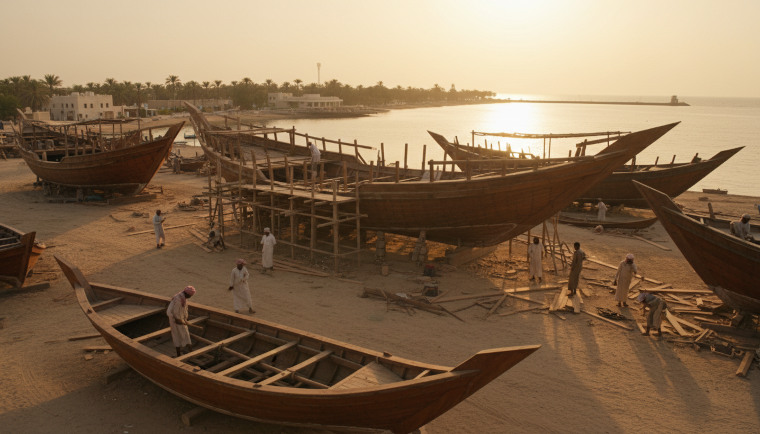
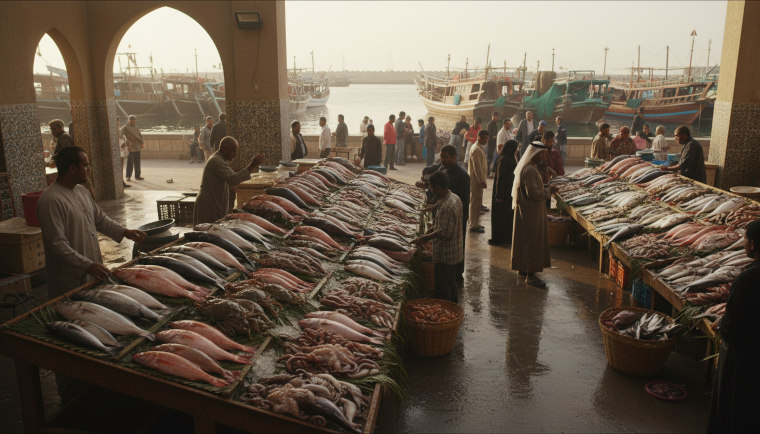
The old port district is home to a traditional shipyard where craftsmen still build wooden dhows using ancient Arab techniques. Nearby is an authentic fish market, operating from early morning until noon. It offers an opportunity to see the fresh catch brought in by local fishermen and soak up the atmosphere of a genuine Arab marketplace.
The image was generated using AI technologies
The best time to visit the market is between 6:00 and 10:00 in the morning, when the choice of seafood is at its widest. Haggling is not customary there, the prices are fixed. This place allows you to discover, in a single day, the traditions of Ajman that have been passed down year after year.
Modern shopping centres
For those who enjoy shopping, several modern shopping centres operate in Ajman. Ajman City Centre offers international brands, a cinema, and a food court. Safeer Mall is known for its accessible prices and wide range of goods.
Shopping centres are open daily from 10:00 AM to 10:00 PM, opening after the midday prayer at 2:00 PM on Fridays. Weekday visits are recommended for a comfortable shopping experience without the crowds. In a single day, you can visit several of Ajman's shopping centres and enjoy the modern Arab tradition of hospitality.
Many centres trace their history back to the 2000s, when active development of the emirate's tourist infrastructure began. Some beaches are situated in the immediate vicinity of the shopping districts, making it possible to combine shopping with leisure by the sea throughout the year.
Frequently Asked Questions
How many kilometres is it from Dubai to Ajman?
The distance from Dubai city centre to Ajman city centre is 39 kilometres by road. The journey by car or taxi takes 30–45 minutes, depending on traffic and the time of day. During peak hours, the journey time may increase to one hour. The fastest route runs along the E11 highway through the emirate of Sharjah.
Which is the smallest emirate in the UAE?
Ajman is the smallest emirate in the United Arab Emirates, with a total area of just 260 square kilometres. By way of comparison, this is approximately 300 times smaller than the emirate of Abu Dhabi, which covers 67,340 square kilometres.
Despite its compact size, Ajman has access to the Persian Gulf and its own coastline stretching 16 kilometres. The population density of Ajman is approximately 1,500 people per square kilometre.
Is it possible to get to Ajman by public transport?
Ajman can be reached by inter-city buses, which run regularly between the emirates of the UAE. RTA buses depart from Al Ghubaiba bus station in Dubai every 20–30 minutes, and the journey to Ajman takes approximately one hour. The fare does not exceed 10 dirhams, making this the most economical option.
There is also an inter-city bus service from Dubai Airport with stops in Sharjah and Ajman.
Where is the airport for flights to Ajman?
Ajman does not have its own international airport for commercial flights. The nearest international airport is in Sharjah, just 15 kilometres away from Ajman city centre; the journey takes 20–25 minutes.
Dubai International Airport is 45 kilometres away from Ajman, and the journey takes 40–50 minutes. Most tourists fly to Dubai Airport, from where it is convenient to travel to any destination in the northern emirates, including Ajman.
What does Ajman offer tourists in particular?
Ajman attracts tourists with its authentic Arab atmosphere and more affordable prices compared with Dubai and Abu Dhabi. It is home to one of the finest historical museums in the UAE, housed in an 18th-century fort and presenting a rich collection of archaeological finds and traditional crafts.
The image was generated using AI technologies
Ajman's beaches are known for their white sand and calm waters, ideal for family holidays. Ajman is also renowned for its traditional shipyards, where wooden dhows are still built using ancient techniques.
Is a visa required to visit Ajman?
The same visa requirements apply to Ajman as to all of the United Arab Emirates. Russian citizens may stay in the UAE for up to 90 days within any 180-day period without a visa, provided they hold a valid passport with at least six months remaining.
For a longer stay in Ajman, the appropriate visa must be obtained through consulates or travel agencies. Entry into Ajman is made through any international airport in the UAE, with no additional formalities required.
Article header image was generated using AI technologies
What a free economic zone in Dubai is. Overview of Dubai's key free economic zones. How to choose a free economic zone for your business. Registering a company in a free economic zone: process, taxes,...
Main features of public transport in Dubai. Dubai public transport zones, rules, and tickets. Dubai metro. Dubai buses. Dubai tram. Dubai monorail. Public water transport in Dubai. Taxis in Dubai. Rul...
Do Russians need a visa for Qatar in 2026? Entry rules for Qatar: documents and requirements. Transit through Doha: is a visa required. How to obtain a visa for Qatar if necessary. Useful tips before ...
What makes the Jebel Ali district in the UAE attractive? Architectural features of Jebel Ali. Transport infrastructure of Jebel Ali. What real estate can be bought or rented in Jebel Ali? Jebel Ali re...
How the car market in Dubai works? How car dealerships work in Dubai? The largest car market in Dubai. Car auctions in Dubai. How to buy a car at the car market in Dubai? Frequently asked questions ab...
Advantages of working in the UAE. In-demand professions for work in the UAE. Visa requirements for work in the UAE. Life in the UAE for expats. Frequently asked questions about work in the UAE.
Population density of Dubai in 2025. Dubai’s Demographic Structure. Key growth factors of Dubai’s population. Specifics of life of the native citizens of the UAE and Dubai in particular. Frequently As...
Specifics of mobile communication in the UAE. Roaming conditions in the UAE from Russian operators. How to activate roaming in the UAE. Alternatives to roaming in the UAE. Frequently asked questions a...



 The image was generated using AI technologies

 The image was generated using AI technologies

 The image was generated using AI technologies

 The image was generated using AI technologies