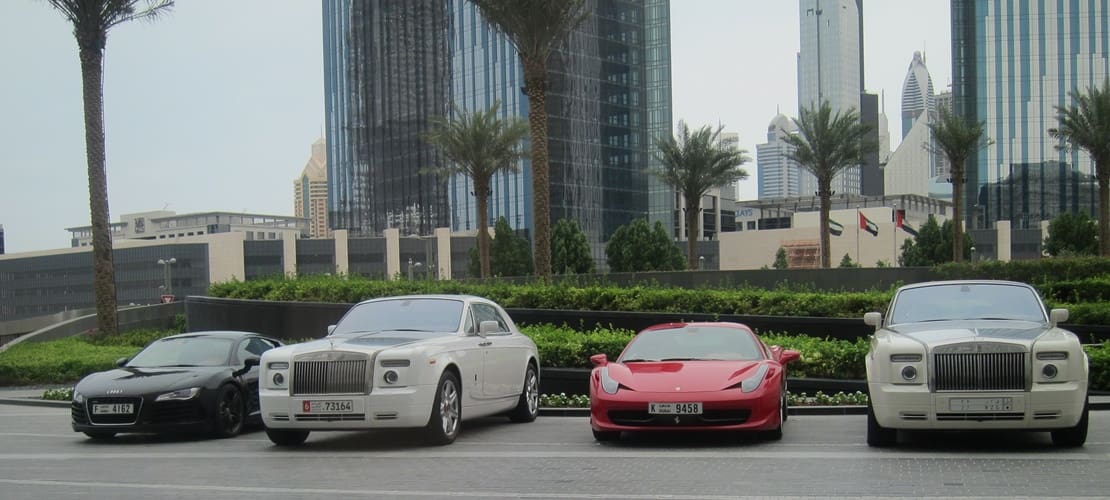
Home/Cities of the UAE/Old Dubai: How to Get There, What to See and Where it is Located
07.05.2026
Cities of the UAE
1076
Reading time: 14 minutes
Old Dubai: How to Get There, What to See and Where it is Located
Save the article:
Are you planning to visit Old Dubai for the first time but don't know where to start or how to get there? This historic district is a true gem of the emirate, where modern skyscrapers give way to traditional Arab quarters and the noise of the metropolis is replaced by the atmosphere of Eastern bazaars. Many tourists avoid independent trips to the old city, fearing the language barrier and difficulties with transport, yet it is precisely there that one can feel the authentic spirit of Dubai and discover its rich culture.
What will change after applying the tips in this guide? You will receive a detailed travel plan for Old Dubai with step-by-step routes, up-to-date transport prices and specific recommendations on attractions. You will find out how to get to the old city in Dubai by metro for just 3 dirhams, where the old city Dubai metro station is located, and which hidden gems are worth visiting beyond the famous Gold Souk. You will also receive practical advice on bargaining at traditional bazaars, museum opening hours and an optimal route map that will allow you to cover all the key locations of the historic district in a single day — without rushing or overpaying.
How to Get to the Old City in Dubai
There are several convenient ways to get to the old city in Dubai. The metro remains the most popular and budget-friendly option, although taxis and buses also offer comfortable alternatives. For those planning an independent trip to Dubai, it is important to familiarise yourself in advance with the best routes and the specifics of each mode of transport in the emirate.
Travelling by metro: the Green Line to the historic district
The metro in Dubai is the most reliable way to get to the old city. You will need the Green Line, which passes through the historic districts of the emirate. Two key stations provide access to different parts of Old Dubai: Al Ghubaiba and Al Fahidi.
Al Ghubaiba station is closest to the Bur Dubai district and the traditional markets. A walk from this station to the Gold Souk takes just 5–7 minutes, and to the Spice Souk around 10 minutes. Al Fahidi station is in immediate proximity to the historic Al Fahidi quarter and the Dubai Museum.
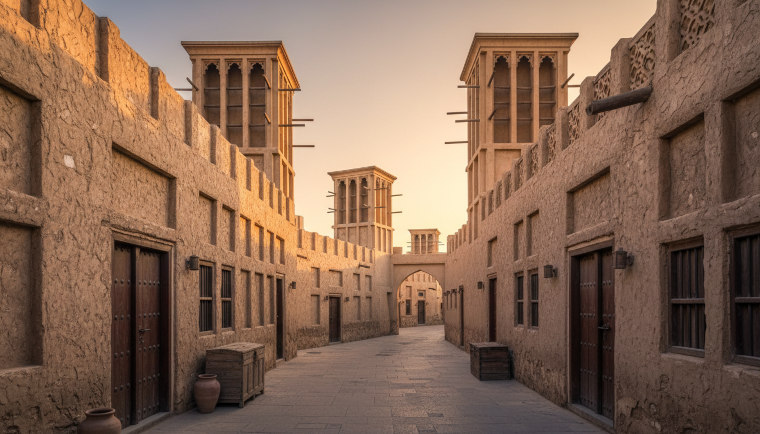
The image was generated using AI technologies
The fare depends on the number of zones: travel within a single zone costs 3 dirhams (around $0.80), and between two zones — 5 dirhams. Journey time from the central districts of Dubai is 15–25 minutes. The metro operates from 5:00 AM to 12:00 AM, except Friday (from 5:00 AM to 1:00 AM) and Sunday (from 8:00 AM to 12:00 AM).
Using taxis and car-sharing in Dubai
A taxi remains the most comfortable but expensive way to travel around the city. The starting fare is 5 dirhams, plus 1.96 dirhams per kilometre during daytime hours. A journey from central Dubai to the old city will cost 25–40 dirhams depending on the distance and time of day.
Popular taxi apps in Dubai include Careem and Uber, which often offer fixed fares. The advantage of mobile apps is the ability to track the route and find out the cost of the journey in advance. During peak hours (7:00 AM–9:00 AM and 5:00 PM–7:00 PM), the fares may increase by up to 25%.
Bus routes to the historic districts of Dubai
RTA public buses offer an alternative to the metro. Routes C07, C10 and C18 connect various parts of the city with Old Dubai. The fare is 2–4 dirhams depending on the distance.
Bus C07 runs from Ibn Battuta Mall to Al Ghubaiba metro station, passing through the key tourist sites of Dubai. Route C10 connects the airport with the historic centre, which is convenient for arriving tourists. Bus frequency is every 10–15 minutes during daytime hours.
Walking routes from the nearest stations
A convenient pedestrian path of 400 metres leads from Al Fahidi metro station to the Dubai Museum. The walk takes 5–7 minutes and passes through the picturesque lanes of the historic district. The route is well signposted in both English and Arabic.
A walk from Al Ghubaiba station to the old city markets takes 8–12 minutes. Follow the signs towards Dubai Creek, then turn right along the waterfront. This route is particularly pleasant in the evening hours, when the heat subsides and the decorative lighting of the buildings comes on.
Navigation and mobile apps
The official RTA Dubai app provides up-to-date information on metro and bus timetables, and also allows you to plan the best routes around the city. Google Maps works excellently in the emirate and shows all types of public transport, taking into account current road conditions.
For purchasing tickets, use the Nol Card, which can be bought at machines at Dubai metro stations for 25 dirhams (including 19 dirhams balance). The card is valid on all types of public transport and provides discounts when transferring between the metro and buses.
Parking for drivers
If you plan to travel by hire car, bear in mind the limited availability of parking in the historic district of Dubai. Paid parking is available along Al Khaleej Road at a rate of 2 dirhams per hour. Free spaces can be found within a 10–15 minute walk of the main attractions.
It is recommended to use the mParking Dubai app to pay for parking via smartphone. This eliminates the need to search for machines and always carry change. Parking is free on Fridays until 1:00 PM and all day on Saturdays.
Where Old Dubai is Located
Old Dubai is situated at the very heart of the emirate, on both banks of the natural seawater inlet known as Dubai Creek. This historic part of the city occupies a strategically important position between the modern districts of Dubai and serves as the link between the metropolis's past and present. Understanding the geography of the old city will help you navigate better and plan routes to its attractions.
The main historic districts of the old city
Old Dubai consists of three key districts, each with its own distinct character. The Bur Dubai district is located on the southern bank of the creek and is considered the commercial centre of the historic part of Dubai. This is where the main museums, traditional markets and a great number of historic buildings can be found.
The image was generated using AI technologies
The Deira district occupies the northern bank of Dubai Creek and is renowned for its famous bazaars — the Gold Souk and the Spice Souk. The Al Fahidi district comprises a historic fort and a museum quarter where traditional architecture from the 18th and 19th centuries has been preserved.
Boundaries and landmarks of the historic centre
The historic centre of Dubai is bounded by natural and man-made borders that are easy to identify on a map. To the east, Old Dubai borders the Umm Hurair district, where modern shopping centres are located. The western boundary runs along Al Ghubaiba Road in Bur Dubai and Al Rigga Road in Deira.
The northern boundary of the Deira district extends to Port Saeed Road, while the southern boundary of the Bur Dubai district reaches Sheikh Rashid Road. The main landmark is Dubai Creek itself, which divides the old part in two and forms its geographic centre.
Distances to key points in Dubai
The distance from Dubai International Airport to the historic centre is approximately 7–8 kilometres, which takes 15–20 minutes by taxi or bus. Distances to popular tourist districts of Dubai vary: to Dubai Marina — 35 kilometres, to Burj Khalifa and Dubai Mall — 12 kilometres, to the Jumeirah beaches — 15 kilometres.
These distances make Old Dubai a convenient starting point for exploring all of Dubai, particularly when using the metro.
Location relative to Dubai metro stations
Old Dubai is served by several metro stations, ensuring excellent transport accessibility. Al Ghubaiba station is located right in the centre of the Bur Dubai district, just 2–3 minutes' walk from the main attractions.
Al Fahidi station is situated close to the historic district of the same name and museums. On the Deira side, the key stations are Baniyas Square and Al Ras, from which the famous markets can be reached on foot in 5–7 minutes. Gold Souq station is in immediate proximity to the Gold Souk.
Nearby hotels and shopping centres in Dubai
Hotels of various categories are situated around the old city, from budget to premium. The Bur Dubai district is home to Four Points by Sheraton and Grand Hyatt Dubai, while in the Deira district you will find Hilton Dubai Creek and Radisson Blu Hotel.
The nearest large shopping centres in Dubai include BurJuman Centre (1.5 km from the centre of the Bur Dubai district), Al Ghurair Centre in the Deira district and Wafi Mall (3 km from Old Dubai). These shopping centres are connected to the historic district by bus routes and Dubai metro stations.
What to See in Old Dubai
Old Dubai offers travellers a unique opportunity to immerse themselves in the rich history of the emirate and discover traditional Arab culture. Every alleyway preserves centuries-old traditions, and ancient structures stand alongside fascinating museums and cultural centres.
Al Fahidi Fort and the Dubai Museum
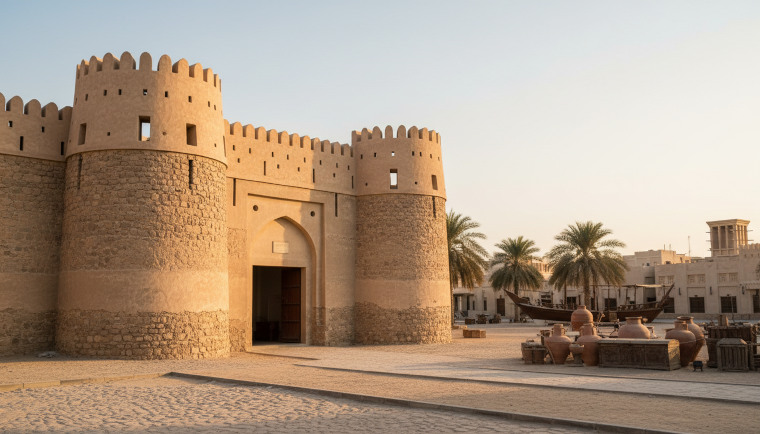
Al Fahidi Fort is considered the main historic attraction of Old Dubai and the oldest surviving building in the city. The fort, built in 1787, served as a residence for the ruling family, a prison and a defensive structure. Today, within its walls stands the Dubai Museum, which tells the story of the emirate from a fishing village to a modern metropolis.
The museum is open daily from 8:30 AM to 8:30 PM (from 2:30 PM on Fridays). The entry fee is 3 dirhams for adults and 1 dirham for children under 6. The exhibition features dioramas of traditional Bedouin life, models of Old Dubai, archaeological finds and interactive exhibits. Allow 1–1.5 hours for the visit.
The underground section of the museum is particularly worthy of attention, where traditional Arab markets, dwellings and craft workshops have been recreated. You’ll be able to see what the streets of Old Dubai looked like, hear the sounds of the bazaar and feel the atmosphere of centuries past.
The historic district of the old city
The historic district is a restored area of traditional Arab houses with distinctive wind towers. These towers served as a natural air-conditioning system, channelling cool air into the living quarters. The district is open for visits daily from 8:00 AM to 10:00 PM, with free entry.
It is a pleasure to stroll through the narrow lanes of the quarter, admiring the traditional architecture and peering into the small galleries, cafés and souvenir shops. Many buildings have been converted into cultural centres and exhibition halls, where themed displays are held on a regular basis. Allow 45–60 minutes for a leisurely walk around the district.
The historic district is home to several interesting museums and cultural sites. You can visit a traditional Arab house where the life of a prosperous family from the early 20th century has been recreated, or drop into one of the arts centres where local craftspeople demonstrate traditional crafts.
Dubai Creek and abra rides
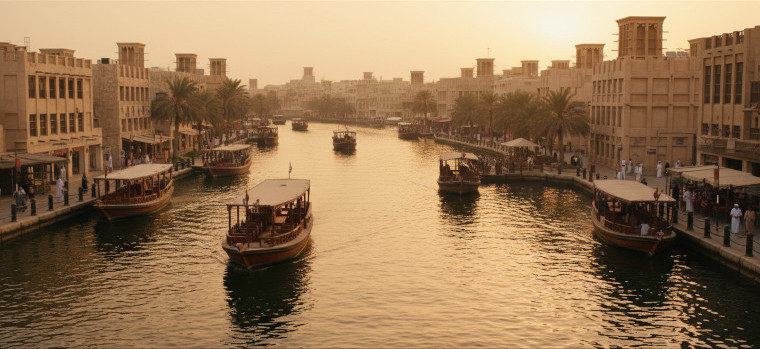
Dubai Creek remains the heart of Old Dubai and the most important transport artery connecting the Deira and Bur Dubai districts. Traditional water taxis — abras — run between the banks daily from 5:00 AM to 12:00 AM. The crossing costs just 1 dirham per person, making an abra ride one of the most affordable activities in the city.
The image was generated using AI technologies
A journey on a traditional wooden boat allows you to see Old Dubai from the water and feel the atmosphere of the trading port that the city was for centuries. From the deck of an abra, you are treated to picturesque views of the historic buildings, traditional dhows and modern constructions. The crossing takes approximately 10–15 minutes each way.
For a longer excursion, you can take a tourist cruise along Dubai Creek, which lasts from 30 minutes to 2 hours. The cost of such tours starts at 25 dirhams per person, while evening dinner cruises cost 150–200 dirhams.
Sheikh Mohammed Centre for Cultural Understanding
The Sheikh Mohammed Centre for Cultural Understanding is located in the historic district and invites visitors to discover the traditions and customs of the UAE. The centre is open from Saturday to Thursday, 8:00 AM–7:00 PM, and on Fridays from 3:00 PM to 7:00 PM. Entry is free, but advance registration for tours is recommended.
The centre regularly holds cultural programmes that include traditional meals, calligraphy workshops and stories about local customs. Particularly popular are the weekly breakfasts featuring Emirati cuisine, held on Sundays from 10:00 AM to 12:00 PM. Allow 1–1.5 hours for the visit.
The centre's programmes help tourists gain a better understanding of local culture and traditions, as well as dispelling common misconceptions about the Arab world. You can ask questions about religion, customs and everyday life in the UAE.
The Coffee Museum and the Coins Museum
The Coffee Museum is housed in one of the historic buildings of Old Dubai and tells the story of coffee culture in the Arab world. The museum is open daily from 9:00 AM to 5:00 PM, with an entry fee of 10 dirhams. The exhibition features antique coffee-making equipment, roasters and coffee pots from various countries around the world.
Visitors can not only browse the collection but also take part in a traditional Arabic coffee preparation ceremony. The museum also houses a small café serving various types of coffee and traditional sweets. Allow 30–45 minutes for the visit.
The Coins Museum is located nearby and showcases a numismatic collection spanning the history of monetary exchange in the region. The museum is open from Sunday to Thursday, 8:00 AM–2:00 PM, with an entry fee of 5 dirhams. You can see ancient Arab coins, modern UAE banknotes and currencies from other Gulf countries.
The Heritage Village and the Diving Village
The Heritage Village is an ethnographic complex where the traditional life of Bedouins and fishermen has been recreated. The complex is open daily from 8:00 AM to 10:30 PM (from 3:30 PM on Fridays), with free entry. You can see traditional dwellings, craft workshops and even camels there.
Traditional craft demonstrations are held regularly in the village, including weaving, pottery and jewellery-making. At weekends, folk performances featuring national dances and music are frequently organised. Allow 45–60 minutes to explore the Heritage Village.
Nearby is the Diving Village, which presents the history of pearl diving — the traditional occupation of the inhabitants of the Persian Gulf. You can learn about the technique of pearl harvesting and see the traditional boats on which divers would set out on their expeditions.
An optimal one-day itinerary
For an efficient tour of Old Dubai, it is recommended to begin at Al Ghubaiba metro station at 9:00 in the morning. The first stop should be the fort and Dubai Museum (1.5 hours), followed by a stroll through the historic district (1 hour).
After this, you can cross by abra to the Deira district to explore its attractions (30 minutes for the crossing and walk), then return. In the afternoon, visit the Sheikh Mohammed Centre for Cultural Understanding (1 hour), the Coffee Museum (45 minutes), and round off the day with a walk through the Heritage Village (1 hour).
This itinerary will allow you to comfortably take in all the main attractions of Old Dubai in 6–7 hours, including breaks for rest and lunch. The total cost of entry tickets will be approximately 20–25 dirhams per person, not including transport costs and food. The prices may change slightly, so it is recommended to check current costs before your visit.
Markets and Bazaars of the Old City
The markets of Old Dubai are a true treasury of Eastern trade, where centuries-old commercial customs have been preserved in their original form. Each bazaar in Old Dubai specialises in particular goods and has its own unique atmosphere, attracting tourists and locals alike.
Gold Souk — the jewel of the world's gold markets
The Gold Souk in the Deira district is considered one of the largest in the world, with more than 380 shops. An incredible variety of jewellery is on display there: from classic Arab pieces to contemporary designer works. Particularly popular are chunky gold bracelets, gemstone necklaces and bridal sets.
Trading at the Gold Souk is conducted by weight of gold according to purity, so prices change daily in line with global market rates. Bargaining is not only acceptable but expected — you can lower the initial price by 10–20%. The market is open from Saturday to Thursday, 10:00 AM–10:00 PM, and on Fridays from 4:00 PM to 10:00 PM.
The easiest way to reach the Gold Souk is by metro to Al Ras station, from which it is a 5-minute walk following the signs. When purchasing gold weighing more than 500 grams, a customs declaration is required upon export from the UAE.
Spice Souk — a fragrant journey into the world of spices
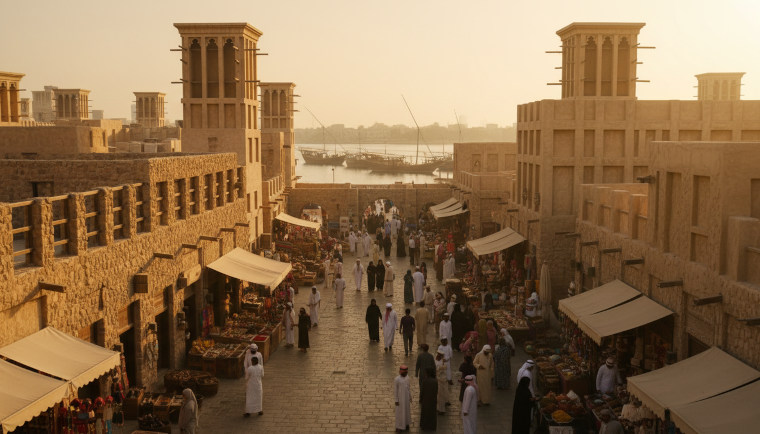
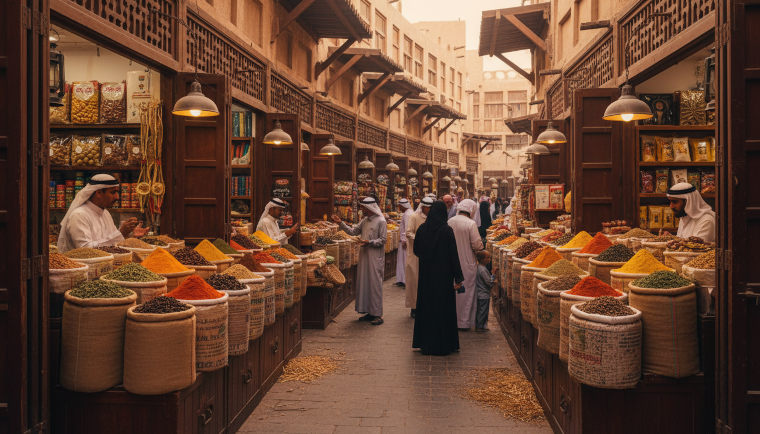
The Spice Souk is located next to the Gold Souk in Dubai and is remarkable for its wealth of aromas and colours. While walking through the narrow passages between stalls you can find top-quality saffron, cardamom, cinnamon, dried limes, rose water and a great many other spices. Many traders offer to try the goods before buying.
The image was generated using AI technologies
Prices at the Spice Souk are significantly lower than in Europe: good-quality saffron starts at 15 dirhams per gram, spice blends for various dishes start at 5 dirhams per 100 grams. Natural oils, incense and Arabic cosmetics are also sold there. Bargaining is both possible and advisable — the real price is usually 60–70% of the initial price.
Textile Souk — a realm of fabrics and textiles
The textile bazaar in the Bur Dubai district is renowned for its vast selection of fabrics: from luxurious silk to practical cotton. Indian saris, Kashmiri pashminas and Arabic fabrics with gold embroidery are particularly popular. Many shops offer a bespoke tailoring service with a turnaround time of 2–3 days.
Good-quality pashmina starts at 50 dirhams, and silk fabrics start at 20 dirhams per metre. When purchasing in larger quantities, traders are willing to offer substantial discounts. The Dubai textile market is open daily from 9:00 AM to 9:00 PM.
Al Fahidi Souk — the authentic atmosphere of the old city
This small market in the historic district of Dubai specialises in souvenirs, antiques and handcrafted items. You can purchase genuine Arabic khanjar daggers, handmade copper kitchenware, lanterns, rugs and leather goods there.
Practical recommendations for successful purchases
When buying gold in Dubai, always request a quality certificate and a receipt stating the purity. Avoid items without a hallmark or with a suspiciously low price. To check the authenticity of spices, smell the goods — quality spices have a rich aroma with no extraneous odours.
The best time to visit Dubai's markets is in the morning or in the evening after 6:00 PM, when the heat has subsided and more local shoppers are about. Always carry dirhams in cash with you — many traders prefer this form of payment and may offer an additional discount.
The prices vary depending on the season and the quality of the goods, but bargaining remains an integral part of the shopping culture at all the markets of Old Dubai.
Practical Tips for Visiting
A successful visit to the historic district of Dubai requires careful preparation and an understanding of local customs. A well-planned trip will allow you to enjoy the atmosphere of the old district to the fullest and avoid the typical tourist mistakes.
The best time to visit
It is best to plan a visit to the historic centre of Dubai in the morning hours between 8:00 AM and 11:00 AM, or in the evening between 5:00 PM and 8:00 PM. During these periods, the temperature in Dubai is at its most comfortable, particularly in the summer months, when the daytime heat can reach 45°C.
The morning hours are ideal for visiting museums and historic sites in Dubai, when there are fewer tourists and the light is favourable for photography. The evening creates a special atmosphere at Dubai's markets, when traditional lighting comes on and trading is at its most lively.
During the winter months (November to March), you can comfortably spend the entire day in Old Dubai, as the temperature stays between 20°C and 28°C. In summer, it is advisable to avoid the period between 12:00 PM and 4:00 PM, when the sun in Dubai is at its most intense.
Dress code and practical clothing
When visiting the historic districts of Dubai, it is necessary to observe a conservative dress code, taking into account Muslim traditions. Men should wear long trousers and shirts with sleeves; women should wear modest clothing that covers the shoulders, neckline and knees. This rule should be observed particularly strictly when entering mosques and cultural centres in Dubai.
Footwear should be as comfortable and enclosed as possible — trainers or trekking shoes are ideal. Avoid sandals and flip-flops, as you will be doing a lot of walking on the uneven surfaces of Dubai's traditional streets. Be sure to bring a hat and sunglasses to protect yourself from the bright Dubai sun.
Planning your time and route
Allow 4–6 hours for a thorough visit to the main attractions of Dubai's historic centre. This time includes a visit to Al Fahidi Fort, a stroll through the old quarter, a look around Dubai's markets and a crossing of Dubai Creek. If you plan to explore the museums in detail and spend time shopping at Dubai's markets, it is better to set aside a full day.
It is recommended to begin the route from Al Ghubaiba metro station in Dubai, gradually making your way to the historic quarter, then to the markets, and finishing the trip with a crossing of the creek. This order will allow you to distribute the walking sensibly and avoid unnecessary detours around Dubai.
Where to eat and safety guidelines
The historic district of Dubai is home to numerous traditional cafés and restaurants where you can sample authentic Arab cuisine. Particularly popular are the establishments near Dubai's Spice Souk, which serve fresh juices, shawarma and traditional sweets. Prices at local cafés in Dubai range from 15 to 40 dirhams for a main course.
When interacting with Dubai's local residents, show respect for cultural traditions — do not photograph people without their permission, especially women in traditional dress. Bargaining is the norm at Dubai's markets, but conduct negotiations politely and with a smile. Try not to display large sums of money or valuables, and keep your documents in a safe place.
Frequently Asked Questions
Which metro station is closest to Old Dubai?
The nearest metro stations to Old Dubai are Al Ghubaiba and Baniyas Square on the Green Line. Al Ghubaiba is within a 5-minute walk from the Bastakiya district and Al Fahidi Fort, while Baniyas Square is right next to the Gold Souk in Deira.
Both stations allow easy walking access to the main attractions of the old part of Dubai. For visiting the Spice Souk, Baniyas Square is the better choice, and for museums and galleries choose Al Ghubaiba.
How much time is needed to explore Old Dubai?
A full exploration of Old Dubai will require a whole day — between 6 and 8 hours. During that time you can take a leisurely tour of Al Fahidi Fort, stroll through the Bastakiya district, visit the main markets and take a ride on a traditional abra boat.
The image was generated using AI technologies
If you are planning only a brief look at the main attractions of Old Dubai, 3–4 hours is sufficient. Bear in mind the time for bargaining at the markets and resting in cafés — this is an integral part of the authentic Dubai experience.
What can you see for free in Old Dubai?
Free of charge are walks through the historic Bastakiya district with its old alleyways and traditional architecture. You can admire the exterior of Al Fahidi Fort, take in the ancient wind towers and photograph the historic buildings of Dubai.
A stroll along the Dubai Creek waterfront and watching the traditional abra boats also requires no payment. Entry to the Gold Souk and Spice Souk in the old part of Dubai is free — you only pay for what you buy.
Is Old Dubai open in the evening?
Old Dubai is especially beautiful in the evening, when the historic buildings are illuminated and the daytime heat has faded. Old Dubai's markets are open until 10:00–11:00 PM, and many cafés and restaurants remain open until late at night.
Evening walks along the Dubai Creek waterfront create a romantic atmosphere thanks to the reflections of the lights in the water. The museums of the old city generally close at 8:00 PM, so cultural activities are best planned for the daytime.
Is knowledge of Arabic necessary in Old Dubai?
Knowledge of Arabic is not essential for a comfortable visit to Old Dubai. Most traders, museum staff and service workers in Old Dubai speak English fluently. In the tourist zones, signs in English are common, and audio guides are available at museums.
Basic Arabic pleasantries will be a welcome gesture in Dubai, but English is perfectly sufficient for a full exploration of the attractions.
How do you bargain properly at Old Dubai's markets?
Bargaining at Old Dubai's markets is something of an art form, requiring patience and diplomacy. Begin by offering 30–40% of the initial price, gradually increasing your bid to 60–70% of the asking amount.
Show respect for the seller, ask about the history of the item and don't rush to a final decision. Being prepared to walk away often proves to be the strongest argument for a price reduction at the old markets of Dubai, but this should be done politely and with a smile.
Article header image was generated using AI technologies
General information about the UAE. Form of government in the UAE. Historical specifics of governance in the UAE. The structure of the UAE's government. Frequently asked questions about the form of gov...
Calendar of official holidays of the UAE. Muslim events in the UAE: traditions and rules of conduct. Opening hours of institutions and businesses during holidays. National events and public occasions...
Healthcare system in Dubai. Access to medical care for UAE citizens. Access to medical care for residents and expats. Access to medical care for tourists and short-term visitors. Medical tourism in Du...
What was before the beginning of the history of the UAE? Territories of the UAE in the 19th century. History of economic development of the UAE. The scandalous story of the UAE emir. Top 5 interesting...
Specifics of working in Abu Dhabi. Popular industries in Abu Dhabi. Places to search for jobs in Abu Dhabi. Obtaining a work visa in Abu Dhabi. Salary range in Abu Dhabi. Frequently asked questions ab...
This article discusses which emirates are better and the characteristics of the UAE regions. While tourists are interested in hotels, beaches and entertainment infrastructure, other factors must be co...
How many airports are there in Dubai? Dubai International Airport. Al Maktoum Airport in Dubai. Choosing an airport in Dubai. Services at Dubai airports. Useful tips on choosing Dubai airport. Frequen...
What a UAE residency visa is and why you need it. Drawbacks of a UAE residency visa: what to know before relocating. Ways to obtain a UAE residency visa. How to apply for a UAE residency visa: a step-...



 The image was generated using AI technologies

 The image was generated using AI technologies

 The image was generated using AI technologies

 The image was generated using AI technologies


 The image was generated using AI technologies