Home/Moving to the UAE/Average Salary in Dubai in 2026: How Much People Really Earn in the UAE
26.06.2026
Moving to the UAE
1477
Reading time: 14 minutes
Average Salary in Dubai in 2026: How Much People Really Earn in the UAE
Save the article:
What problem are you facing? You've received a job offer from Dubai, or you're simply exploring the UAE market, but you can't quite work out whether it's genuinely worthwhile or whether the impressive-sounding figures in dirhams are simply a mirage. The average salary in Dubai raises many questions — especially when you need to compare it with your current income, factor in the cost of living, and avoid underselling yourself in negotiations with a prospective employer.
What will you get from reading this? In this article, we'll break down what the average salary in the UAE amounts to in dollars and dirhams across key professions in 2026, how the average monthly salary in Dubai compares with real expenditure on housing, food, and transport, and why the absence of income tax changes the entire picture when comparing earnings with those in Europe or Russia. The dirham (AED) is the UAE's currency, pegged at a fixed rate to the dollar: 1 USD ≈ 3.67 AED — and it's important to understand this from the outset. In the article you'll find specific figures by industry, practical budget calculations, and an honest look at what level of income genuinely provides a comfortable life in Dubai — whether you're an experienced professional planning a relocation, a young specialist just starting out, or an expat already living there who wants to know whether their salary is in line with the market.
Dubai's Labour Market in 2026: The Overall Picture
The economy of the United Arab Emirates continues to grow at a steady pace: according to IMF data, the country's GDP is increasing by 4–5% annually in 2024–2026. Dubai remains the region's main business hub and consistently ranks among the world's most attractive cities for international professionals.
The labour market there is dynamic and competitive — vacancies appear quickly, and demand for qualified employees consistently outstrips supply in key industries.
Why Dubai attracts professionals from around the world
The main argument is the absence of income tax. You receive exactly the amount stated in your contract. For a professional from Russia, Germany, or India, this means an immediate increase in real income of 13–45% compared with an equivalent position back home.
In addition, Dubai offers:
a stable currency — the dirham (AED) has been firmly pegged to the dollar at a rate of 1 USD ≈ 3.67 AED for several decades;
well-developed infrastructure and a high level of safety;
a wide expat community — more than 90% of Dubai's population are foreigners, which makes settling in considerably easier than in most other countries.
Average salary in the UAE: current data
According to data from the platforms Bayt, GulfTalent, and recruitment agency reports for 2024–2026, the average market salary in the UAE is 15,000–20,000 AED per month (approximately 4,100–5,450 USD). This is a median figure covering mid-level professionals across most industries.
The image was generated using AI technologies
Over the past three years, salary levels in Dubai have risen by an average of 8–12%, with particularly notable growth in IT, finance, and construction. This rise has been driven by a significant influx of international companies, the expansion of free economic zones, and government investment in the technology sector.
What determines your salary
Dubai's labour market operates pragmatically: employers pay for the specific value you bring to the table. Here are the key factors that determine where you'll sit within a salary band:
Work experience — a professional with 5+ years of experience earns on average 40–60% more than an entry-level employee.
Qualifications and education — having a relevant degree or international certifications (PMP, CFA, AWS) noticeably increases your starting offer.
English language proficiency — a prerequisite for most positions; fluency opens doors to international companies with higher pay rates.
Type of employer — multinational corporations pay on average 20–30% more than local companies.
Industry — IT, the oil and gas sector, and finance traditionally offer some of the highest levels of remuneration.
Salary is more than just a figure in a contract
Many companies in Dubai structure a compensation package that goes well beyond the basic rate. A standard benefits package typically includes a housing allowance or company-provided accommodation, health insurance, transport expenses, and annual flights home.
This is important to bear in mind when comparing offers: a package with a basic salary of 14,000 AED plus housing and insurance may be more advantageous than one offering 18,000 AED with no additional benefits. The real value of a benefits package frequently adds 3,000–6,000 AED to monthly income in cash terms.
Average Salary in Dubai by Profession and Industry
Dubai is one of the few cities in the world where the salary gap between industries can be tenfold. A junior waiter and an experienced bank manager live in the same city but inhabit entirely different financial realities. To help you make a clear-eyed assessment of your position in this market, the following section sets out up-to-date figures for key professions and industries, in both dirhams and dollars.
As a reminder: the dirham (AED) is the UAE's currency, with a fixed rate against the dollar. 1 USD ≈ 3.67 AED, or conversely: 1 AED ≈ 0.27 USD. This is convenient — the exchange rate doesn't fluctuate, so you can always quickly convert an employer's offer.
IT and technology: the highest-paying sector
IT professionals in Dubai are among the most sought-after and highest-paid specialists. Demand for developers, analysts, and technical managers continues to grow steadily, driven by the digitalisation of government services and the expansion of fintech companies.
The average salary in Dubai in dirhams for the IT sector breaks down as follows:
Developer (junior–middle): 15,000–25,000 AED (~4,050–6,750 USD) per month
Data analyst: 18,000–30,000 AED (~4,860–8,100 USD) per month
IT manager / team lead: 25,000–40,000 AED (~6,750–10,800 USD) per month
The image was generated using AI technologies
By way of comparison, the average salary for an IT professional in Dubai is around 18,000–22,000 AED (~4,900–5,950 USD) per month — and this is before bonuses and housing compensation, which frequently add a further 20–30% to the overall package.
Financial sector and banking
Finance professionals have traditionally been well remunerated in Dubai — the city serves as the regional headquarters for hundreds of international banks and investment funds.
Financial analyst: 20,000–35,000 AED (~5,400–9,450 USD) per month
Bank manager: 25,000–45,000 AED (~6,750–12,150 USD) per month
High salaries in this sector are often accompanied by annual bonuses equivalent to one to three monthly salaries. If you work at an international bank with an office in DIFC (Dubai International Financial Centre), expect offers towards the upper end of the range.
Healthcare: wide variation between specialisations
The UAE's healthcare sector is growing rapidly, and the average salary in the UAE in dollars for doctors is highly competitive, especially for specialist physicians.
Doctor (general practitioner, paediatrician, surgeon): 25,000–50,000 AED (~6,750–13,500 USD) per month
Nurse: 8,000–15,000 AED (~2,160–4,050 USD) per month
The variation within the "doctors" category is enormous: an anaesthesiologist or cardiac surgeon at a private clinic may earn close to 50,000 AED, whereas a general practitioner at a public hospital might earn around 25,000–30,000 AED. Nurses with international certifications (such as NCLEX) receive additional allowances and progress through salary grades more quickly.
Education, construction, and engineering
These industries offer mid-range salaries — not the highest by Dubai standards, but perfectly adequate for a comfortable life, especially if the employer covers housing costs.
The average monthly salary in Dubai in these fields:
Teacher (school, international curriculum): 8,000–18,000 AED (~2,160–4,860 USD).
Teachers at international schools offering IB or Cambridge programmes often receive housing and health insurance as part of their package, which significantly increases the real value of the offer. Engineers in the oil and gas sector (particularly on Abu Dhabi projects with a Dubai base) can expect to earn at the higher end of the salary range.
Marketing, logistics, and services
This is where much of Dubai's middle class is concentrated — professionals who keep retail, tourism, and urban infrastructure running.
Industry
Salary range (AED/month)
Salary range (USD/month)
Marketing and sales
10,000–20,000
~2,700–5,400
Logistics and transport
6,000–14,000
~1,620–3,780
Services and tourism
4,000–10,000
~1,080–2,700
Average salaries in marketing vary considerably by seniority: an executive-level marketer earns 10,000–12,000 AED, whilst a marketing director at a large company earns 30,000 AED and above. In the services and tourism sector, tips and service charges are often added to the basic rate, which increases the overall income.
Summary table: average salary in Dubai by profession
Profession
AED per month
USD per month
Bank manager
25,000–45,000
6,750–12,150
Doctor (specialist)
25,000–50,000
6,750–13,500
IT manager
25,000–40,000
6,750–10,800
Financial analyst
20,000–35,000
5,400–9,450
Data analyst
18,000–30,000
4,860–8,100
Developer
15,000–25,000
4,050–6,750
Engineer
12,000–25,000
3,240–6,750
Marketing and sales
10,000–20,000
2,700–5,400
Teacher
8,000–18,000
2,160–4,860
Nurse
8,000–15,000
2,160–4,050
Logistics and transport
6,000–14,000
1,620–3,780
Services and tourism
4,000–10,000
1,080–2,700
All figures are approximate and reflect the market range for 2026. The specific amount depends on the company, level of experience, professional certifications held, and the terms of the employment contract, including whether housing, transport, and health insurance are included in the package.
Taxes and Benefits: Net Income in Dubai
One of the first discoveries made by anyone who relocates to Dubai is that the figure in the contract is your actual income. No deductions, no surprises on the pay slip. The UAE has no personal income tax, and this fundamentally changes the logic of comparing salaries.
How the UAE tax system works for employees
The United Arab Emirates has no income tax — neither federal nor regional. The government does not deduct any percentage from individuals' salaries, regardless of the amount earned or the employee's nationality. This means that if your contract states 20,000 AED (~5,450 USD at the 2026 exchange rate), that is precisely the amount you receive in your bank account each month.
The 9% corporate tax, introduced in 2023, applies exclusively to businesses with profits exceeding 375,000 AED per year. It has no bearing whatsoever on employees' salaries — it is paid by the company, not by you.
By way of comparison: a professional earning 150,000 roubles in Russia pays 13% personal income tax — around 19,500 roubles per month. A European worker on a comparable income may lose between 25 and 45% depending on the country. The absence of income tax in Dubai effectively increases real income by that same proportion, with no additional conditions attached.
What a standard benefits package includes
In addition to the net salary, most employers in Dubai put together a compensation package that substantially increases the overall value of an offer. Here is what is typically included:
Health insurance — mandatory by law for all employers in the UAE. Basic cover is provided at a minimum for the employee; larger companies extend insurance to family members.
Housing allowance or company-provided accommodation — one of the most significant benefits. Companies either rent accommodation directly or pay an allowance equivalent to 20–30% of the basic salary.
Transport expenses — company transport or a monthly compensation for fuel and parking costs.
Annual flight home — standard practice for expats, particularly at large international companies.
Annual bonus — typically one to three monthly salaries, paid at year's end and dependent on company results and personal KPIs.
A calculation of what you're actually left with
Let's take a look at a specific example. A mid-level manager receives a salary of 20,000 AED (~5,450 USD). In Russia, a professional on an equivalent income of 200,000 roubles (~2,200 USD) pays around 26,000 roubles in taxes and contributions. The difference in net income is thus more than twofold — even without factoring in benefits.
If the employer additionally covers accommodation costing 6,000 AED per month and provides health insurance worth 3,000 AED per year, the real value of the package rises to 26,000 AED (~7,100 USD) per month.
What to look out for when evaluating an offer
Before comparing offers, clarify the following key points with the employer:
Whether health insurance is included in the package and whether it covers family members.
Whether a housing allowance is provided or accommodation is arranged directly.
Whether the annual flight home is covered.
How the bonus structure works and under what conditions it is paid.
Understanding the full compensation package is no less important than the salary amount itself. Two offers with identical numbers in the contract can differ in real value by 30–40%.
Cost of Living in Dubai: Is the Salary Enough
Knowing the amount of your future salary is only half the story. The other half is understanding what that money will realistically buy. Dubai knows how to impress: skyscrapers, shopping malls, Michelin-starred restaurants. But behind this façade lies a very specific arithmetic of expenditure that is worth understanding in advance.
Housing: the biggest item of expenditure
Renting a flat is what swallows the lion's share of a budget in Dubai. A one-bedroom apartment in central areas — Downtown Dubai, Dubai Marina, JBR — will cost 6,000–10,000 AED per month. Looking at more affordable areas on the outskirts — Deira, Al Quoz, International City — the price drops to 3,500–6,000 AED.
The image was generated using AI technologies
An important detail: in Dubai, it is customary to pay rent by cheque up to a year in advance. The fewer cheques, the lower the price. This requires a financial cushion on arrival, but most employers cover initial costs or pay a housing allowance.
Food, transport, and utilities
Monthly food costs for a single person come to 1,500–3,000 AED — depending on whether you cook at home or prefer ready-made food. Lunch at an ordinary café costs 30–60 AED, dinner at a mid-range restaurant costs 100–200 AED per person. Local markets and hypermarkets such as Carrefour or LuLu allow you to save significantly on groceries.
Transport costs depend on your lifestyle. The metro and buses are a convenient and inexpensive option: a monthly travel card costs around 300 AED. Taxis are affordable, but daily use adds up to 1,000–1,500 AED per month. Car rental costs from 1,500 to 2,000 AED plus fuel and parking. Total transport cost: 500–2,000 AED per month.
Utility bills — electricity, water, and internet — average 500–1,200 AED per month. During summer, electricity bills rise due to air conditioning: in July and August, electricity alone can cost 600–800 AED.
Healthcare and leisure
Medical costs are minimal if your employer provides health insurance; most companies in Dubai are legally required to do so. Routine GP appointments, tests, and basic procedures are covered by insurance. Without insurance, a specialist consultation costs 300–600 AED.
Leisure and entertainment accounts for 1,000–3,000 AED per month. This covers cinema tickets (45–65 AED each), gym membership (200–500 AED/month), trips to shopping malls, beach clubs, and occasional restaurant meals. Dubai offers an enormous range of free activities — waterfront promenades, parks, beaches — which helps keep this category of spending under control.
Total budget: how many dirhams a month do you need?
Here is what a realistic monthly budget looks like for a single professional in Dubai:
Category
Budget option
Comfortable option
Flat rental
3,500 AED
7,000 AED
Food
1,500 AED
2,500 AED
Transport
500 AED
1,500 AED
Utilities
500 AED
1,000 AED
Leisure
1,000 AED
2,500 AED
Total
~7,000 AED
~14,500 AED
With an average monthly salary in Dubai of 15,000–20,000 AED, a single professional lives comfortably, saves 3,000–6,000 AED each month, and can afford to travel. This is a realistic standard of living, not a marketing fantasy.
A family with children: different figures
For a family, the calculations change considerably. A private school in Dubai costs 25,000–60,000 AED per year per child. A nursery costs 2,000–4,000 AED per month. Renting a two-bedroom flat costs 7,000 AED in the outer areas. Total outgoings for a family with one child start from 20,000 AED and are comfortably covered on an income of 25,000–30,000 AED.
Comparison with Russia: an honest look
For clarity: a professional earning 150,000 roubles in Moscow (~1,600 USD) earns around 130,500 roubles after tax. In Dubai, the same professional earns 15,000 AED (~4,100 USD) with no deductions whatsoever.
The cost of living in Dubai is higher, but the income gap more than offsets the difference in expenditure. And you're living in a city with almost zero crime, modern infrastructure, and a stable environment for business.
The main conclusion: the cost of living in Dubai is high, but manageable. With sensible budget planning, the move proves to be a financially beneficial step for the majority of qualified professionals.
How to Find Work in Dubai as a Foreigner
Every year, thousands of foreigners seek employment in Dubai — and the majority find it without personal connections or knowledge of Arabic. The labour market there is structured in such a way that qualifications and English open doors to work in companies from across the globe.
Many global corporations — from Microsoft and Google to major banks and logistics conglomerates — maintain their regional offices in Dubai, which substantially expands the list of available vacancies.
Where to look for vacancies
Most people seeking work in Dubai start with a handful of tried-and-tested platforms:
LinkedIn — the primary tool for mid-level and senior professionals; recruiters from large international companies are highly active there.
Bayt.com — the leading regional job board for the Middle East market.
GulfTalent — specialises in qualified professionals in the UAE and Saudi Arabia.
Indeed UAE — an aggregator with wide coverage, convenient for searching by industry.
In addition to platforms, it is worth considering recruitment agencies: Robert Half, Michael Page, and Hays UAE work directly with employers and frequently fill vacancies that are never advertised publicly.
How a work visa is arranged
The good news is that foreigners do not need to navigate the bureaucracy themselves. The work visa and residency visa are arranged by the employer — this is their obligation under UAE law. Your task is to prepare a set of documents:
a passport valid for at least 6 months;
an educational certificate or degree (with apostille and translation into Arabic or English);
a criminal record certificate;
a medical certificate (some examinations are carried out in the UAE itself).
The entire process takes 2 to 6 weeks after signing the contract. A residency visa entitles you to live, work, and open a bank account in the country.
Specifics of employment for Russians
Russians are consistently among the most active jobseekers in the UAE market. The most in-demand specialisations include IT (developers, DevOps engineers, data analysts), finance, construction and engineering, marketing and sales, and healthcare.
English language proficiency is not a desirable extra but a mandatory requirement. Most interviews are conducted in English, and documentation is maintained in English as well. A level of B2 or above significantly broadens the range of accessible positions. Arabic is an advantage but is not required for most corporate roles.
The image was generated using AI technologies
Career progression and the golden visa
Dubai is attractive not only for its starting salary but for the pace of career growth. According to recruitment agencies, qualified professionals earn an average increase of 10–15% annually when changing employers and 5–8% when promoted internally.
A separate goal for the ambitious is the UAE Golden visa. It is issued for 10 years and is not tied to a specific employer. One of the criteria for obtaining it is an income of 30,000 AED (~8,200 USD) per month. This is a realistic target for senior professionals in IT, finance, and management.
How to write a CV for the UAE market
A CV for a Dubai employer differs from the familiar format. A few main rules:
Length — no more than 2 pages; recruiters look through dozens of applications per day.
Photo — it is customary to include one, unlike the practice in Europe.
Nationality and visa status — include these: the employer needs to know whether a sponsored visa will be required.
Achievements in numbers — "increased sales by 30%" works better than "responsible for sales development".
Language — the CV must be written in English.
A cover letter is valued less in the UAE than in Western markets, but a brief and specific letter will still set a candidate apart from the rest.
Frequently Asked Questions
What is the average salary in Dubai in 2026 in dirhams and dollars?
The average salary in Dubai in 2026 is approximately 15,000–17,000 AED per month, equivalent to around 4,100–4,600 USD. The average salary in the UAE in dollars varies by industry and seniority: professionals in finance and IT earn considerably above the average, whilst workers in the services sector earn below it.
The average salary in the UAE across all economic sectors remains one of the most competitive in the Middle East region.
The UAE has no personal income tax, so the figure in your contract is precisely what you will receive in your bank account. There are no mandatory deductions from salaries in favour of the state. This fundamentally changes the comparison with earnings in countries where the tax rate reaches 30–45%: a salary of 15,000 AED in Dubai frequently exceeds a nominally higher income in Europe or Russia in terms of purchasing power.
Is a salary of 10,000 AED enough for a comfortable life in Dubai?
Living in Dubai on 10,000 AED per month is possible, but with limitations: renting a modest studio in a more distant area will cost 4,000–5,000 AED, leaving relatively little for other expenses.
A comfortable standard of living with decent housing, food, and transport starts at around 12,000–13,000 AED for a single person. If you are considering a move with a family, the minimum budget should be at least doubled.
Is there a minimum wage in the UAE?
There is no officially established universal minimum wage in the UAE — legislation does not set a lower limit on remuneration for most categories of worker.
In practice, the minimum income for unskilled workers starts from 1,500–2,000 AED per month; however, such positions typically include free housing and meals from the employer. For qualified professionals, the market minimum is significantly higher and is determined by demand within the specific industry.
The image was generated using AI technologies
What benefits do employers in Dubai offer in addition to salary?
Most large companies in Dubai offer a benefits package that substantially increases the real value of an offer. The standard package includes health insurance, a housing rental allowance or company-provided accommodation, annual flights home, and transport allowances.
Some employers additionally cover children's school fees and provide year-end bonuses; this is particularly characteristic of banks, the oil sector, and international corporations.
How much do IT professionals earn in Dubai?
IT professionals remain one of the most sought-after and highly paid categories in the UAE labour market. The average monthly salary in Dubai for a mid-level developer is 18,000–22,000 AED (~4,900–6,000 USD), whilst experienced architects and chief technology officers earn from 35,000 AED upwards.
Specialisations in cybersecurity, artificial intelligence, and cloud technologies are showing the strongest growth in salary offers in 2026.
Article header image was generated using AI technologies
This article discusses which emirates are better and the characteristics of the UAE regions. While tourists are interested in hotels, beaches and entertainment infrastructure, other factors must be co...
Description of the Al Quoz district in Dubai. Location of the Al Quoz district. Infrastructure of the Al Quoz district. Leisure and entertainment in Al Quoz. Specifics of the real estate market in Al ...
At first glance, schools in Dubai differ little from those in other countries: similar large buildings, classrooms, and uniforms. However, the education process itself is structured slightly different...
Specifics of the administrative structure of the UAE. History of Abu Dhabi. Description of Abu Dhabi. Frequently asked questions about the capital of the UAE.
What makes the Jebel Ali district in the UAE attractive? Architectural features of Jebel Ali. Transport infrastructure of Jebel Ali. What real estate can be bought or rented in Jebel Ali? Jebel Ali re...
A reason to contact a real estate agency in Dubai. Regulation of real estate agencies in Dubai. How to choose a real estate agency in Dubai? Specifics of real estate agencies' work in Dubai. Risks of ...
The best entertainment for families with children. Free entertainment in Dubai. Dubai's iconic landmarks and attractions. Practical tips for budget-conscious travellers. Frequently asked questions.



 The image was generated using AI technologies

 The image was generated using AI technologies


 The image was generated using AI technologies


 The image was generated using AI technologies

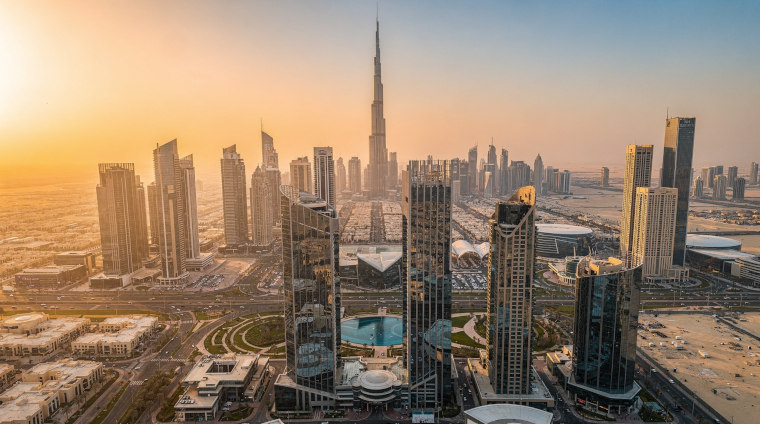 The image was generated using AI technologies