Home/Business in the UAE/DMCC Dubai: Free Zone, Company Registration, and Business Advantages
05.08.2026
Business in the UAE
1457
Reading time: 13 minutes
DMCC Dubai: Free Zone, Company Registration, and Business Advantages
Save the article:
What's this article about? DMCC — the Dubai Multi Commodities Centre — is one of the largest free economic zones in the world. It's located in Dubai in the Jumeirah Lakes Towers (JLT) district. More than 25,000 companies from around the world are registered there. DMCC has been named the world's best free zone by Financial Times fDi Magazine for seven consecutive years.
What will you get from reading this? You'll learn what DMCC is, what advantages it offers businesses, who this free economic zone is suited for, how company registration works, and what to keep in mind before starting a business.
What Is DMCC
DMCC stands for Dubai Multi Commodities Centre. It's a free economic zone established by the UAE government in 2002. Its main purpose is to develop global trade in commodities: gold, diamonds, precious metals, tea, food, and energy resources.
Today, DMCC is more than just a trading hub. It's a full-fledged business ecosystem for companies across a wide range of sectors: IT, finance, consulting, media, education, logistics, and technology.
History and Status of DMCC
DMCC was established by decree of the Dubai government. Since its founding, the zone has grown from a niche trading platform into a global business hub. Thousands of new companies from more than 170 countries join every year.
In 2015, DMCC received the status of the Dubai Diamond Exchange. Almas Tower — DMCC's headquarters — is one of the zone's key landmarks, standing 360 meters tall. It houses DMCC's offices, the Diamond Exchange, and world-class business centers.
Location: Jumeirah Lakes Towers and Uptown Dubai
DMCC occupies the Jumeirah Lakes Towers (JLT) district — one of Dubai's most developed business districts. More than 80 high-rise towers surround four artificial lakes there. JLT sits directly across from Dubai Marina and right next to metro stations.
Image source: Dawid Tkocz / unsplash.com
JLT District Infrastructure
The DMCC area has everything needed for living and working:
category A and B office towers;
residential real estate;
restaurants, cafés, and retail spaces;
parks and lakeside promenades;
fitness centers and medical clinics;
kindergartens and schools.
The metro connects the district to the rest of Dubai — the DAMAC Properties station is located within JLT. Dubai International Airport is 25–30 minutes away by car.
Uptown Dubai
In addition to JLT, DMCC is developing a new residential and business district — Uptown Dubai. This modern mixed-use project includes offices, residences, retail spaces, and cultural venues. Uptown Dubai sits near Sheikh Zayed Road, Dubai's main highway.
Advantages of Registering a Company in DMCC
DMCC offers businesses a set of conditions unavailable in the UAE mainland. This is precisely why the zone remains one of the most attractive options for foreign entrepreneurs.
Tax Advantages
0% corporate tax on qualifying income under the free zone regime.
0% personal income tax.
0% tax on profits from trading operations within DMCC.
Tax benefit guarantees are locked in for 50 years from the date of registration.
Important! Since 2023, the UAE has imposed a 9% corporate tax. DMCC companies that work exclusively with foreign clients and don't operate on the mainland retain the 0% rate on qualifying income.
Ownership Structure
100% foreign company ownership with no mandatory participation of a UAE national. This is a key distinction from mainland companies, which previously required a local partner holding a 51% stake.
Other Advantages
Full repatriation of capital and profits.
No customs duties on goods imported and exported through DMCC.
Access to an extensive business network: there are more than 25,000 companies within the zone.
Developed trading infrastructure: a diamond exchange, platforms for trading gold and precious metals.
A professional regulatory environment and support from the DMCC Authority.
Access to the DMCC Disputes Centre — free mediation for resolving corporate disputes.
Types of Licenses in DMCC
DMCC issues several types of licenses depending on a company's business activity.
Trading License
Suited for companies engaged in the buying and selling of goods. Covers trade in raw materials, consumer goods, and industrial products. This is the most common license type in DMCC.
For companies providing services, such as consulting, IT, marketing, finance, education, logistics. Allows working with clients worldwide from a DMCC office.
Industrial License
For manufacturing companies engaged in light production, packaging, or processing of goods. Requires production facilities.
Holding Company License
For companies that manage assets, hold stakes in other businesses, or structure international operations. Popular among investors and family offices.
License Type
Who It's For
Processing Time
Trading
Import, export, wholesale trade
3–5 business days
Service
IT, consulting, finance, marketing
3–5 business days
Industrial
Manufacturing, processing
7–10 business days
Holding
Asset management, investments
5–7 business days
Types of Activities in DMCC
DMCC covers more than 600 permitted business activities, divided by sector:
Technology: software development, IT services, cybersecurity, blockchain.
Media and marketing: advertising, content production, PR, digital agencies.
Education: training, coaching, online education.
Logistics: supply chain management, warehousing.
Professional services: legal, accounting, auditing.
A single DMCC license allows for several activities within the same category, which reduces registration costs.
The Company Registration Process in DMCC
Business registration in DMCC is done through the DMCC online portal. The entire process is transparent and takes 3 to 10 business days.
Step 1. Choose the Business Activity and License Type
The first step is determining what kind of business you plan to run. DMCC offers a detailed catalog of activities. It's important to select activity codes that match your actual business.
The company name is checked for uniqueness and compliance with DMCC requirements. You can't use the names of government bodies, offensive words, or already registered trademarks.
Step 3. Submit an Application via the DMCC Portal
All documents are submitted through the official DMCC portal. The system lets you track your application status in real time. Once approved, an Initial Approval is issued.
Step 4. Sign an Office Lease Agreement
To obtain a license, you must specify the company's legal address within DMCC. This can be a physical office, a flexi desk, or a virtual office. No license is issued without a lease agreement.
Image source: fizkes / shutterstock.com
Step 5. Pay Fees and Receive the License
After signing the lease and paying the government fees, the DMCC Authority issues the corporate documents: the registration certificate, trading license, and Memorandum of Association.
Documents Needed to Start a Company
To register a new company in DMCC, an individual will need:
copies of the passports of all shareholders and directors;
color photos of each shareholder against a white background;
a completed registration application form;
proof of residential address (utility bill, bank statement);
a business plan (in some cases).
To open a branch of a foreign company, additionally required are:
the parent company's Articles of Association;
the parent company's certificate of incorporation;
a board resolution to open a branch in DMCC;
an audit report for the most recent year.
Important! All foreign documents must be apostilled and translated into English or Arabic. The DMCC Authority won't accept documents without proper certification.
Offices in DMCC
DMCC offers several office space formats depending on a company's size and budget.
Physical Office
A dedicated office in one of the JLT or Uptown Dubai towers, ranging from 13 to several thousand square meters. Suited for companies with employees working in Dubai on a permanent basis.
Office rental costs in DMCC start at 40,000–60,000 AED per year for a small space. The number of visa quotas depends on office size: one visa per 9 sq m of office space.
Flexi Desk
A flexible workstation — a desk in a DMCC coworking space. A flexi desk provides a legal address for the company and the right to one resident visa. This is the optimal option for startups, freelancers, and companies with remote teams.
A flexi desk cost starts at 15,000–20,000 AED per year, including access to meeting rooms and common areas.
Virtual Office
A legal address without physical presence. A virtual office suits companies that operate online or have no employees in the UAE. The cost starts at 5,000–10,000 AED per year.
A single DMCC license can be linked to multiple offices across different towers.
Taxes in DMCC
DMCC offers some of the best tax conditions for business in the region.
Corporate Tax
Since 2023, the UAE has introduced a 9% corporate tax to companies with profits exceeding 375,000 AED. DMCC companies operating within the free zone retain the 0% rate on qualifying income, provided they meet the requirements of the Qualified Free Zone Person (QFZP) regime.
VAT
Since 2018, the UAE has introduced a 5% VAT. Companies with turnover exceeding 375,000 AED must register as a VAT payer with the FTA (Federal Tax Authority).
Personal Tax and Customs
There is no personal income tax in the UAE. Customs duties on goods imported and exported through DMCC aren't charged, provided free zone conditions are met.
Resident Visa Upon DMCC Registration
Registering a company in DMCC grants the right to obtain UAE resident visas for shareholders, directors, and employees. The number of visas depends on the size of the rented office.
Investor Visa — for company shareholders. Valid for 3 years, renewable.
Employment Visa — for company employees, issued after a medical exam and biometrics.
Dependent Visa — for family members: spouse and children.
A DMCC resident visa holder receives an Emirates ID — the primary document for living in the UAE. The Emirates ID unlocks access to banking services, healthcare, education, and government services.
Opening a Bank Account
After registering a company in DMCC, the next step is opening a corporate bank account in the UAE — a mandatory requirement for doing business.
Popular banks for DMCC companies:
Emirates NBD
RAKBANK
Mashreq Bank
ADCB (Abu Dhabi Commercial Bank)
First Abu Dhabi Bank (FAB)
To open an account, the bank requests the company's corporate documents, passports of directors and shareholders, and information about the business model and expected transactions. Processing time ranges from two weeks to two months, depending on the bank.
Important! UAE banks carefully scrutinize the source of funds and the business reputation of shareholders. Having prior business experience and a transparent company structure significantly speeds up account approval.
Comparing DMCC With Other UAE Free Zones
The UAE has more than 40 free zones. DMCC is one of the most well-known and developed, but it does have competitors.
Parameter
DMCC
DIFC
JAFZA
Meydan
Location
JLT, Dubai
DIFC, Dubai
Jebel Ali
Nad Al Sheba
Specialization
Trading, services, IT
Finance
Logistics, trade
Services, startups
Free zone corp. tax
0%
0%
0%
0%
Office formats
Physical, flexi, virtual
Physical, flexi
Physical, warehouse
Flexi, virtual
Registration cost
Starts at 15,000 AED
Starts at 30,000 AED
Starts at 10,000 AED
Starts at 12,000 AED
Reputation
Global leader
Financial center
Logistics hub
Budget alternative
DMCC wins out in terms of business network scale, reputation, and variety of permitted activities. DIFC is better suited for financial structures. JAFZA is better suited for logistics and manufacturing companies.
Frequently Asked Questions About DMCC
What is DMCC, and how does it differ from the mainland?
DMCC is a free economic zone in Dubai. DMCC companies operate under a free zone regime: 100% foreign ownership, zero customs duties, and special tax conditions. Mainland companies pay standard corporate tax and can work directly with the UAE market without restrictions.
DMCC companies mainly work with international clients, while trading with the mainland requires a distributor or an affiliated mainland company.
How much does it cost to register a company in DMCC?
The cost depends on the license type, business activity, and chosen office solution. A minimal package with a flexi desk starts at 15,000–20,000 AED per year. A full package with a physical office and several visas starts at 40,000–80,000 AED per year. A government registration fee of about 8,000–12,000 AED is charged additionally.
Yes. DMCC allows all documents to be submitted online. Signing certain documents may require a notarized power of attorney. Physical presence in Dubai is needed for biometrics when processing the resident visa.
How many visas can you get on a single DMCC license?
The number of visas depends on the size of the rented office. A flexi desk allows for 1 visa. A physical office of 23 sq m allows up to 3 visas. The larger the office, the more visa quotas. There's no cap on the maximum number of employees.
Do DMCC companies need to be audited?
Yes. DMCC requires all registered companies to undergo an annual audit by an accredited auditor. The audit report must be submitted along with the license renewal application. License renewal isn't possible without an audit.
Can you have multiple offices in different DMCC towers under a single license?
Yes. DMCC allows multiple offices across different towers under one license. Each additional office is registered as a branch within the zone and requires a separate lease agreement.
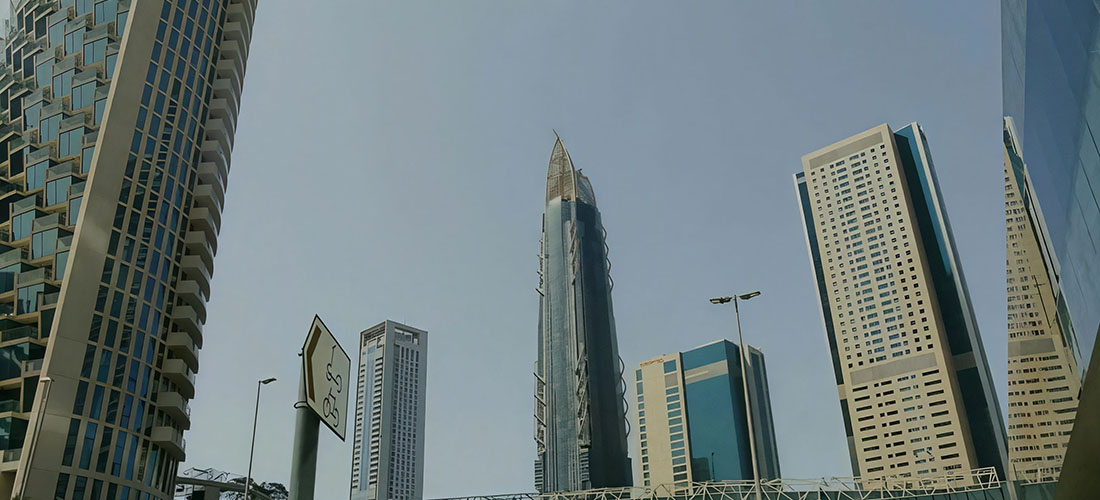
Article header image source: Max Tcvetkov / unsplash.com
Do Russians need a visa for Oman in 2026? Entry rules for Oman for Russians: documents and requirements. Visa for Oman for Russians in 2026: types, cost, and how to apply. Tourist visa for Oman for Ru...
General characteristics of Qatar's population. Demographic structure and indigenous population. Population growth and migration. Qatar's economy and its influence on the population. Comparison of Qata...
Taxes in Dubai are among the lowest in the world. In some cases, individuals and businesses don't pay them at all, while in others, they pay no more than 9% on profits, which is significantly lower th...
The main night-time attractions of Dubai. Nightlife and clubbing. Dubai's night markets and beaches. Night walks and excursions. Practical tips for night-time leisure. Frequently asked questions.
General cost of living and recreation. Housing and accommodation prices. Food: restaurants, cafes and groceries. Transport and travel. Entertainment and attractions. Shopping and purchases. Additional...
Specifics of life in Abu Dhabi. Popular vacancies for Russians in Abu Dhabi. Requirements for job seekers in Abu Dhabi. Where to look for work as a Russian in Abu Dhabi. Frequently asked questions abo...
What a flying taxi is and how it works. From the first flights to the present day: who is developing the flying taxi. Where air taxis are already flying: Dubai and other cities around the world. Why f...



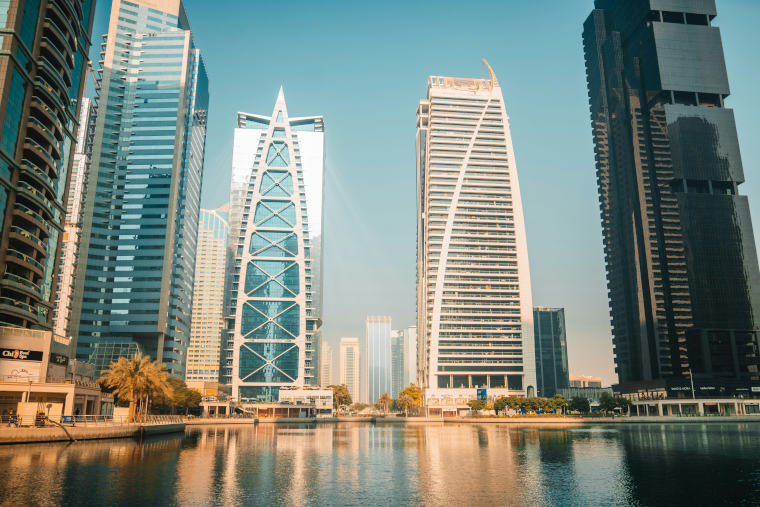 Image source: Dawid Tkocz / unsplash.com


 Image source: fizkes / shutterstock.com
 Image source: Smallroombigdream / shutterstock.com