Home/Cities of the UAE/The Best Restaurants in Dubai: A Complete Guide to Cuisines, Views and Prices
18.05.2026
Cities of the UAE
908
Reading time: 10 minutes
The Best Restaurants in Dubai: A Complete Guide to Cuisines, Views and Prices
Save the article:
What food should you try in Dubai and where should you do it? Dubai brings together more than 200 nationalities, and each one has brought its own cuisine. Michelin-starred restaurants sit alongside street cafés, whilst a dinner table by the window with a breathtaking view of the Burj Khalifa costs only a little more than lunch at an ordinary Lebanese restaurant. This guide provides a full overview of the city's establishments: from fine dining to budget places, from underwater restaurants to rooftop bars.
Who is this guide for? For those visiting Dubai for the first time who don't want to waste money on a poor choice. For those looking for a venue for a romantic dinner with a panoramic view. And for those who live in the city and want to discover something new — original, delicious and without an enormous bill.
Why Dubai is the Gastronomic Capital of the Middle East
Dubai ceased to be a mere transit hub long ago. The city has become one of the world's leading gastronomic centres, and this is no exaggeration. The reason lies in its population: more than 200 nationalities reside there permanently. Each one has brought its own cuisine, traditions and chefs. French restaurants sit alongside Japanese sushi bars, Indian tandoor establishments alongside Peruvian eateries.
Competition between venues is extremely high. This compels restaurateurs to continuously work on quality, concept and presentation. The Michelin Guide has covered Dubai since 2022 — and the list of recognised establishments grows every year. Dubai is home to one of the largest concentrations of Michelin-starred restaurants across the entire Middle East.
The UAE as a whole, and Dubai in particular, has become a magnet for world-class chefs. Luxury hotels — from Atlantis to the Four Seasons — attract renowned cooks with their own signature concepts. A journey through Dubai's gastronomic scene is an adventure in its own right, one that rivals a trip to the world's most celebrated culinary capitals.
Dubai Restaurants by Cuisine Type
Choosing a cuisine in Dubai is no simple task. The city offers dozens of options: from classic French to rare Peruvian, from Arabic street food to refined Japanese cuisine. Below is a detailed breakdown of the main gastronomic categories that every visitor to the city should explore.
European cuisine: French, Italian and Mediterranean
European cuisine holds a strong position in Dubai. French restaurants offer classic steakhouses with aged meat, duck confit and fond-based sauces.
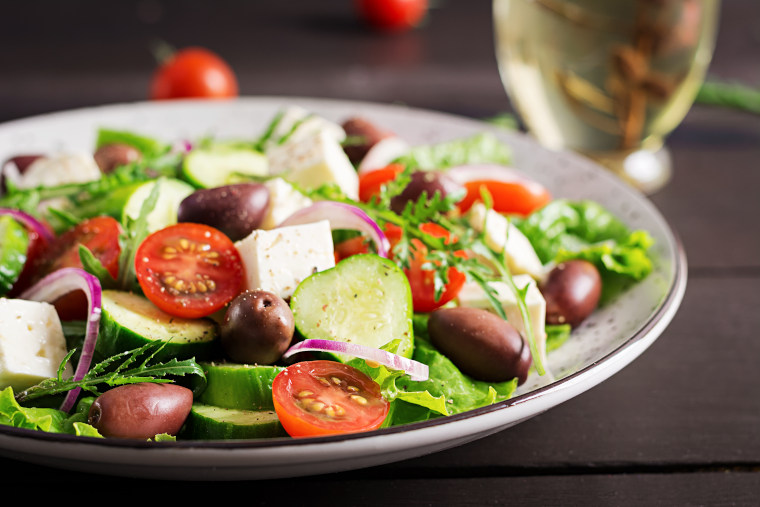
Italian cuisine is widely represented: from authentic establishments with wood-fired ovens and hand-made pasta to contemporary concepts. The Mediterranean cuisine brings together the best of Spain, Greece and the Levant — seafood, olive oil and fresh herbs.
Источник: timolina / magnific.com
Restaurants with open kitchens, where chefs work in full view of guests, have gained particular popularity. Exquisite tuna carpaccio, fresh oysters, truffle ravioli, seafood risotto and house-made tiramisu are the standard of a good European restaurant in Dubai.
The Spanish offering is represented by tapas bars and Basque cuisine concepts. British cuisine has found its place in the pubs and gastropubs of the DIFC business district.
Asian cuisine: Japanese, Chinese, Indian and pan-Asian
The Asian segment in Dubai is one of the richest. Japanese restaurants are divided into two tiers: high-end concepts offering omakase and premium sushi, and more casual establishments serving rolls and ramen. Chinese cuisine ranges from traditional dim sum to restaurants with a dedicated oven for Peking duck.
Indian cuisine occupies a special place — Dubai is one of the largest centres of the Indian diaspora. Tasting menus at the finest Indian restaurants combine classics, such as tandoori, biryani, and curry, with modern presentation. Thai cuisine is available in both street-food format and full-service restaurants.
Pan-Asian concepts bring together the flavours of Vietnam, Thailand and Japan under one roof. Kinoya restaurant in Dubai Marina has earned popularity among locals and expats alike precisely through its pan-Asian approach combined with the atmosphere of a Japanese izakaya.
Arabic and Emirati cuisines in Dubai
Authentic Emirati cuisine differs from the tourist version that is often served in food courts. True local food consists of harees (a wheat and meat porridge), maqbous (spiced baked fish), date-based sweets and aromatic cardamom coffee. The best establishments that serve this kind of food are located in the historic neighbourhoods of Bur Dubai and Deira, where the atmosphere is more authentic and the tourist footfall is lower.
Lebanese cuisine occupies a special niche. A mezze of hummus, baba ghanoush, kibbeh and fresh pitta is the hallmark of a good Lebanese restaurant. Middle Eastern establishments bring together the cuisines of Egypt, Syria and Turkey under one menu. Shawarma, falafel and mansaf are the signature dishes to try at street venues in the historic quarters.
In the Jumeirah area and along Sheikh Zayed Road, establishments operate where traditional Arabic recipes have been reimagined by a new generation of chefs — with contemporary interiors and signature starters.
Latin American and Peruvian cuisines
Peruvian cuisine is one of Dubai's leading gastronomic trends. Michelin-starred restaurants offer ceviche, tiradito and anticucho in modern interpretations. Beachside establishments in a Latin American style create a Caribbean atmosphere — live music, vibrant interiors and bold flavours.
COYA on Palm Jumeirah is one of the most well-known establishments in this category. The restaurant combines Peruvian gastronomy with a lounge atmosphere and cocktail culture. The Latin American segment is complemented by Mexican restaurants offering tacos and guacamole, as well as Brazilian churrascarias with open grills. These establishments areespecially popular for celebratory dinners and evenings with friends.
Turkish, Uzbek and Russian cuisines
Restaurants offering familiar cuisine are in steady demand among Russian-speaking expats and tourists. Turkish meat-focused establishments offer kebab, pide and mezze in classic style. Uzbek cuisine attracts diners with pilaf cooked over an open fire, samsa and traditional Central Asian dishes. It is particularly popular among those from Uzbekistan and Kazakhstan.
Russian restaurants are found in areas with a high concentration of Russian-speaking residents, such as Jumeirah and Dubai Marina. They combine classics such as borscht and pelmeni with contemporary presentation. Menus are frequently supplemented with dishes featuring sturgeon, red caviar and Siberian fowl. A number of establishments offer a business lunch — a good way to assess the quality of the cuisine without a large bill.
Restaurants with Panoramic Views and Unusual Formats
Dubai is a city where the view from a restaurant becomes part of the gastronomic experience. You can dine at a height of over 495 metres, underwater among sharks and rays, or on a suspended platform in the sky.
Restaurants with a view of the Burj Khalifa
A view of the Burj Khalifa is the main emotional asset of restaurants in Downtown Dubai. The best time to visit is the evening, when the musical fountain show begins. Restaurants situated opposite the skyscraper offer a direct view of the light show from a terrace. This spectacle is worth planning a dinner around.
It is important to bear in mind that a street-level view and a view from the upper floors are fundamentally different experiences. The panorama from above takes in the entire silhouette of the skyscraper, whereas from street level only a portion of it is visible. Address Sky View is one of the venues from which the Burj Khalifa can be seen in its full height. The restaurant is situated on a high floor with panoramic glazing and offers European cuisine.
Important! A table with a view of the fountains should be booked at least 2–3 weeks in advance, as demand significantly exceeds supply.
Restaurants with a view of Dubai Marina and the Persian Gulf
Dubai Marina and JBR restaurants offer a completely different view.The panorama is a forest of skyscrapers, yachts on the water and the open gulf on the horizon.
Restaurants along Marina Walk combine a view of the yachts with a relaxed atmosphere. The best time to visit is sunset and the early evening hours, when the lights of the city are reflected in the water. JBR restaurants offer a direct view of the Persian Gulf with no city buildings on the horizon. These are two different visual experiences. Those who wish to enjoy a city panorama choose Marina Walk. Those who prefer the view of the sea and the horizon head to Jumeirah Beach.
On Bluewaters Island, connected to JBR, there are several restaurants with a view of the Ain Dubai observation wheel.
Restaurants on rooftops and upper floors
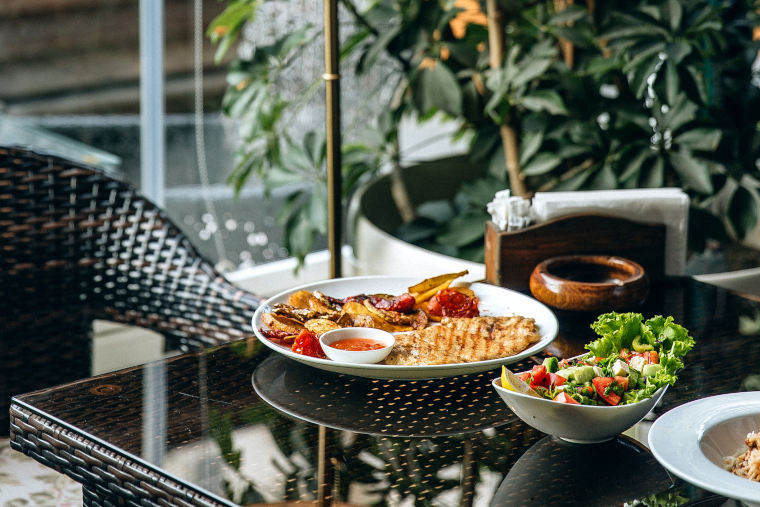
There are two types of rooftop restaurants in Dubai: covered and open-air terraces. Open terraces are comfortable from October to April; during the summer months, the high temperature makes spending time outdoors uncomfortable. Covered rooftop venues with panoramic glazing operate year-round.
Источник: KamranAydinov / magnific.com
From the 25th floor and above, you can see a real city panorama. Spacious terraces with lounge zones, live music and cocktails are the standard of a good rooftop establishment in Dubai. The dress code in most of these establishments is smart casual or more formal. Shorts and beach footwear are not acceptable.
Underwater restaurant: Ossiano on Palm Jumeirah
Ossiano is a Michelin-starred restaurant with panoramic windows into a giant aquarium. Thousands of marine creatures — sharks, rays, tropical fish — glide behind the glass while the guests peruse a seafood menu. The presentation is theatrical: each dish is a separate visual act. The restaurant is located in the Atlantis hotel on Palm Jumeirah.
The menu is built around the seafood: scallops, prawns, lobster, crab and deep-sea delicacies. The chef employs a woodfire technique for some dishes, adding a smoky flavour and distinctive texture to the seafood. Booking is essential, often several weeks in advance.
Aerial dining: At.Mosphere and Dinner in the Sky
At.Mosphere is located on the 122nd floor of the Burj Khalifa, at a height of over 495 metres. It is one of the highest restaurants in the world. The menu features European fine dining. The view encompasses the entire city, the bay and the desert beyond. This restaurant is a luxury establishment with a corresponding level of service.
Dinner in the Sky is an entirely different experience. The guests are raised on a suspended platform to a height of 50 metres. Dinner takes place in the air directly above the city (with seat belts fastened).
Both venues offer an event rather than simply a dinner. It is worth booking in advance, especially during the peak season from November to March.
Restaurants with theatrical presentation
Some of Dubai's restaurants turn dinner into a full-scale show. Chefs work directly at a counter in the dining room, and dishes are served with liquid nitrogen “smoke”, open flames or fresh flowers. In some establishments there are theatrical performances, along with live music and dancing.
Tresind Studio, which holds a Michelin star, is known for a theatrical approach: each course is a separate story with its own narrative. Orfali Bros Bistro offers signature Middle Eastern cuisine with unconventional presentation, and has likewise appeared in the region's best restaurant rankings. These establishments attract those for whom not only the flavour matters, but the overall impression of the evening.
Michelin-Starred and the Most Expensive Restaurants in Dubai
The Michelin Guide has covered Dubai since 2022. Over the course of several years, the list of recognised establishments has grown. A Michelin star signifies specific things: consistent quality of ingredients, precision of technical execution, impeccable service and the chef's own signature concept. It is not merely an expensive restaurant, it is a guarantee of a certain standard.
Among the most well-known Michelin-starred restaurants in Dubai are Tresind Studio with its theatrical new-generation Indian cuisine, Ossiano with its underwater format and seafood gastronomy, COYA with its Latin American menu on Palm Jumeirah, and Tasca by the celebrated Portuguese chef José Avillez at the Mandarin Oriental hotel.
Each of these restaurants offers a tasting menu — from 5 to 12 courses. The service is of a corresponding calibre: a sommelier, a personal welcome and an explanation of each dish.
Prices at the most expensive establishments in the city are based on several factors. A unique location adds a significant proportion to the bill. Rare ingredients — caviar, truffle, foie gras and premium wagyu beef — make up another component.
The chef's signature dishes featuring marbled beef or sea bass with signature presentation frequently feature among the menu highlights. Exquisite décor, impeccable table settings and a high standard of service complete the picture. The dress code at premium establishments is strict: smart casual or, in some restaurants, formal attire.
Important! Michelin-starred restaurants in Dubai should be booked 2–4 weeks in advance. During the peak season (November–March), there is almost no availability.
Beachside Restaurants and Budget Venues
The main myth about Dubai is that it is impossible to eat cheaply there. But this is not the case. The city offers a wide range of establishments — from ethnic cafés serving a full meal for a few dirhams to family restaurants with a mid-range bill. Below is an overview of venue types by price level and typical dishes.
Type of venue
Price level
Typical dishes
Locations
Ethnic café
Budget
Pilaf, hummus, manti, flatbreads, kebab
Bur Dubai, Deira
Family restaurant
Mid-range
Grilled meat, pizza, seafood
JBR, Dubai Marina, Jumeirah
Gastro café
Below mid-range
Breakfasts, sandwiches, desserts
Various districts
Business lunch at a premium restaurant
Mid-range (set menu)
Chef's tasting sets
DIFC, Downtown Dubai, Business Bay
Beach café
Affordable–mid-range
Seafood, salads, cocktails
JBR, Jumeirah Beach
The table shows the true range of venue types in Dubai. The budget option is ethnic cafés in Deira and Bur Dubai, where pilaf, hummus and kebab cost very little. A tasty and filling bite can be found easily in these neighbourhoods.
A useful tip: lunch sets at upscale restaurants in DIFC and Downtown Dubai are considerably cheaper than the evening menu. This is an opportunity to sample high-quality cuisine without a large bill. Bib Gourmand is another category in the Michelin guide, which includes establishments offering high-quality cuisine at accessible prices.
Beachside restaurants in Dubai
Beachside venues are concentrated in two areas — JBR and along Jumeirah Beach. The format is relaxed: sand instead of flooring, a light menu, seafood and cocktails. In the evenings, the atmosphere of sunset over the Persian Gulf is added to the mix. Healthy eating is a particular strength of beachside cafés: avocado toast, fruit smoothies and Greek salads with cheese and fresh vegetables.
The best time to visit is from October to April, when the temperature allows you to sit outdoors and enjoy the view. During the summer months, beachside restaurants remain open, but most guests prefer to arrive in the evening after sunset. On Palm Jumeirah, beachside establishments combine a resort vibe with a higher-quality menu. This is the mid-price segment with a magnificent view of the Burj Al Arab or the Persian Gulf.
Conclusion
Dubai is a city where the gastronomic experience is not confined to a single format. You can dine underwater surrounded by sharks, at a height of 495 metres above the ground, or on the sand by the Persian Gulf with a cocktail in hand. You can also choose a Michelin-starred restaurant with a twelve-course tasting menu, or find an authentic pilaf in a Deira café for a significantly lower price.
The main rule when making a choice is to be guided by the purpose. A business dinner calls for a quiet, prestigious venue in DIFC. A romantic evening calls for a restaurant with a breathtaking view of the Burj Khalifa, or Ossiano. A family lunch calls for a venue in Dubai Marina or JBR with a varied menu. The budget option can be found in the historic neighbourhoods with their authentic food.
Dubai continues to develop as a gastronomic hub. Luxury hotels are opening new restaurants, celebrated chefs are bringing signature concepts, and the Michelin Guide is expanding its list.
Frequently Asked Questions
Which Dubai restaurants are included in the Michelin guide?
The Michelin Guide has covered Dubai since 2022. Among the recognised establishments are Tresind Studio (new-generation Indian cuisine), Ossiano (seafood, underwater aquarium), COYA (Peruvian cuisine, Palm Jumeirah) and Tasca (Portuguese fine dining). The list continues to grow. It is worth checking the current selection before travelling, as new stars and Bib Gourmand designations appear on a regular basis.
Where in Dubai can one try authentic Emirati cuisine?
Authentic Emirati cuisine is concentrated in the historic neighbourhoods of Bur Dubai and Deira. It is there that establishments serving harees, maqbous and traditional date-based sweets can be found. Tourist areas such as Downtown Dubai and Dubai Marina tend to offer a stylised version of Middle Eastern cuisine rather than the genuine article. Dubai Creek offers the opportunity to combine dinner with a trip on an abra.
Is it possible to eat cheaply in Dubai?
Yes. Ethnic cafés in Deira and Bur Dubai offer a full meal at minimal cost. A good option is lunch sets at restaurants in DIFC and Downtown Dubai: the quality of the cuisine is high, yet the price is considerably lower than in the evening.
Family restaurants in Dubai Marina and JBR are mid-range in terms of price and offer a varied menu. A number of venues offer happy-hour deals on drinks and light-bites on weekdays.
When is the best time to visit rooftop restaurants?
Open terraces are comfortable from October to April. During this period, the evening temperature ranges between 18 and 28°C. From May to September, the heat makes spending time outdoors uncomfortable. Covered rooftop venues with panoramic glazing operate year-round.
Which area of Dubai is best for a business dinner?
DIFC, Downtown Dubai and Business Bay are all well-suited to business meetings. These areas offer quiet establishments with a high standard of service. DIFC is the city's financial centre, with a high concentration of premium restaurants. Downtown Dubai offers prestigious establishments with a breathtaking view of the Burj Khalifa. Both areas are located at the very heart of the city's business life and are convenient for meetings.
Are there restaurants in Dubai suitable for families with children?
Family restaurants are widely represented in Dubai Marina, JBR and Jumeirah. They offer varied menus, open terraces and a comfortable format without a strict dress-code. Beachside venues at JBR are especially well-suited to families: there is more space, the atmosphere is relaxed and the menu is varied.
General situation regarding safety in the UAE for tourists. Safety of women in the UAE. Rules of conduct for tourists in the UAE. How safe is public transport in the UAE for tourists? What is prohibit...
What real estate is and which types of property are legally classified as such. What are the main types of real estate? What types of residential and commercial real estate exist? How to register righ...
Why Arabic is not a single language. How Arabic dialects arose — a brief history. The main groups of Arabic dialects — where they are spoken and how. Do Arabs from different countries understand one a...
Features of the Dubai Festival City district. Daily life in Dubai Festival City. Housing in Dubai Festival City. Shopping and entertainment in Dubai Festival City. Transport accessibility of Dubai Fes...
Taxes in Dubai are among the lowest in the world. In some cases, individuals and businesses don't pay them at all, while in others, they pay no more than 9% on profits, which is significantly lower th...
The Arabian Peninsula before the formation of the Saudi state. The first and second Saudi states. The creation of the modern Kingdom of Saudi Arabia. The development of Saudi Arabia in the 20th–21st c...
Specifics of the UAE government structure. Who the sheikhs are. Sheikhs of Dubai. Sheikhs of Abu Dhabi. Sheikhs of other emirates. Frequently asked questions about UAE sheikhs.
Specifics of mobile communication in the UAE. Roaming conditions in the UAE from Russian operators. How to activate roaming in the UAE. Alternatives to roaming in the UAE. Frequently asked questions a...
Do Russians need a visa for the UAE and how do you obtain one? What documents are required to enter the UAE? What are the differences between entry rules for Dubai, Sharjah and Abu Dhabi? What you nee...



 Источник: timolina / magnific.com

 Источник: KamranAydinov / magnific.com