Arab Culture: History, Science, Traditions and Distinctive Features
Save the article:
Arab culture is one of the richest and most enduring traditions in human history. It spans millennia of history, dozens of peoples, and millions of square kilometres, from the Arabian Peninsula to the Atlantic.
What did the Arabs discover in science, and why does it still matter? Which traditions are alive in the Arab world today, and what lies behind them? This article provides answers without unnecessary words, only facts.
What Arab Culture Is and How it Came About
Arab culture is not the culture of a single people. It is a civilisational layer that was formed over many centuries through the efforts of dozens of peoples. The unifying foundation was the Arabic language — the language of the Quran, of science, poetry and trade. It was this language that bound together Arabs, Persians, Berbers, Turks and many others who lived under the roof of the Arab Caliphate.
Geographically, this culture encompassed territories stretching from the Arabian Peninsula to Spain in the west and Central Asia in the east, as well as part of Africa.
Where Arab culture originated: the Arabian Peninsula and its role
It all began with the harsh deserts of Arabia. The unforgiving climate shaped a unique character: resilience, pride, and a deep appreciation for water and guests. The nomadic Bedouin tribes lived separately, but were united through language and poetry.
Image source: Rabah Al Shammary / unsplash.com
The spoken word was the greatest of all values, and poets commanded immense authority: verses were passed by word of mouth across generations. Language became the foundation of collective identity long before any unified state existed. It was on the Arabian Peninsula that the cultural codes were born which would later spread across half the world.
How the Arab Caliphate became the centre of world culture
Islam united the scattered tribes. The new faith provided a common law, a common language of worship and a common purpose. The Caliphate expanded rapidly and became one of the largest countries of the medieval world. Trade routes connected it with India, China and Europe. Rulers encouraged the sciences and the arts.
The symbol of this era was Baghdad, the capital of the Caliphate and one of the largest cities of its time. There stood the House of Wisdom, an institution where works on mathematics, medicine, philosophy and astronomy were translated, studied and created. It was from Baghdad that knowledge spread across the entire world.
Contribution of Arab Science to World Civilisation
When many ancient texts had been lost or forgotten in early medieval Europe, Arab scholars preserved them, translated them and developed them further. Without this bridge, there would have been neither the Renaissance nor modern science as we know it. Arab science is not a separate chapter of history; it is the foundation upon which European and world civilisation stands.
How the Arabs preserved and transmitted ancient knowledge to the West
The translation movement of the 8th–10th centuries is one of the most significant cultural projects in the history of humanity. Scholars of the House of Wisdom translated the works of Aristotle, Galen, Ptolemy and Euclid from Greek into Arabic. They did not merely copy — they commented, clarified and corrected errors.
When, centuries later, European thinkers wished to return to ancient philosophy, they read it in Arabic translations. It was through the Arabs that Europe rediscovered the logic of Aristotle and the geometry of Euclid.
Medicine, mathematics and astronomy: the principal discoveries of Arab scholars
Arab scholars did not only preserve — they discovered. Al-Khwarizmi developed a system of computation that is today called algorithms, and the very word derives from the Latinised form of his name. He also laid the foundations of algebra: the term "algebra" comes from the title of his treatise.
Ibn Sina systematised the medical knowledge of his time in a work that served as a textbook in European universities for several centuries. Al-Razi described the symptoms of smallpox and measles, distinguishing between these diseases. Arab astronomers built observatories and refined the movements of celestial bodies; many stars still bear Arabic names.
Field of science
Achievement
Key figures
Mathematics
Algebra, algorithms, positional numeral system
Al-Khwarizmi
Medicine
Systematisation of knowledge, description of diseases
Ibn Sina, Al-Razi
Astronomy
Observatories, star catalogues, refinement of orbits
Al-Battani
Optics
Theory of vision, description of lenses
Ibn al-Haytham
Alchemy as a precursor to chemistry: what the Arabs discovered in the laboratory
Arab alchemy was not merely the pursuit of the philosopher's stone. It was a genuine experimental practice. Scholars distilled substances, studied acids and alkalis, and described chemical reactions. It was from this tradition that chemistry grew as a science.
Traces of Arab influence in the chemical terms remain to this day: the words "alcohol", "alkali", "alchemy" and "alembic" are all of Arabic origin. The Arab laboratories of the medieval era were the first places in history where experiment was considered a means of understanding the world.
Culture of the Arabic Language and Its Role in Literature, Philosophy and Art
Arab culture is not science alone. Its humanities are no less rich. Literature, philosophy and the visual arts developed in parallel with scientific discoveries, drawing from the same sources: language, faith and contact with other civilisations.
Arab literature: from Bedouin poetry to One Thousand and One Nights
The Arab literary tradition has its roots in the pre-Islamic era. Bedouin poets composed qasidas — odes celebrating martial valour, love and generosity. This oral tradition was vibrant and powerful. The advent of Islam gave it a new dimension: the Quran became the model of the Arabic language, the standard of beauty and precision of expression. It was the Quran that established a unified written form for an enormous cultural space.
Later, written works of global significance emerged. One Thousand and One Nights — a collection of tales from various peoples, reworked by Arab authors — became a global cultural phenomenon. Scheherazade and Sinbad long since transcended the boundaries of the Arab world.
Arab philosophy: between theology and reason
Arab thinkers posed themselves a difficult question: how to reconcile faith with reason? Their encounter with Aristotle sharpened it further. Philosophers Al-Farabi and Ibn Rushd sought to demonstrate that Greek logic and Islamic theology were not contradictory. Their works reached Europe and became the foundation of scholasticism.
Thomas Aquinas debated with Ibn Rushd, referring to him simply as "the Commentator", so great was the authority of this Arab thinker. Arab philosophy served as a bridge between antiquity and the European Renaissance.
Arab art and architecture: calligraphy, mosques and ornamentation
In a number of Islamic traditions, the depiction of people and animals in a religious context was not encouraged. This gave powerful impetus to other forms of art. Calligraphy became the highest of them: the written word was transformed into a work of art. Arabic script adorned the walls of mosques, manuscripts and everyday objects.
The architecture of the Caliphate was remarkable for its scale and elegance: pointed arches, domes, geometric ornamentation, and the interplay of light and shadow in interiors. The Moorish style — a synthesis of Arab, Berber and Iberian traditions — was embodied in the palaces and mosques of Spain.
Image source: Sheila C / unsplash.com
The decorative and applied arts, such as ceramics, weaving, and metalwork, attained exceptional refinement in the Arab world.
Which Traditions of Arab Culture are Important to Know Today
The centuries-old traditions of the cultures of Arab countries are alive. They are not museum exhibits — they are part of the daily life of millions of people. To understand them is to understand the Arab world without stereotypes.
Islam and Sharia as the foundation of the Arab way of life
Islam shapes the rhythm of life in the majority of Arab countries. The five daily prayers structure the day; the fast of Ramadan unites society for a month.
Sharia — a set of norms based on the Quran and the Sunnah — governs a wide range of matters: from family relations to economic transactions. The degree of Sharia's influence on the structure of the state varies from country to country. But in the cultural dimension, Islamic norms remain significant everywhere — even for non-religious Arabs.
Hospitality, family and etiquette: how life is organised in Arab society
Hospitality in Arab culture is not merely courtesy. It is a moral imperative rooted in the Bedouin ethic of survival in the desert. A guest is sacred. Refusing them food and shelter is dishonorable. Family occupies a central place in life: decisions are taken with due consideration of the opinions of elders, and the reputation of the family name matters to every individual. Understanding these values helps one to conduct oneself appropriately in an Arab country.
Several key rules of etiquette:
Greet the host first and accept refreshments with gratitude
Do not decline tea or coffee without good reason
Avoid using the left hand when passing objects or food
Dress modestly, especially when visiting religious sites
Do not raise the topics of politics or religion without being invited to do so
Traditional Arab dress: what is worn and why
Traditional Arab clothing serves two purposes: climate and culture. Long, loose garments protect against the sun and keep one cool. Men in the majority of Arab countries wear a dishdasha or a galabeya— long tunics, often white. The head is covered with a keffiyeh, held in place by an agal.
Image source: oneinchpunch / shutterstock.com
Traditional women's dress varies by region, but generally emphasizes modesty. In cities, modern Arabs often combine traditional and Western styles: a business suit paired with a head covering, or a hijab worn with a contemporary silhouette. Clothing is not merely conformity to a norm, it is also an expression of identity.
Frequently Asked Questions about Arab Culture
How has the influence of Arab culture manifested itself in Europe?
Europe received from the Arab world science, philosophy and hundreds of words. Algebra, algorithm, alcohol, alchemy, lute, mattress — all of these are of Arabic origin. Through Arabic translations, Europe recovered Aristotle. Moorish architecture left its mark on Spain and Portugal. Arab astronomical tables were used by European navigators during the Age of Discovery.
What is Arab culture in the modern world?
Arab culture continues to develop. Modern writers are receiving major international literary prizes. Architecture astonishes with its scale and boldness. Fashion, cinema, music — in all of these, the Arab world is finding its own voice, without abandoning its traditions. The distinctive features of the culture today lie in the ability to combine a centuries-old heritage with the demands of the present.
Why is the Arabic language considered important for understanding the culture?
It is not merely a means of communication for three hundred million people. It is the custodian of a cultural code. The Quran is read and quoted in the original — translation is considered merely an interpretation. Classical poetry, scholarly texts, philosophical treatises — all of these exist in the Arabic language and are in many respects untranslatable without loss of meaning. To know the culture of the Arabic language is to obtain the key to a civilisation that has been taking shape for more than a thousand years.
Basic dress code rules in Dubai: what every tourist needs to know. Dress code for women in Dubai: a detailed guide. Climate and clothing in Dubai: how to dress for the weather. Where to wear what: a d...
Which desert surrounds Dubai? Where the desert is located and how to get there? The best places for photo shoots in the desert. Entertainment and activities in the desert. FAQ.
11 official festivals in Dubai and the UAE. Non-muslim festivals celebrated in the UAE and Dubai. Other festival celebrations in Dubai and the UAE. Frequently asked questions about festivals in Dubai.
Where is Dubai located? History and development of Dubai. Culture and architecture of Dubai. Districts of Dubai. Frequently asked questions about the location of Dubai.
General information about bus travel in Dubai. Rules of conduct in Dubai public transport. Bus fare in Dubai. Ways to find out Dubai bus schedules. Sightseeing buses in Dubai. Popular tourist bus rout...
UAE bank terms and conditions, and how to meet them. Step-by-step instructions for opening a bank account: from documentation to receiving the services. Best UAE banks: a comparison of conditions for ...



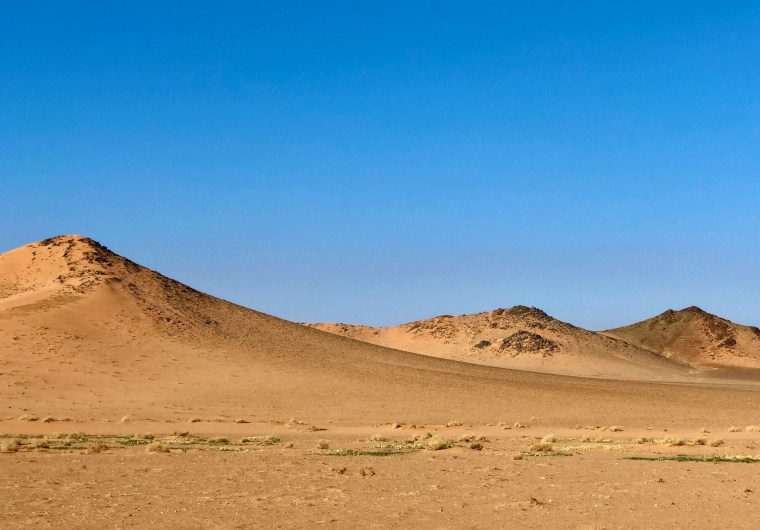 Image source: Rabah Al Shammary / unsplash.com


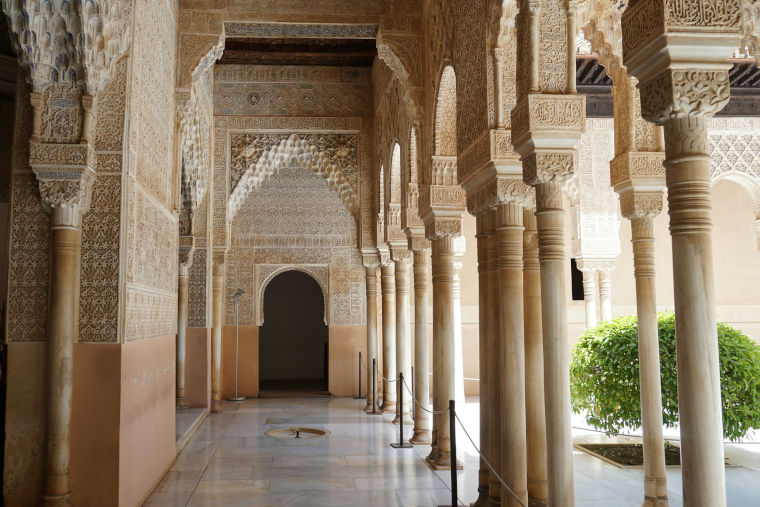 Image source: Sheila C / unsplash.com

 Image source: oneinchpunch / shutterstock.com