UAE Climate: A Complete Guide to the Weather in the Emirates by Month
Save the article:
Are you planning a trip to the United Arab Emirates but unsure of the best time to go? The UAE climate differs dramatically from the temperate conditions most of us are used to — summer temperatures there can reach 50°C, whilst in winter the thermometer rarely drops below 20°C. Many tourists make the mistake of choosing July or August for their holiday, a time when even locals prefer not to venture outside during the day. Understanding the local weather will help you avoid discomfort and get the most out of your trip.
What will change after you learn about the climate of the Emirates? You will be able to choose the optimal months for a beach holiday, active sightseeing, or business travel. Our detailed guide to the UAE climate by month contains up-to-date data on air and water temperatures, humidity, precipitation, and wind strength. We will cover the seasonal characteristics of each emirate, share tips on clothing choices, and offer practical recommendations for a comfortable stay at any time of year. This information is particularly valuable for those planning an extended stay or a move to the UAE.
UAE Climate
The United Arab Emirates is situated in the south-east of the Arabian Peninsula, which determines its unique climatic characteristics. The country lies within a zone of tropical desert climate with the following distinctive features: minimal precipitation, high temperatures, and considerable fluctuations in humidity depending on proximity to the coast of the Persian Gulf.
Geographical influence on climatic conditions
The UAE climate is shaped by several geographical factors. Proximity to the Tropic of Cancer (23°26' north latitude) ensures intense solar radiation throughout the year. The Arabian Desert covers the greater part of the country's territory, creating continental conditions with sharp fluctuations between daytime and night-time temperatures in inland areas.
The Persian Gulf acts as a natural air conditioner, moderating temperature fluctuations in the coastal emirates. The average water temperature is 24–32°C, which influences the formation of sea breezes and increased humidity along the coastal zone.
The country's main climatic zones
What the climate is like in the UAE depends on the specific region. The country's territory is divided into three main climatic zones:
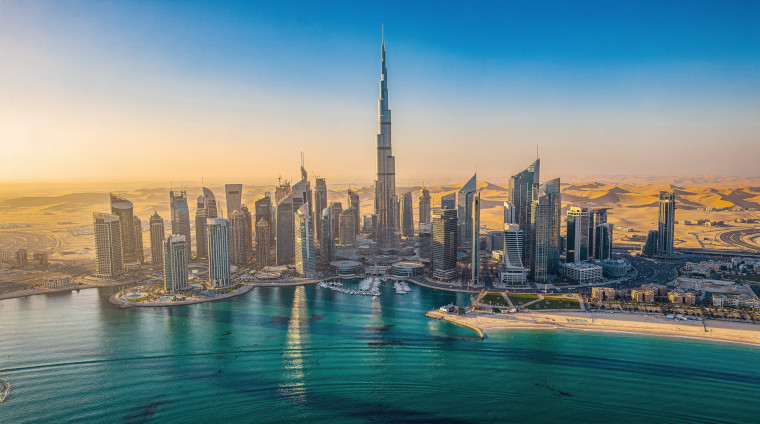
The coastal zone, which encompasses Dubai, Abu Dhabi, and Sharjah, is characterised by high humidity (60–90% in summer) and milder temperatures owing to maritime influence. The average temperature in summer is 35–42°C, and in winter it is 20–28°C.
The image was generated using AI technologies
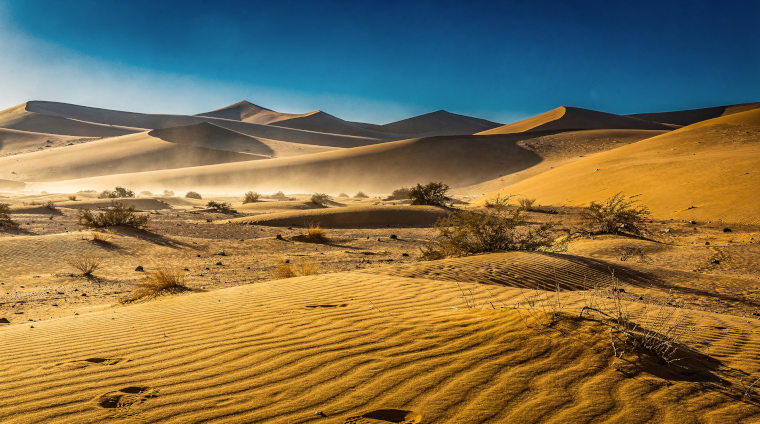
Inland desert regions are distinguished by dry air (humidity 20–40%) and more extreme temperatures. In summer, the thermometer can reach 50°C during the day and drop to 25°C at night.
The mountainous areas in the east of the country (the emirate of Fujairah) have a somewhat cooler climate owing to their elevation above sea level and the influence of the Gulf of Oman.
Characteristics of the desert climate
The UAE's desert climate is characterised by extremely low precipitation — less than 100 mm per year. Rain falls predominantly in the winter months (December–March) in the form of brief downpours. The average annual number of sunny days exceeds 350, making the country one of the sunniest in the world.
A notable characteristic is the phenomenon of sandstorms, which occur most frequently during the transitional seasons (April–May, October–November). These natural events can significantly reduce visibility and affect air quality.
The influence of the Persian Gulf coast
The Persian Gulf coastline creates a unique microclimate in the coastal emirates. Sea breezes bring coolness during the daytime hours but simultaneously raise the humidity of the air. This creates a feeling of stuffiness, especially in the summer months, when the heat index can reach 60°C.
The average water temperature in the gulf ranges from 22°C in January to 33°C in August, providing comfortable conditions for swimming throughout the year. Tides in the Persian Gulf are negligible — no more than 2 metres — which creates stable conditions for beach holidays.
UAE Climate by Month
Planning a trip to the UAE requires an understanding of the climatic characteristics of each month. Temperature indicators, humidity, and precipitation vary dramatically depending on the season, which directly affects the comfort of your stay and the choice of activities.
Winter season: December–February
December marks the beginning of the most comfortable period for visiting the Emirates. Daytime air temperature is 24–26°C, dropping to 16–18°C at night. The sea water temperature remains at 23–24°C, ideal for swimming. Humidity falls to 60–65%, and precipitation is almost entirely absent (2–3 rainy days per month). Light clothing is recommended during the day, with a warm layer for evening walks.
In January, the peak tourist season sets in, with daytime temperatures of 23–25°C and night-time temperatures of 15–17°C. The water cools to 22–23°C but remains comfortable for swimming. Humidity is at its lowest — 55–60%, with almost no rain. This is the optimal time for sightseeing, desert trips, and active holidays. Dress in layers: a T-shirt and light trousers during the day, jeans and a jumper in the evening.
February brings the cool season to a close, with daytime temperatures of 25–27°C and night-time temperatures of 17–19°C. The sea water warms to 23—24°C. Humidity begins to rise to 65–70%, though this does not cause discomfort. Occasional rain is possible — 3–4 days over the month. An ideal time for a family holiday with children and for those who struggle in the heat.
Spring season: March–May
March heralds the onset of warmer weather, with daytime temperatures of 28–30°C and night-time temperatures of 20–22°C. The sea water warms to 24–25°C. Humidity rises to 70–75%, though precipitation remains sparse. This is the last month of truly comfortable weather. Wear light cotton clothing and make sure to bring wide-brimmed hats and sunglasses with UV protection.
In April, the heat becomes noticeable: 32–34°C during the day and 23–25°C at night. The water temperature reaches 26–27°C, very comfortable for swimming. Humidity rises to 75–80%, intensifying the sense of stuffiness. There is almost no rain. It is advisable to plan outdoor activities for the morning and evening hours, avoiding the midday sun.
May is a transitional month leading into the summer heat, with daytime temperatures of 36–38°C and night-time temperatures of 26–28°C. Sea water warms to 28–29°C. Humidity reaches 80–85%, creating a "steam room" effect. There is no rain. This is the last month when it is still possible to be outdoors comfortably in the morning hours. Choose clothing that is as light and breathable as possible, in pale colours.
Summer season: June–August
June marks the beginning of the period of extreme heat, with temperatures of 40–42°C during the day and 30–32°C at night. The sea water heats up to 30–31°C, too warm to offer any relief. Coastal humidity reaches 85–90%, whilst in desert areas it drops to 40–50%. There is no rain. Activities are only possible in air-conditioned spaces or in the very early morning before 7:00 AM.
July is the peak of the summer heat, with daytime temperatures of 42–45°C and night-time temperatures of 32–34°C. The sea water becomes a "hot bath" at 32–33°C. Coastal humidity is critical — 90–95%. Being outdoors during the day is extremely uncomfortable and poses a genuine health risk. Light, covering clothing is essential for protection from the sun, as is constant hydration.
August mirrors July's temperatures: 43–46°C during the day and 33–35°C at night. Water temperature remains at 33–34°C. Humidity reaches its maximum — 95–98% on the coast. Rare but intense downpours are possible. This is the least suitable month for tourism. Plan only indoor activities: shopping, museums, and spa treatments.
Autumn season: September–November
September sees a gradual decline in temperatures: 39–41°C during the day and 30–32°C at night. The water remains very warm at 31–32°C. Humidity drops slightly to 85–90%. The first rains begin — 2–3 days per month. Conditions are still challenging for Europeans, but locals already begin to notice some relief.
October brings a marked improvement: 35–37°C during the day and 26–28°C at night. The sea water cools to 29–30°C, but is still very warm. Humidity falls to 75–80%. There is more rain — 3–4 days, though showers are brief. This is the first month in which it is possible to plan evening walks and outdoor activities after 5:00 PM.
November heralds the return of comfortable weather: 30–32°C during the day and 22–24°C at night. The water temperature drops to 26–27°C, ideal for swimming. Humidity returns to normal at 70–75%. Rain is possible on 4–5 days per month. An excellent time for all kinds of activities, including sightseeing and outdoor sport.
The Best Time to Visit the UAE
Choosing the optimal time to travel to the UAE depends on your priorities, budget, and planned activities. The tourist season in the Emirates divides clearly into high and low periods, each with its own advantages and disadvantages.
High tourist season: November–March
The peak tourist season is from November to March, when weather conditions are most comfortable for all types of outdoor activities. Air temperature stays in the range of 22–28°C, humidity is at its lowest, and the number of sunny days reaches 95%.
During this period, hotel prices rise by 40–60% compared with the summer months. Five-star resorts in Dubai and Abu Dhabi can cost $800–$1,200 per night in December–January, compared with $300–$500 in summer. It is advisable to book accommodation 3–4 months in advance.
The image was generated using AI technologies
The main advantages of the high season are ideal conditions for a beach holiday, comfortable sightseeing, and the ability to take part in outdoor sport. The drawbacks include high prices, overcrowded beaches, and the need to book well in advance.
Low season: May–September
The summer months are considered the low season due to extreme heat and high humidity. Temperatures reach 45–50°C, and humidity can exceed 90%, creating a feeling of stuffiness even during the evening hours.
However, this is precisely the period when significant savings can be made on accommodation and entertainment. Hotel discounts reach 50–70%, and many restaurants and shopping centres offer special summer promotions. For tourists on a limited budget, this is an optimal time to discover the culture and sights of the Emirates.
The best time for different types of holiday
For a beach holiday, the months from December to February are the most suitable, when the water temperature is a comfortable 24–26°C and it is possible to spend the whole day on the beach without any risk of overheating.
Those who enjoy sightseeing should choose the period from November to March. During this time it is comfortable to visit desert safaris, historic districts, and architectural landmarks. In summer, sightseeing programmes are shifted to early morning or evening hours.
For shopping, the months of January, February, July and August are ideal. This is when the largest sales events take place: the Dubai Shopping Festival (January–February) and Dubai Summer Surprises (July–August), when discounts can reach 90%.
Active recreation, including golf, tennis, and water sports, are best planned for the winter months. Air temperatures of 20–25°C allow for sport at any time of day, and sea conditions are ideal for diving and surfing.
Practical Tips for Acclimatisation
Successful acclimatisation to the UAE climate requires a comprehensive approach and adherence to tried-and-tested safety guidelines. Proper preparation will help you avoid heatstroke, sunburn, and other unpleasant consequences of staying in conditions of extreme heat.
Choosing clothing by season
A wardrobe for a trip to the UAE differs dramatically depending on the time of year. In the period from November to March, light summer clothing during the day and a thin cardigan for evening walks, when the temperature drops to 18–20°C, are sufficient. Be sure to pack closed-toe footwear for visiting mosques and business meetings.
From April to October, prioritise the lightest possible fabrics made from natural materials. Linen shirts, cotton T-shirts, and loose-fitting trousers will ensure the necessary air circulation. Avoid synthetic fabrics and dark colours — they increase body heat by 3–5 degrees. Be sure to bring wide-brimmed hats and sunglasses with UV protection.
Sun protection and guidelines for behaviour in the heat
Ultraviolet radiation in the UAE reaches extreme levels — the UV index frequently exceeds 10. Use sunscreen with an SPF of at least 50, reapplying every 2 hours. Pay particular attention to protecting your nose, ears, and feet — these areas most commonly sustain burns.
The image was generated using AI technologies
Plan outdoor activities before 10:00 AM and after 4:00 PM, when the sun is less intense. Between 11:00 AM and 3:00 PM, try to remain in air-conditioned spaces or in the shade. If you must go outside during these hours, take frequent breaks in shopping centres or cafés.
Hydration and the prevention of dehydration
The need for fluids in the UAE climate increases by 2–3 times compared with temperate latitudes. An adult needs to drink a minimum of 3–4 litres of water per day; for children, the recommendation is 50 ml per kilogram of body weight. Begin drinking water as soon as you wake up, without waiting until you feel thirsty.
Avoid alcohol and caffeine in large quantities, as they accelerate dehydration. Give preference to still water at room temperature, freshly squeezed juices, and coconut water. The sea water in the Persian Gulf has elevated salinity, so after swimming always shower with fresh water and replenish your fluid intake.
Acclimatisation specifics
The process of adapting to a hot climate takes 7–14 days, depending on individual physiology. During the first few days, limit physical exertion and spend time predominantly in air-conditioned spaces. Gradually increase the time you spend outdoors, starting with 15–20 minutes.
Watch for symptoms of heat exhaustion: dizziness, nausea, a rapid heartbeat, and heavy perspiration. Should these appear, move to a cool place immediately, drink water, and apply a cold compress to your wrists and neck.
Recommendations for families with children
A child's body adapts to heat more slowly than an adult's, and therefore requires particular attention. Dress children in light-coloured clothing with long sleeves made from natural fabrics, and always use a sun hat. Children's sunscreen should have an SPF of 50+ and be water-resistant.
Plan children's activities exclusively in the morning and evening hours. A swimming pool is the optimal place to spend the midday hours, but monitor the water temperature — it should not exceed 32°C. Always carry a flask of cool water and wet wipes for rapid cooling.
Choosing a hotel with the climate in mind
When booking a hotel, pay attention to the quality of the air-conditioning system throughout the premises, including corridors and the lobby. Give preference to hotels with covered walkways to the beach or shopping centres — this will minimise the time spent in direct sunlight.
Choose rooms with windows facing north or east to avoid overheating from the afternoon sun. Be sure to check whether there is a balcony or terrace with an awning — this will make it possible to spend time in the fresh air in safe conditions. Hotels with their own water parks and covered entertainment areas will be the optimal choice for the summer period.
Frequently Asked Questions
What is the sea temperature in the UAE in winter?
The water temperature in the Persian Gulf in winter remains at a comfortable 22–25°C, which is ideal for swimming and water activities. In December the water cools to 23°C, in January it reaches its minimum of 22°C, and by February it begins to warm up to 24°C.
These levels make it possible to enjoy a seaside holiday throughout the year without discomfort. The coastal waters off Dubai and Abu Dhabi warm up more quickly due to the shallow depth and shelter from the wind.
Is it possible to holiday in the UAE in summer?
A summer holiday in the UAE is possible, but requires special preparation and limitations on activity. Air temperatures reach 45–50°C with humidity of up to 90%, which creates the sensation of a steam room.
The image was generated using AI technologies
Most tourists spend their time in air-conditioned spaces, shopping centres, and hotels with swimming pools. Beach time is limited to the early morning and late evening hours, when the sun is less intense.
When is the rainy season in the UAE?
The rainy season in the UAE occurs during the winter months from December to March, though precipitation is brief. The annual amount of rainfall is only 100–150 mm — ten times less than in a temperate climate.
Rain falls on 5–10 days per year in the form of short downpours lasting 1–2 hours. In the mountainous areas of Fujairah and Ras Al Khaimah, precipitation is higher due to the terrain.
What is the humidity like in the UAE?
Humidity in the UAE varies dramatically by season and by region. In winter, levels are 40–60%, which ensures comfort during any activity.
In summer, humidity rises to 80–90% in coastal areas, creating a “steam room” effect at high temperatures. In the desert, humidity remains low throughout the year: 20–40%.
Do sandstorms occur in the UAE?
Sandstorms in the UAE occur predominantly during the transitional seasons — spring and autumn, when air masses are changing. The most intense storms take place in March–April and October–November, lasting from several hours to 2–3 days.
Modern monitoring systems make it possible to forecast storms in advance, and the well-developed infrastructure minimises their impact on daily life. In major cities, buildings and transport are adapted to cope with such natural phenomena.
Does the climate differ across the emirates?
The climate across the seven emirates has regional characteristics depending on their geographical location and terrain. Dubai and Abu Dhabi are characterised by a typical desert climate with high temperatures and low humidity in winter.
Fujairah, on the eastern coast, has a milder climate owing to the Gulf of Oman and the Hajar Mountains. The northern emirates — Sharjah, Ajman, Umm Al Quwain, and Ras Al Khaimah — have characteristics intermediate between desert and subtropical climate.
Article header image was generated using AI technologies
Types of taxis in Dubai. Ways to book a taxi in Dubai. Cost of taxis in Dubai. Protection against taxi fraud in Dubai. Frequently asked questions about taxis in Dubai.
How rain forms naturally. What is artificial rain? How artificial rain is induced in Dubai. The dangers of weather interference: meteorologists' opinion. Consequences of artificial rain in Dubai. Whic...
Features of Saadiyat Island. Infrastructure of Saadiyat Island. 7 districts of Saadiyat Island. Top 5 residential projects on Saadiyat Island. Frequently asked questions about Saadiyat Island.
Specifics of the UAE government structure. Who the sheikhs are. Sheikhs of Dubai. Sheikhs of Abu Dhabi. Sheikhs of other emirates. Frequently asked questions about UAE sheikhs.
Principal prohibitions and rules of conduct in Dubai. Dress code and clothing requirements. Alcohol and prohibited substances. Photography and social media. Special rules during Ramadan. Frequently as...
This article discusses which emirates are better and the characteristics of the UAE regions. While tourists are interested in hotels, beaches and entertainment infrastructure, other factors must be co...
Main features of the Downtown Dubai district. Infrastructure of Downtown Dubai. Investment attractiveness of the Downtown Dubai district. Frequently Asked Questions about Downtown Dubai.
History and development of the UAE armed forces. Strength and structure of the UAE Army. Military service in the UAE: specifics and requirements. Armament and technical equipment. UAE Army in world ra...
Qatar: essential facts before your trip. What to see in Doha: the main attractions. Attractions outside Doha. Practical tips: itineraries, food, and shopping. Frequently asked questions.



 The image was generated using AI technologies


 The image was generated using AI technologies

 The image was generated using AI technologies

 The image was generated using AI technologies