Arabic Musical Instruments: Names, Types and History
Save the article:
Arabic musical instruments are an entire world of sound rooted in the millennia-old traditions of the Middle East. They include percussion, string and wind instruments, each occupying its own place in the culture of the Arab peoples.
What instrument produces that piercing Eastern rhythm? Why is the oud called the "sultan of instruments," and why does the darbuka resound at every Arab wedding? This article offers a comprehensive overview of Arabic musical instruments: their names, construction and role in culture.
History of Arabic Musical Instruments
The Arabic musical tradition took shape over many centuries. Its origins lie in the culture of the peoples of the Middle East, North Africa and the Arabian Peninsula.
Origins of the Arabic musical tradition
Music occupied a central place in Arab society. It resounded at court banquets, weddings, religious festivals and Sufi ceremonies.
Image source: Asim Z Kodappana / unsplash.com
Arab scholars of the Middle Ages — in particular, the philosophers Al-Kindi and Al-Farabi — described and systematised the musical instruments of their time in considerable detail. This indicates that musical culture was not merely entertainment but a subject of serious scholarly inquiry.
The influence of Arabic music on world culture
Arabic instruments and musical ideas reached Europe via Spain, Sicily and the trade routes of the Mediterranean. The very word "lute" derives from the Arabic "al-oud" — the name of the ancestor of this European instrument.
Arabic modal systems — maqamat — influenced the formation of European harmony. Many European instruments, including the rebec and the cittern, trace their lineage to Arabic prototypes.
Classification of Arabic Musical Instruments
Arabic musical instruments are conventionally divided into four broad groups according to the method of sound production: percussion, plucked strings, bowed strings and wind. Each group fulfils its own role in the ensemble, from setting the rhythm to carrying the melodic line.
Table No. 1. Classification of Arabic musical instruments
Type
Examples of instruments
Method of sound production
Percussion
Darbuka, tabla, tambourine (riqq), sagat, sistrum
Striking a membrane or metal
Plucked strings
Oud, kanun, saz
Plucking the strings with the fingers or a plectrum
Bowed strings
Rebab, kemancheh
Drawing a bow across the strings
Wind
Mizmar, zurna, duduk
Blowing air through a tube
Each of these groups occupies a special place in the Arabic musical tradition. Their roles within the ensemble are clearly defined: some govern the rhythm, others construct the melody, and still others add a colourful timbre.
Percussion instruments of the Arab world
Percussion instruments provide the rhythmic foundation of Arabic music. No dance composition is possible without them, especially in the music that accompanies Eastern dance.
Plucked string Arabic instruments
Plucked instruments carry the melodic line. They are distinguished by a rich timbre and the capacity to convey the subtle emotional nuances that are the essence of Arabic maqamat.
Arabic bowed musical instruments
Bowed instruments — the rebab and the kemancheh — produce a sustained, almost vocal sound. It is they that lend Eastern music its characteristic languor and emotional depth.
Arabic wind instruments
Wind instruments are distinguished by a bright, piercing tone. They can be heard across great distances, which is why they have traditionally accompanied festivals, processions and folk ceremonies.
Arabic Percussion Instruments
Percussion instruments are the most numerous and rhythmically rich group in Arabic music. Each of them has its own character and its own role in the ensemble.
Darbuka (dumbek, tabla) — the main Arabic drum
The darbuka is the most popular percussion instrument in the Arab world. Its body is elongated and tapered at the bottom, with the upper part covered by a membrane of fish or goat skin and the lower part left open. The body is made of ceramic or metal. The sound of the darbuka is resilient and crisp. The high-pitched "tek" and the low "dum" combine into complex rhythmic patterns.
Image source: Othman Alghanmi / unsplash.com
The instrument is held horizontally on the knee or tucked under the arm. In different countries it is known by different names: dumbek in Turkey, tabla in Egypt and North Africa, and darbuka as the more general term. In belly-dance music the darbuka is the main instrument: it is the one that "speaks" to the dancer through rhythm.
Tambourine (riqq, daf) — a frame percussion instrument
The riqq is a small frame drum with a skin membrane. Around the wooden or metal frame, small metal cymbals are fastened. The musician strikes the membrane with their fingers and shakes the instrument, producing simultaneously a dull thud and a jingle.
The riqq is widespread from Morocco to Iran. In classical Arabic music it is considered one of the most virtuosic percussion instruments.
Sagat (zills) — small metal cymbals worn on the fingers
Sagat are a pair of small metal cymbals worn on the thumb and middle finger of each hand. They are made predominantly of brass. Dancers use small sagat to accompany themselves during a performance.
Musicians in an ensemble play on larger cymbals with a deeper sound. The ringing of the sagat adds a light shimmer to the music and accentuates the rhythmic beats.
Sistrum — an ancient Egyptian temple rattle
The sistrum is one of the oldest percussion instruments known to humanity. It consists of a metal frame in the shape of a horseshoe or loop, through which metal rods are threaded with rings or small bells strung upon them. When shaken, the rods strike the frame, producing a soft, rustling jingle.
The sistrum is closely associated with the culture of ancient Egypt, where it was used in religious rites. In the modern tradition it serves as a rhythmic accent, adding an archaic flavour to the music.
Arabic String Instruments of the Plucked Type
Plucked string instruments form the melodic foundation of Arabic music. They are capable of conveying the finest intonational nuances that constitute the essence of the Arabic maqamat — modal systems that have no equivalent in European music.
Table No. 2. Main plucked string instruments of the Arab world
Instrument
Number of strings
Characteristic feature
Distribution
Oud
5–7 pairs (doubled)
Fretless, soft warm timbre
The entire Arab world
Kanun
24 triple courses
Horizontal position, risha plectra
Arab countries, Turkey
Saz / baglama
7–9 (in groups)
Tied frets, long neck
Turkey, Azerbaijan, Iran
Each of these Arabic string instruments occupies its own niche in ensemble and solo performance. The oud establishes the tonal centre, the kanun creates melodic ornamentation, and the saz carries the spirit of folk tradition.
Oud — the oldest Arabic string instrument
The oud is the main instrument of the Arab world, often called the "sultan of instruments." Its body is pear-shaped and convex at the back, with no frets on the neck. The strings — doubled, from five to seven pairs — are plucked with a specialised plectrum made from a feather or plastic.
The sound of the oud is warm, soft and velvety. The absence of frets allows the musician to produce microtonal intervals unavailable on most European instruments.
The European lute is a direct descendant of the oud: the very word "lute" derives from the Arabic "al-oud," meaning "wood" or "flexible branch." The oud occupies a central place in both classical Arabic music and the modern popular music of Arab countries.
Kanun — an Arabic zither with 24 triple-strung courses
The kanun is a flat string instrument of trapezoidal form. The musician lays it horizontally across their knees or on a special stand. Each of its 24 courses has three strings tuned in unison. The kanun is played using metal or bone plectra called risha, which are fitted onto the index fingers of both hands.
The sound of the kanun is crisp and bright, with a long decay. In Arabic ensembles the kanun fulfils the role of a kind of "voice from above": its part is frequently built on melodic variations and ornaments. In belly-dance music, solo passages on the kanun are a special moment — the dancer improvises to its capricious melodic line.
Saz and baglama — string instruments of the Eastern world
The saz and the baglama are closely related long-necked lutes with a small pear-shaped or almond-shaped body. The neck is long, and the frets are tied — their position can be adjusted. This makes it possible to tune the instrument to a specific maqam. The strings are metal, ranging from seven to nine, grouped into three courses.
The sound of the saz is piercing, with a metallic shimmer. The instrument is widespread in Turkey, Azerbaijan and Iran. It is firmly associated with the folk tradition and Sufi music — the saz was played by ashiks, wandering poet-singers.
Arabic Bowed Musical Instruments
Bowed instruments are the "voice" of Arabic and Persian music. Their timbre is closest to the human singing voice: sustained, emotional, capable of conveying the most delicate emotions.
Construction and acoustic characteristics of the rebab
The rebab is one of the oldest bowed instruments in the world. Its body is small, made of wood or coconut shell, covered on one side with a skin membrane. It has one or two strings of horsehair or metal. The bow is arc-shaped and strung with horsehair. At the bottom of the instrument there is a metal spike upon which it rests on the knee or on the floor.
Image source: Giorgia Doglioni / unsplash.com
The very word "rebab" in Arabic conveys the idea of joining short sounds into a single sustained line — an apt description of its sound. Folk singer-poets known as sha'irs used the rebab as an instrument of accompaniment when performing heroic verse and epic poetry.
Kemancheh — a bowed instrument of the Middle East
The kemancheh is a bowed instrument of more complex construction. Its body is round or polygonal, covered with a skin membrane, and has a straight neck. The number of strings is three or four. The kemancheh has a wider range than the rebab and a richer, fuller sound. The instrument is held vertically, resting on the knee or on a special stand, and the body is rotated relative to the bow.
The kemancheh is widespread in Iran, Azerbaijan and Turkey, where it is also known as the "kemençe." In the classical music of these regions it occupies the position of the leading solo instrument.
Arabic Wind Instruments
The wind instruments of the Arab world are distinguished by a sharp, bright, piercing sound. They are capable of carrying over the noise of a crowd and can be heard across great distances, which is why they were traditionally used outdoors, at festivals and processions.
Mizmar — an Arabic wind instrument of folk music
The mizmar is a double-pipe wind instrument with a double reed made of cane. Both pipes are of equal length, and each has finger holes. The sound of the mizmar is sharper and more piercing than that of the oboe, to which it is frequently compared.
The instrument belongs to the folk musical tradition. It is most commonly heard in Eastern folk music, particularly in the sa'idi style — the music of Upper Egypt with its characteristic heavy, marching rhythm.
Zurna — an instrument of Eastern celebrations
The zurna is a wooden wind instrument of conical form with a flared bell at the end and a double cane reed. In construction it is similar to the mizmar, but larger and louder. The sound of the zurna — piercing and powerful — can be heard several hundred metres away.
The zurna traditionally opens weddings, festivals and popular celebrations in the Caucasus, Turkey and Iran. It is usually played in tandem with a drum — the nagara or the davul.
Duduk (balaban) — the piercing voice of the East
The duduk is a cylindrical wind instrument with a wide double reed and several finger holes. Unlike the zurna, its sound is soft, deep and slightly melancholic.
Image source: Youhana Nassif / unsplash.com
The duduk is widespread among Turkic peoples, as well as in Iran and Azerbaijan, where it is known as the “balaban”. In each tradition the instrument has its own features of tuning and performance technique. Its timbre is so distinctive that it is instantly recognisable in any arrangement.
Arabic Musical Instruments in Belly Dance
Belly dance is unimaginable without a specific set of musical instruments. They are what shapes the characteristic sound that compels the dancer to move in a particular way.
Percussion instruments govern the hips; the darbuka sets the rhythmic framework — it is to its rhythm that the main movements are structured. The riqq tambourine adds subtle rhythmic ornamentation, whilst the sagat on the dancer's fingers make her part of the ensemble.
Wind instruments affect emotions; the mizmar and the zurna set the mood — festive, passionate, ceremonial. String instruments engage the mind; the oud and the kanun create the melodic foundation. To the solo passages of the kanun the dancer improvises, demonstrating her musicality. The oud establishes the tonality and harmony of the entire composition.
Arabs figuratively say: percussion instruments guide the dancer's hips, wind instruments guide her heart, and string instruments guide her mind.
This metaphor reflects a profound understanding of the connection between music and movement. Arabic musical instruments are not merely props for performance; they are the custodians of cultural memory, passing it from generation to generation.
Frequently Asked Questions about Arabic Musical Instruments
Which Arabic instrument is considered the main one in Arabic music?
The oud is the main Arabic string instrument, known as the "sultan of instruments." It is present in Arabic classical music, folk traditions and modern popular music. The oud is fretless, which allows the performance of the finest intonational nuances characteristic of Arabic music.
What is the difference between the darbuka, the dumbek and the tabla?
These are all the same percussion instrument with an elongated body and a skin membrane. Different names are used in different countries: dumbek in Turkey, tabla in Egypt and North Africa, and darbuka as the more general term. The construction and method of playing are similar across all variants.
What is the kanun and how is it played?
The kanun is a plucked string instrument of trapezoidal form with 24 triple-strung courses. It is laid horizontally across the knees and the strings are plucked using metal or bone plectra called risha, fitted onto the index fingers. The sound of the kanun is bright and crisp, with a long decay.
What is the difference between the rebab and the kemancheh?
Both instruments are Arabic bowed instruments, but the rebab is simpler in construction: a small body of wood or coconut shell with one or two strings. The kemancheh is more complex, with a round body, three to four strings and a wider tonal range.
The rebab is the instrument of folk singer-poets; the kemancheh belongs to the classical repertoire of Iran, Azerbaijan and Turkey.
Which instruments are used in belly-dance music?
The main instruments are the darbuka (rhythm), the oud (melody and harmony), the kanun (melodic ornamentation) and the mizmar (flavour). Sagat — small metal cymbals — are worn on the dancer's own fingers and used for self-accompaniment. The riqq tambourine adds rhythmic nuance.
What are the mizmar and the zurna, and how are they similar?
The mizmar and the zurna are wind instruments with a double cane reed. Both produce a sharp, piercing sound that carries across great distances. The mizmar is widespread in Arabic folk music, particularly in the Egyptian sa'idi style. The zurna is larger and louder, and is traditional to the Caucasus, Turkey and Iran.
History and origins of Arabian mythology. Gods of Arabian mythology and the ancient pantheon. Djinn and spirits in Arabian mythology. Mythical creatures of Arabian mythology. The influence of Arabian ...
Specifics of Dubai developers. Criteria for choosing a developer in Dubai. Top 10 Dubai developers. Russian developers in Dubai. Frequently asked questions about Dubai developers.
Benefits of starting a company in Dubai. Nuances of starting a company in Dubai. What is required to start a company in Dubai? How to start a company in Dubai as a foreigner in 2026? Relocation of exi...
Advantages of working in the UAE. In-demand professions for work in the UAE. Visa requirements for work in the UAE. Life in the UAE for expats. Frequently asked questions about work in the UAE.
UAE and Saudi Arabia: what they have in common and their key differences. Culture, laws and way of life: what is the difference? Economy, business and employment opportunities. Tourism and expat life:...
What the UAE Golden Visa is and what it provides. UAE Golden Visa: conditions for obtaining it by category. Step-by-step process for obtaining a UAE Golden Visa. Cost and processing time for the Golde...
What Nakheel Mall is. What can be found in Nakheel Mall? Entertainment in Nakheel Mall. How to get to Nakheel Mall? Frequently asked questions about Nakheel Mall.
Main features of apartments in Dubai. 10 freehold zones for buying an apartment in Dubai. Main trends in the Dubai real estate market in 2024. Frequently asked questions about the cost of apartments i...



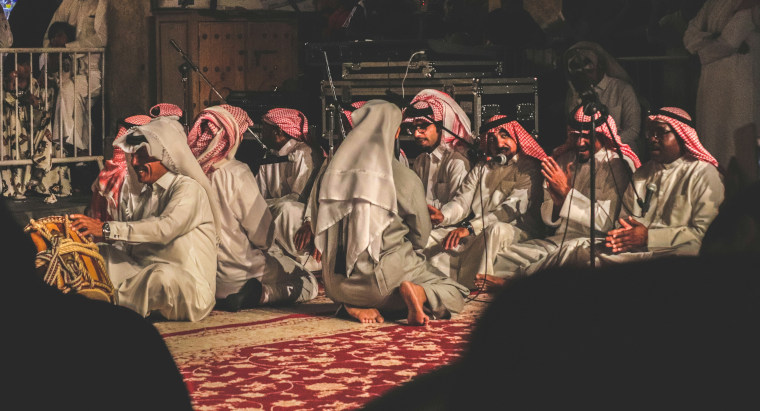 Image source: Asim Z Kodappana / unsplash.com
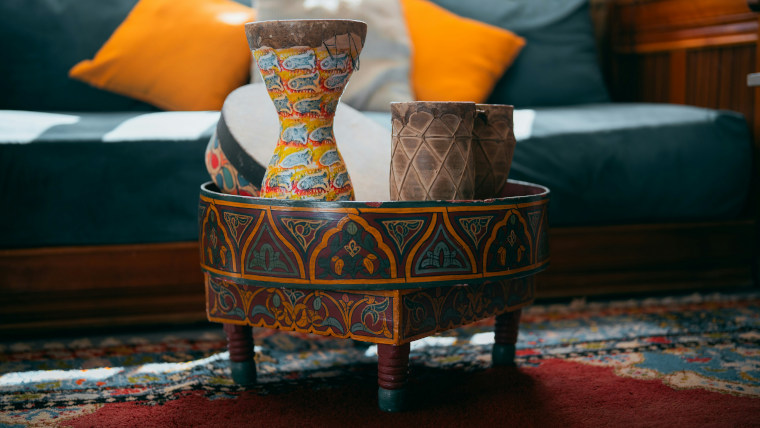 Image source: Othman Alghanmi / unsplash.com


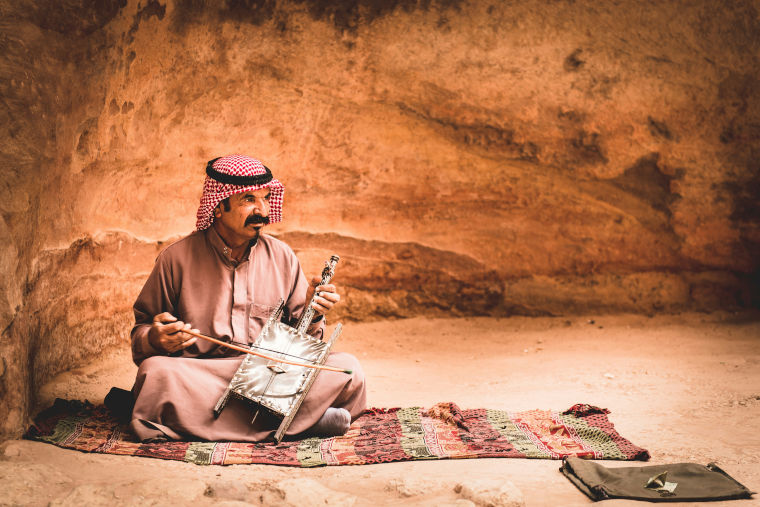 Image source: Giorgia Doglioni / unsplash.com

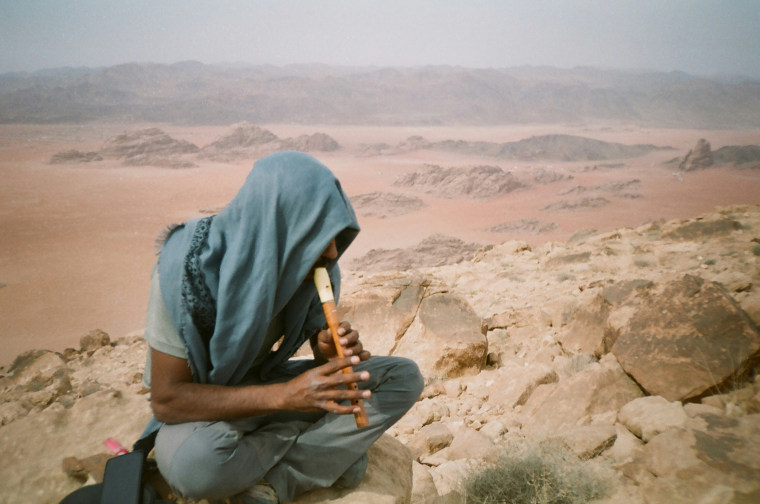 Image source: Youhana Nassif / unsplash.com