Fines in the UAE: How Knowledge Can Save Your Budget
Save the article:
What is it about? Fines in the UAE are regulated by strict legislation that applies to residents and tourists alike. Violations may concern not only traffic rules but also public order, cultural norms, and digital security.
What to pay attention to? Large fines are imposed for speeding, using a mobile phone whilst driving, and crossing the road in the wrong place. Separate sanctions apply for indecent behaviour in public places, unauthorised photography, and social media posts that violate local laws.
The Legal System in the UAE
The political system in the UAE is a federal monarchy consisting of seven emirates: Abu Dhabi, Dubai, Sharjah, Ajman, Umm Al Quwain, Ras Al Khaimah, and Fujairah. Each can exist as autonomous, having its own laws and internal administration. The emir of Abu Dhabi leads the state, and the ruler of Dubai heads the government.
Image source: Dario Ciraulo / unsplash.com
Each emirate has its own set of laws. They may all choose a measure of punishment for offenders independently, but the final decision always complies with federal legislation.
The UAE is an Islamic state with Sharia laws. The decision to begin welcoming people of different cultures into the country with the aim of developing the economy was difficult for the authorities and caused serious public outcry. But over time, it became clear that this step was not taken in vain.
In order to preserve the patriarchal system and prevent the spread of unacceptable norms of behaviour, numerous amendments were made to the existing list of laws. This helped to preserve the country's original values.
The UAE authorities often find it difficult to balance compliance with Islamic laws and the freedom to which expats from America and Europe are accustomed. To ensure their comfort, all Sharia restrictions were lifted for hotels, private beaches, parties, and nightclubs.
Minor offences in these places may be punished by warnings and fines. The latter are issued extremely rarely. However, punishment is still imposed for certain offences.
Traffic Fines in the UAE
Driving regulations in the UAE are practically no different from European ones. However, the size of fines for traffic violations is quite substantial (400–800 dirhams, or 109–218 USD). Therefore, you should think carefully before demonstrating your fast-driving skills on local roads.
The UAE stands out for its excellent road quality and right-hand traffic. All road signs are easy to recognise, and inscriptions are duplicated in English.
Driving a rented car in the UAE is only permitted if you have an International Driving Permit or a UAE driver’s licence. Failure to comply with this rule carries a fine of 5,000 dirhams (approximately 1,360 USD).
Standard speed limits in the UAE are 40 km/h in residential areas, 60–80 km/h on main roads, and 100–120 km/h on motorways. The speed limit is usually regulated by road signs. At the same time, you cannot drive either faster or slower than the limit on a given section.
In 90% of cases, tourists in the UAE are fined for speeding. Even if you have heard that speeding might be acceptable in some places, don't believe it. Each emirate has its own norms regarding speed buffers. For example, in Abu Dhabi there is no buffer at all, so you can be punished even for accelerating 1 km/h above the limit.
You should also make sure that all passengers have their seatbelts fastened. All children under 4 years of age should be transported in special seats. Those under 10 years of age and under 145 cm in height cannot ride in the front seat. To ensure road safety, children under 12 years of age and under 145–150 cm in height are recommended to be secured with a child restraint system.
Smoking in a car with passengers under 12 years of age and leaving small children or animals unattended in the car are punishable by law. Talking on the phone, applying makeup, eating, and drinking while driving are prohibited.
Other rules: When moving along so-called "rings" (roundabouts) in the UAE, you should give way to vehicles travelling around the circle, unless otherwise indicated on road signs. At night or in foggy weather, you must not drive without your lights on. When driving on the city streets, you must let all pedestrians cross. It is forbidden to drive a vehicle whilst under the influence of alcohol or drugs.
In the UAE, punishment for violating traffic rules includes:
Fines.
Penalty points (black points).
Fines can be imposed for any traffic violations, whilst black points are reserved for serious accidents. At the same time, fines and points are applied jointly and do not exclude each other.
The algorithm for clearing black points for UAE residents does not apply to tourists. Guests of the country can pay them independently at the police department or by contacting the rental company. Paying the main fine without clearing the black points is unacceptable.
In the UAE, the police do not send renters messages containing links to pay sanctions — this is considered fraud. Notifications about fines are received by the rental company.
In the table below, you can see the amounts of fines for traffic violations in Dubai.
Violation
Amount
Black Points
up to 20 km/h
300 AED (~82 $)
–
up to 30 km/h
600 AED (~163 $)
–
up to 40 km/h
700 AED (~191 $)
–
up to 50 km/h
1,000 AED (~272 $)
–
up to 60 km/h
1,500 AED (~408 $); possibility of vehicle confiscation
6
more than 60 km/h
2,000 AED (~545 $); possibility of vehicle confiscation
12
more than 80 km/h
3,000 AED (~817 $); possibility of vehicle confiscation and licence suspension
12
driving slower than the established speed limit (if there is one)
400 AED (~109 $)
4
unfastened seat belt
400 AED (~109 $)
4
using a mobile phone
800 AED (~218 $)
4
running a red light
1,000 AED (~272 $); possibility of vehicle confiscation
12
driving in poor visibility without lights on
500 AED (~136 $)
4
not to letting a pedestrian cross at a crosswalk
500 AED (~136 $)
6
incorrect transportation of children
400 AED (~109 $)
4
throwing rubbish out of a window
1,000 AED (~272 $)
6
driving whilst under the influence of alcohol, drugs, etc.
by court decision; possibility of arrest
23
The amount of the fine may vary depending on the type of violation and the emirate where it was recorded.
Fines in the UAE for Disturbing Public Order
When going on vacation to the emirates, tourists want to make their vacation as comfortable and active as possible: swimming a lot, sunbathing, walking around modern quarters, and shopping for something new and original. But you should keep in mind that the UAE is distinguished by strict rules and norms of behaviour in society. Much of what is permitted in other countries can entail serious sanctions in the Emirates. Below we will list the most common cases and ways to avoid them.
Alcohol fines: a licence or nothing
Although alcohol can be bought in Dubai, drinking it outside special places or walking the streets whilst intoxicated is strictly prohibited. For this, a tourist faces:
a fine of 2,000 dirhams (around 550 $) or more;
arrest or deportation (in some cases).
It is best to consume alcohol only in hotels, bars, and licensed restaurants. Going out on the street even after a glass of wine, a tourist risks ending up at the police station, and it does not matter whether they are aggressive or behave calmly.
One of the most frequently encountered fines in the UAE is for smoking in public. This should only be done in designated areas. Smoking in shopping centres, metro carriages, on beaches, and near public places is punishable by law. The punishment is provided in the form of:
a fine of 500 dirhams (135 $);
a larger sum or administrative liability for repeat violations.
Foreign tourists should pay attention to the designated smoking areas. Many hotels and expats' accommodations are equipped with such areas.
Fine for using a phone in inappropriate ways
Photographing and filming people, especially children and women, without their consent is considered a serious violation of the law in Dubai. Ignoring this rule can result in:
a fine of 1,500–5,000 dirhams (400–1,300 $);
confiscation of the device and court trial.
The strictest punishment is for photographing police officers, civil servants, and various emergencies. It is best to photograph yourself and landscapes. You must not post photos of strangers on social media.
Fine for littering and violating sanitary regulations
Cleanliness in the UAE is the responsibility not only of the authorities but also of the citizens themselves: there are serious penalties for disorder. A cigarette butt, napkin, or candy wrapper thrown on the pavement can cost a tourist:
1,000 dirhams (270 $) for littering;
2,000 dirhams for spitting (especially spitting out chewing gum).
It is best to throw all waste in bins, which are easy to find anywhere. Any trash, even the smallest rubbish, a plastic bottle, or wrapper, must be properly disposed of.
Fine for a dirty car
Many tourists, especially those who rent a car, may be very surprised by this fact, but in Dubai you can get a fine even for a dirty car.
The fine’s amount starts at 500 dirhams. The basis for the fine is that dirty vehicles are considered a sign of disrespect for the local environment and the country's image.
We advise you to clean your car every 2–3 days and as necessary. Hotels and parking lots have car washes for this purpose.
Image source: Zulfahmi Khani / unsplash.com
Fines in Dubai's public transport
The metro also has strict rules, violations of which are instantly recorded, facilitated by numerous cameras, patrols, and civilian inspectors. Among all еру known offences, the following stand out:
Riding without a ticket will cost you 200 dirhams.
Eating in a carriage will cost you 100 dirhams.
Entering the waiting area without a ticket will cost you 200 dirhams.
Men travelling in the women's carriage will have to pay 100 dirhams.
The biggest fine is for throwing litter in carriages — 500 dirhams.
Pay attention to the signs and indicators. Each instruction is duplicated in English.
Fines in the UAE Related to Real Estate
There are 23 categories of violations of the law for which people living in freehold residential complexes in Dubai may face administrative penalties. This is in addition to the standard regulations and requirements imposed by developers or residents' associations, which have the authority to impose fines. These penalties are divided into four groups based on the type of violation:
Standard: causing harm to society, vandalism, noise, rudeness in communication with staff, poor quality care for your animals, renting out one's premises by the day, and so on.
Violations of the rules of use, or causing damage to parks, gyms, swimming pools, children's playgrounds, and other places where people gather.
Fines for offences from the third group are imposed not directly but through certain bodies that regulate their amount. These include incorrect parking, blocking roads, speeding on certain road sections, and so on.
And the most extensive group of fines includes a fine of 1,000 dirhams for improper plant care, inappropriate use of balconies, patios, terraces, and summer recreation areas,, unauthorised alteration of the urban landscape with additional elements, and so on.
Fines in the UAE and the GDRFA System
The General Directorate of Residency and Foreigners Affairs in Dubai (GDRFA) is the local government body responsible for dealing with visa issues, residence permits, and providing immigration services.
If you are a guest or resident of Dubai, you will come across GDRFA when applying for a visa, residence permit, or when passing through immigration control at the airport. The main functions of this body include:
Issuing visas and renewing them. GDRFA provides tourist, work, and residency visas to Dubai.
Monitoring entry and exit to the UAE. GDRFA provides visitors and residents with a guarantee of legal entry into the country.
Supervising residency services: visa cancellation, renewal, and provision of all kinds of permits.
Monitoring compliance with immigration legislation. This means ensuring that all residency and visa requirements established in the UAE are met.
A fine from GDRFA may be received by those who have overstayed their visa, violated its conditions, or failed to renew an expired residence permit on time. Ignoring these rules can lead to more serious legal consequences, such as a ban on obtaining a new visa and re-entry to the UAE. Therefore, it is essential to monitor for GDRFA fines and pay them.
Image source: fizkes / shutterstock.com
GDRFA in Dubai has the authority to impose any penalties necessary to ensure compliance with laws on residency and immigration. The main reasons for fines are:
Expired visa. The ICP introduced a unified standard for fines for overstaying visas throughout the UAE. According to the new rules, the fine is 50 dirhams per day.
Illegal employment. Those who hire employees without legal registration may be fined 50,000 dirhams.
Failure to renew an Establishment Card on time. Companies that do this late are fined 100 dirhams per month.
Unjustified copying of Emirates ID card. Such actions may result in a fine of 2,000 dirhams.
Improper use of the system. Participation in activities that constitute abuse of the foreign affairs and residency system carries a fine of 5,000 dirhams.
Interference with the work of GDRFA employees. Directly interfering with the work of GDRFA employees will result in a fine of up to 5,000 dirhams.
Issuing visas and entry permits to persons whose business is inactive. In the UAE, this is punishable by a fine of 5,000 dirhams.
Refusing to assist GDRFA employees during their raids. This can result in a fine of 5,000 dirhams.
Delayed registration of Emirates ID. Failure to renew Emirates ID or delayed registration is also grounds for a fine.
Failure to pay for services rendered. Those who have not paid for services related to residence and foreign affairs may receive a fine of 5,000 dirhams.
Frequently Asked Questions about Fines in the UAE
How do I pay a fine for a traffic violation in the UAE?
All violations caught on cameras and recorded by police officers and their radars are entered into an electronic database.
Most often, all driver fines in the UAE are published on the local police website only after 3–4 weeks. This is why car rental deposits are refunded within this timeframe.
It is not possible to pay a fine at the place where the violation was recorded. You can pay at police stations and special payment terminals. You can pay a fine in cash at the Department of Transport between 7:30 AM and 2:30 PM. When paying a fine, check that the actual date of the violation matches your rental date. A list of all fines for a vehicle can be found in a special database.
If you want to pay the fine online, you can do so through a special app using a local card only (foreign cards are not accepted). That is why rental companies always take on the payment of fines themselves. The UAE authorities charge rental companies a service fee for processing the payment and VAT. Therefore, the final amount always comes out 10–15% higher.
What are the fines for inappropriate appearance in the UAE?
Before travelling to Dubai, it is worth familiarizing yourself with the local dress code. You should not dress too openly or provocatively. Adhering to this rule is mandatory. You should refrain from:
clothing that is too short, transparent, or tight-fitting;
see-through fabrics;
exposed back, décolletage area, and stomach.
Women who are dressed inappropriately will not be allowed into certain places. The ideal outfit should cover the body from shoulders to knees.
In the UAE, this is quite simple, thanks to the online system. Below is a step-by-step guide to checking for fines:
Visit the official GDRFA website or app: visit theGDRFA website or install theGDRFA-Dubai app on your smartphone.
Open the "Fine Inquiry" section, find the "Request Fines" or "Check Fines" function.
Enter your personal details. This is required to complete the operation. You will need your passport number, visa number, and other information, such as your date of birth.
To continue, press the "Check" or "Submit" button.
See if there are any fines. If there are, this is indicated on the screen along with an explanation.
Save the results and print them if necessary.
How do I pay GDRFA fines in Dubai, UAE?
After you check for fines in GDRFA, they must be paid to avoid any further problems and penalties. The easiest way to do this is through the official GDRFA website or application. Here's how:
In some cases, to log in to the system, you need to enter your Emirates ID, passport number, or visa details.
Once the fines have been checked, you need to go to the page for paying them by clicking the "Pay Now" button.
Payment can be made with a credit/debit card or any available method.
All that remains is to check the accuracy of the data entered and proceed with the payment.
Those who prefer to pay fines offline can visit the nearest Amer service centre, where an agent will help check issued fines and pay them.
When planning to fly to the UAE, learn the rules of conduct in the country. This way you can avoid unpleasant incidents during your trip. By observing local moral, ethical, and religious traditions, you show respect for the local culture and make your vacation as comfortable as possible.
Main specifics of banks in the Emirates. Benefits of accounts in Dubai and other emirates' banks. Types of banking institutions in Dubai. Accounts and cards that Dubai banks offer. Top Dubai banks ran...
Overview of Ras Al Khaimah. Districts of Ras Al Khaimah. Advantages of buying property in Ras Al Khaimah. Interesting facts about Ras Al Khaimah. Frequently asked questions about Ras Al Khaimah.
Healthcare system in Dubai. Access to medical care for UAE citizens. Access to medical care for residents and expats. Access to medical care for tourists and short-term visitors. Medical tourism in Du...
Where the Dubai Mall is located and how to get there. Fashion Avenue — the luxury brand zone. Popular clothing and shoe stores. Cosmetics and perfume at Dubai Mall. Electronics stores. Jewelry stores ...
Geographical features of the UAE. Key resources of the UAE. Investments in the resource sector and other sectors of the UAE. Frequently asked questions about UAE resources.
The main sights of Oman. What to see in Oman in 1 day, in 4 days, and in a week. What to see in Oman with children. Natural attractions of Oman. Where to stay in Oman. Oman tours: what to choose and i...
What attracts tourists to shopping in Abu Dhabi? What to buy in Abu Dhabi. 10 best shopping centres in Abu Dhabi. What to pay attention to while shopping in Abu Dhabi. Frequently asked questions about...
Main features of public transport in Dubai. Dubai public transport zones, rules, and tickets. Dubai metro. Dubai buses. Dubai tram. Dubai monorail. Public water transport in Dubai. Taxis in Dubai. Rul...
The Emirate of Fujairah is an excellent place for relocation. It is the only emirate in the UAE located on the shore of the Arabian Sea of the Indian Ocean.



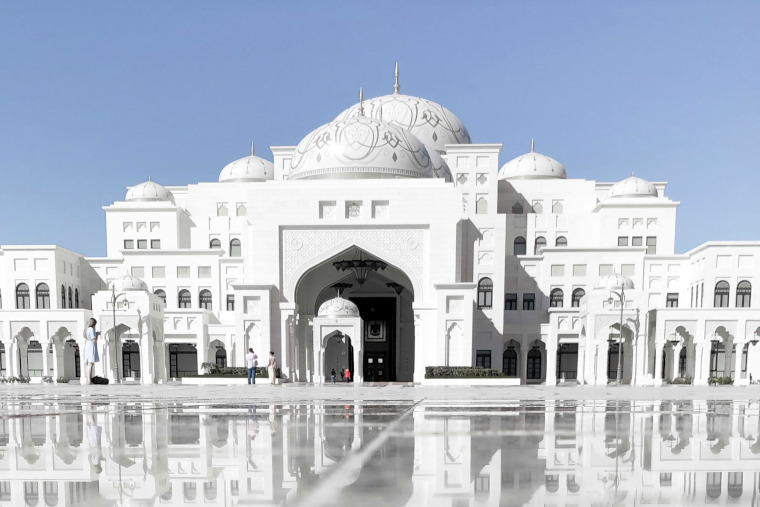 Image source: Dario Ciraulo / unsplash.com


 Image source: Zulfahmi Khani / unsplash.com
 Image source: fizkes / shutterstock.com