Flying Taxi: What It Is, What It Looks Like, and When It Will Become a Reality
Save the article:
What kind of transport is this and why is everyone talking about it? A flying taxi is an electric aircraft with vertical take-off that transports passengers through the air at speeds of up to 320 km/h. News of test flights has been coming in from Dubai, China, and the United States. Developer companies plan to launch their first commercial services as early as 2026. This is not science fiction — the air taxi is currently undergoing real trials with passengers on board.
Who is this article for and what should you pay attention to? The material has been prepared for those who want to understand the subject without complex technical terminology. The article provides specific details: what the aircraft looks like, whether flying is safe, how much a ticket costs, and when an air taxi will appear in Moscow. A table of eVTOL specifications and expert forecasts will help you form your own opinion.
What a Flying Taxi Is and How It Works
An air taxi is a new type of urban transport based on eVTOL technology (electric vertical take-off and landing). The aircraft takes off without a runway, transitions into horizontal flight, and runs on electric power. Quiet, with no harmful emissions and minimal vibration — these are the very qualities that set the air taxi apart from a helicopter.
The definition of an air taxi and how it differs from an ordinary helicopter
A flying taxi is a hybrid of a drone and a small aeroplane. A helicopter has one or two main rotors and an internal combustion engine.
An eVTOL has between four and twelve electric motors mounted on its body and wings. This ensures stability and smooth handling. The noise level is many times lower than that of a helicopter.
Image source: freepik / magnific.com
What a flying taxi looks like: the design, dimensions, and passenger capacity of an eVTOL
The aircraft looks like a streamlined capsule with short wings and rotors. The body length is 6–7 metres, and the wingspan is up to 11 metres. Inside is a cabin for 2–4 passengers with panoramic glazing. The structure is made from composite materials — both light and strong.
What altitude do taxis fly at and what speeds do they reach
The cruising altitude is 300–600 metres: below flight paths but above the urban skyline. The speed of most models is 200–320 km/h. The journey from the airport to the city centre takes 10–15 minutes instead of an hour in ground traffic.
Electric drive, batteries, and range
The air taxi is powered by lithium-ion batteries. Flight time is 20–40 minutes, and range is 35–240 km depending on the model. A number of companies are testing hybrid powertrains with a range of over 300 km.
Key eVTOL specifications:
Parameter
Specifications
Cruising altitude
300–600 m
Speed
200–320 km/h
Range
35–240 km
Passenger capacity
2–4 passengers
Charging time
30–90 minutes
Drive
Electric / hybrid
With each successive generation of aircraft, these figures improve — batteries become more powerful and structures become lighter.
From the First Flights to the Present Day: Who is Developing the Flying Taxi
The idea of an air taxi is not new. As far back as the 1950s, helicopter routes operated between airports and the city centre in New York. The service was expensive and noisy, and never achieved mass appeal. For decades the subject faded into the background — until the breakthrough in electric motors and batteries.
The first flying taxis in history and the revival of the idea in the 21st century
A new wave began in the 2010s. The development of drones proved that a multi-rotor aircraft could be stable and controllable. Several nations joined the race for the air transport market.
Leaders in development:
USA — large-scale test flights, preparation for certification
Germany — European eVTOL projects with trials at various locations around the world
China — the world's first licence for the commercial use of an autonomous eVTOL, serial production
South Korea and Japan — government urban air mobility programmes
The autonomous flying taxi: how the autopilot and safety systems work
The autonomous taxi uses LiDAR, radar, cameras, and GPS. The autopilot analyses airspace, plots a route, and avoids obstacles. If one engine fails, the aircraft continues flying on the remaining ones.
Parachute systems are provided for emergency situations — they lower the vehicle gently to the ground. Aviation experts note that it is precisely the multi-layered safety system that makes the eVTOL more reliable than it may appear at first glance.
Where Air Taxis are Already Flying: Dubai and Other Cities Around the World
For now, there are active trials and preparation for commercial services. But the results are impressive — in several regions of the world, air taxis have already made flights with passengers on board.
Flying taxi in Dubai: trials and the first flights
Dubai is striving to become the first city with a fully operational air taxi network. In 2025, successful piloted eVTOL flights took place there. The authorities are building a network of landing pads near the airport, on the islands, and in the business districts.
The launch of commercial services is scheduled for 2026. Travel time from the airport to the coast will be reduced from 45 to 10–12 minutes. For cities with heavy ground traffic, this represents a qualitatively new level of mobility.
Air taxi projects in Asia, Europe, and the United States
China has advanced further than others. Serial production of two-seat aircraft has been launched, and landing pads are being built in several cities simultaneously. In 2025, the first five-tonne eVTOL for 10 passengers received approval for flights — an aircraft of an entirely new class.
Image source: freepik / magnific.com
In the United States, aircraft are making flights between airports and taking part in air shows. The Civil Aviation Authority has prepared special regulations for eVTOL and launched an integration programme. Japan held demonstrations at the World Exposition in Osaka. In Europe, trials are under way in the United Kingdom and Germany.
Why Flying Taxis Haven't Become Commonplace Yet
The technology is ready, prototypes are flying, and investors are pouring billions into it — yet the flying taxi has not yet appeared in people's everyday lives. Promises of an imminent launch have been heard since 2017. The reasons for the delay lie not in the engines and batteries.
The main obstacle is aviation legislation policy. No country has yet created a comprehensive legal framework for mass passenger transport by eVTOL.
Rules are needed for the use of airspace over cities, certification standards, and the licensing of pilots and operators. This issue can only be resolved by regulators working in conjunction with manufacturers and aviation authorities.
The second factor is infrastructure. For air taxis to operate, landing pads with charging stations are required. Building them demands investment and approval from city authorities.
absence of a legislative framework and certification standards;
lack of landing infrastructure and charging stations;
limited range due to battery capacity;
high cost of aircraft and tickets;
urban airspace safety issues;
passengers' psychological fear of a new mode of transport.
Economics also plays a role. A single aircraft costs millions of dollars. The price of a flight at launch will be at a premium. The air taxi will become mass transport when serial production begins. None of these problems is insurmountable — it is a matter of time and coordinated effort.
When the Flying Taxi Will Appear in Russia and How Much a Flight Will Cost
In Russia, the development of air taxis is following its own path. More than a dozen teams are engaged in development, and the Ministry of Transport is building a regulatory framework for unmanned aviation.
Russian developments: the Skolkovo project and domestic innovators
A Skolkovo resident has created an aircraft — a hybrid of a copter, an aeroplane, and a car. The electric drone taxi takes off vertically from an ordinary car park and carries two passengers weighing up to 300 kg in total. Control is entirely digital. Tests were conducted in Moscow at the Luzhniki site. According to the developers' estimates, the cost of a journey in the future will be around 20 roubles per km.
The Samara Region became a pilot region with an experimental legal regime for unmanned aviation. News from this region confirms that the Orenburg and Sakhalin Regions have joined the project.
The Ministry of Transport believes this phased implementation policy will make it possible to scale such projects to other cities in Russia.
Expert forecasts on the timeline for launching air taxis in Moscow and the regions
A mass launch in Moscow is not a prospect for the coming year. Experts expect pilot projects with routes over industrial zones and rivers by 2027–2030. Although individual demonstrations within experimental frameworks may be possible earlier.
Key conditions for launch:
adoption of a legislative framework for passenger transport by eVTOL;
construction of landing pads in major cities;
certification of domestically produced aircraft;
deployment of an air traffic management system.
The price of a flight will be at a premium in the initial phase. The cost will decrease over time, as serial production and infrastructure develop. Analysts expect that by 2035, air taxis worldwide may become as affordable as ground transport.
Image source: vectorjuice / magnific.com
The era of the air taxi is on the threshold. And the answer to the question "when?" depends not so much on engineers as on legislators and people's willingness to entrust themselves to an aircraft with electric motors.
Frequently Asked Questions about the Flying Taxi
How does a flying taxi differ from a helicopter?
The air taxi runs on electric power, whilst a helicopter uses an internal combustion engine. An eVTOL has numerous small electric motors in place of one or two main rotors. This makes flight quieter and more stable.
The air taxi is more compact and can land on a small pad the size of a parking space. Operation is less expensive: an electric drivetrain is simpler to maintain, and servicing does not require aviation fuel.
Is an air taxi safe for passengers?
The safety systems of an eVTOL include redundant engines — if one fails, the flight continues. The autopilot monitors the surrounding space using LiDAR, radar, and cameras. A parachute landing system is provided for emergency situations.
Each aircraft must undergo certification according to civil aviation standards, under the same rules as aeroplanes. Today, this is one of the principal conditions for approval for commercial services.
How much does a flight in an air taxi cost?
The price depends on the region and the operator. At launch, the cost will range from 3 to 7 dollars per kilometre — on a par with any premium transport service. As serial production grows, costs will decrease.
Russian developers from Skolkovo plan to reach a price of 20 roubles per km. Society will gain access to affordable air transport once the number of aircraft and routes grows to the required level.
When will air taxis appear in Moscow?
Experts expect pilot projects by 2027–2030. Full integration into Moscow's transport system is a longer-term task. To launch, a law on passenger transport by eVTOL must be passed, a network of landing pads must be built, and aircraft must be certified.
The Russian Ministry of Transport is working in this direction with the support of regional authorities — the Samara Region has already become a pilot zone.
Where in the world can you already fly in an air taxi?
As of early 2026, there are no commercial passenger eVTOL services. The closest to launch is Dubai, where test flights have been completed successfully and commercial services are planned for 2026. China has issued the first licence for the commercial use of a two-seat autonomous aircraft. Certification procedures are under way in the United States and Europe.
Information on launch dates is updated on the websites of aviation regulators. Be sure to distinguish genuine news from developer advertising — rely on data from regulators and comments from independent experts.
The main night-time attractions of Dubai. Nightlife and clubbing. Dubai's night markets and beaches. Night walks and excursions. Practical tips for night-time leisure. Frequently asked questions.
A reason to contact a real estate agency in Dubai. Regulation of real estate agencies in Dubai. How to choose a real estate agency in Dubai? Specifics of real estate agencies' work in Dubai. Risks of ...
Distance from Sharjah to Dubai and journey time. How to get from Sharjah Airport to Dubai? How to get from Sharjah to Dubai by bus? Taxi and shuttle from Sharjah to Dubai. Comparison of all options: w...
UAE Oil Industry. What makes Arab oil famous? Major oil deposits in the UAE. Current state of the oil and gas industry in the UAE. Frequently asked questions about oil in the UAE.
Abu Dhabi bus system. Hafilat card: payment and use. Fares and tariffs. Free buses and special services. Practical tips for using public transport. FAQ.
Advantages of working in the UAE. In-demand professions for work in the UAE. Visa requirements for work in the UAE. Life in the UAE for expats. Frequently asked questions about work in the UAE.
Top countries to live in 2026. Dubai as the best destination for relocation. Best countries to live in with children. How to choose a country for relocation: a practical guide. Frequently asked questi...



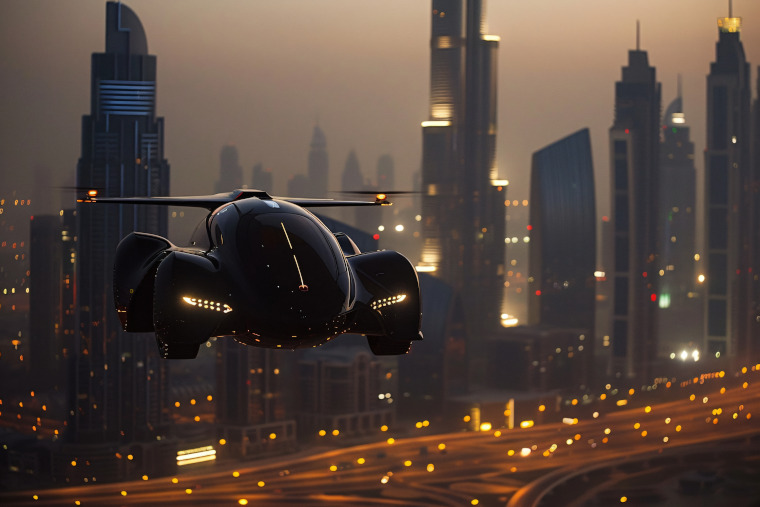 Image source: freepik / magnific.com

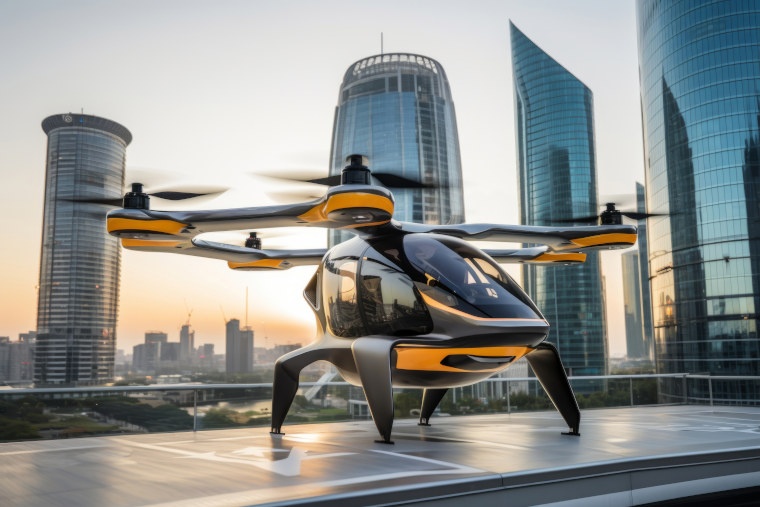 Image source: freepik / magnific.com

 Image source: vectorjuice / magnific.com