What Language is Spoken in Dubai: The Official Language and Communication
Save the article:
Are you planning a trip to Dubai and worried about the language barrier? Many tourists feel anxious before travelling to the UAE, unsure whether they will be able to communicate comfortably with hotel staff, understand road signs, or make themselves understood in shops and restaurants. These concerns are perfectly reasonable, as the quality of your stay and your ability to handle everyday matters in an unfamiliar country depend greatly on the language of communication.
What will you gain from reading this article? You will learn what language is officially spoken in Dubai, which languages are actually used in tourist areas, hotels, and shopping centres, and you will receive practical advice on how to prepare for your trip. We will describe the linguistic situation in different parts of the city, offer recommendations on the use of translators and mobile applications, and share useful phrases in Arabic and English. After reading this guide, you will feel confident in any situation — from checking into a hotel to shopping at traditional markets.
The Official Language of Dubai and the UAE
Arabic holds the status of the sole official language in all seven emirates of the United Arab Emirates, including Dubai. This status is enshrined in the UAE Constitution and means that all government documents, legislative acts, and official correspondence are conducted exclusively in Arabic.
The question of language status is of great importance to all UAE residents, particularly for English-speaking expats who use English in their day-to-day communication.
Classical Arabic in the official sphere
Classical Arabic is used in Dubai's government institutions — it is the literary form that serves as the basis for all official record-keeping.
Visa documents, employment contracts for the public sector, court rulings, and legislative acts in the United Arab Emirates are all drawn up in classical Arabic. All media outlets, including state television channels and newspapers, also use this form of Arabic rather than English.
Classical Arabic differs from spoken dialects in its more complex grammar and formal vocabulary. Within the UAE's educational system, all subjects related to history, religion, and civil law are taught in classical Arabic. The question of learning this language is particularly pressing for expats in Dubai who are accustomed to using English in an international environment.
The Emirati dialect in everyday communication
The local population of Dubai and the other emirates use the Emirati Arabic dialect in their everyday lives. This dialect differs noticeably from classical Arabic and incorporates borrowings from Persian, Urdu, and English, reflecting the centuries-long trading history of the United Arab Emirates region.
The Emirati dialect is characterised by simplified grammar and specific pronunciation. For instance, the sound «ق» is often pronounced as a [g], and certain word endings are dropped. The dialect makes active use of words of Persian origin to denote everyday objects and trade-related concepts.
Situations in which Arabic is essential
Knowledge of Arabic becomes critically important in several key situations in Dubai. When applying for a residence visa, all documents must be submitted in Arabic, although English translations are accepted with notarisation.
Working in the public sector of the emirates requires a mandatory command of classical Arabic at a level sufficient for conducting official correspondence, rather than using English.
Court proceedings in the United Arab Emirates are conducted exclusively in Arabic. If you do not speak Arabic, the court will provide an interpreter, but all documents must be translated into Arabic at your own expense.
Registering a marriage, the birth of a child, or processing an inheritance in Dubai also requires knowledge of Arabic or the services of a certified translator. This matter affects a large number of expats who speak English.
Arabic in banking and healthcare
Government banks in the Emirates are required to provide all contracts and official notifications in Arabic. Private banks in Dubai often duplicate documents in English, but it is the Arabic version that carries legal force. In government medical institutions in the emirates, medical records and official certificates are maintained in Arabic rather than English.
A considerable volume of data in Dubai's healthcare sector is processed in Arabic, which creates additional challenges for foreign residents who are accustomed to English in medical documentation and communication with staff.
Practical aspects for expats in Dubai
For long-term residence in Dubai, it is advisable to learn the basic Arabic alphabet and key phrases used in official communication. This is particularly important when dealing with municipal services, the police, and immigration officers in the United Arab Emirates.
Many expats attend Arabic language courses offered by cultural centres in the region, alongside their study of English.
When seeking employment in international companies in Dubai, knowledge of Arabic is not mandatory, but it can be a significant advantage when it comes to career advancement. This is especially relevant in areas connected with government contracts or local business in the Emirates.
This fact is borne out by a wealth of statistical data on career progression across the various cities of the United Arab Emirates, where proficiency in both Arabic and English opens up a broad range of opportunities for professional development.
English as the Main Means of Communication
English effectively serves as the common language in Dubai, bringing together representatives of more than 200 nationalities in their daily communication. Despite the official status of Arabic, it is English that has become the primary tool of inter-ethnic communication in the emirate, making it a comfortable place for tourists and expats from around the world.
Statistics on the use of English in key sectors
In the business sector, English dominates with a figure of 89% of all commercial negotiations and business correspondence. International companies, which form the backbone of Dubai's economy, conduct their official record-keeping predominantly in this language.
The image was generated using AI technologies
The tourism industry shows even higher figures — 95% of hotel and travel agency staff speak English at Intermediate level or above.
The property sector displays interesting dynamics: 78% of transactions with foreign buyers are conducted in English, and all advertising materials in the premium segment are duplicated in this language. In retail, English is used in 85% of shopping centres as the primary language of communication with customers.
Levels of English proficiency among the population
Among the local population of the UAE, the level of conversational English proficiency stands at 73%, which is significantly above the global average. The younger generation of Emiratis demonstrates particularly high linguistic competence — 91% of residents aged between 18 and 35 communicate fluently in English.
Expats show even more impressive results: 96% of foreign residents use English as their primary language at work and in everyday life. This is explained by the fact that knowledge of English is often a mandatory requirement for obtaining a work visa in the majority of industries.
The widespread use of English in urban infrastructure
In Dubai's shopping centres, English is present everywhere: from directional signs to public address announcements. The largest malls, such as Dubai Mall and Mall of the Emirates, provide all information in two languages — Arabic and English — and in 94% of cases, shop staff are able to serve customers in English.
The hotel industry sets the highest standards of English-language service. In four- and five-star hotels, all staff undergo mandatory language training, and reception desks operate exclusively in English and Arabic. International cuisine restaurants use English menus as their primary ones, with Arabic duplicates provided alongside.
English in medical institutions and transport
Dubai's healthcare system is adapted for international patients: 87% of doctors in private clinics speak English at a professional level. Medical records are maintained in English, which ensures continuity of treatment for expats and tourists.
Public transport is fully bilingual — all announcements on the metro, buses, and taxis are duplicated in English. Navigation systems in transport applications are set to English by default, which significantly simplifies getting around the city for foreign visitors.
Specifics of British and American variants of English
The British variant of English predominates in the UAE, owing to the country's historical ties with the United Kingdom. Official documents, educational programmes, and government communications follow British spelling and grammar standards. For example, spellings such as «colour» rather than «color», and «centre» rather than «center» are used.
However, the influence of American English can be observed in the business environment, particularly in technology and finance companies. Many international corporations bring American language standards with them, creating an interesting blend of variants.
In everyday communication, expats use whichever variant of English they studied in their home countries, producing a diverse linguistic environment that is comfortable for speakers of any variety of English. The de facto status of English in the business sphere is driving its further spread across all sections of the emirate's population.
Other Widely Spoken Languages in Dubai
Dubai is a unique linguistic mosaic, where representatives of more than 200 nationalities create a multilingual environment of an unprecedented scale. In addition to the official Arabic language and the widely used English, dozens of other languages are spoken in the UAE, reflecting the cultural diversity of the international community.
Hindi and Urdu: the languages of the largest diasporas
Hindi and Urdu are the third and fourth most spoken languages in Dubai, which is hardly surprising given the demographic composition of the emirate. Indians make up approximately 27% of the UAE's population, and Pakistanis around 12%, making these languages an integral part of daily life in the city. In recent years, the influence of these languages has only grown stronger in Dubai.
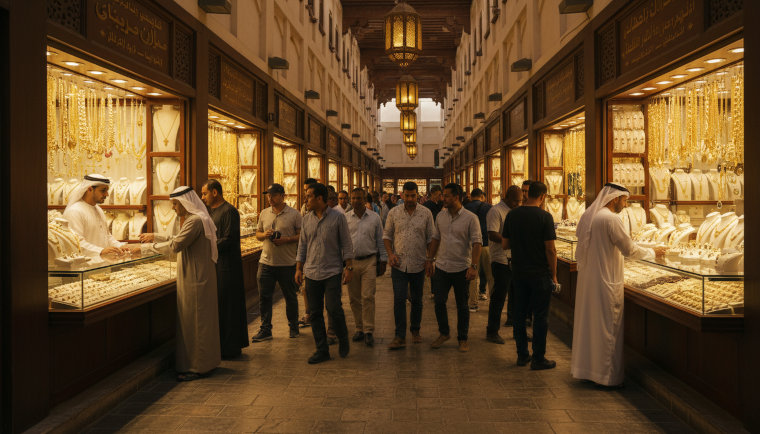
In the districts of Deira, Bur Dubai, and Dubai International City, Hindi and Urdu can be heard at virtually every turn. Many shops, restaurants, and service centres in these areas serve customers in the native languages of South Asian communities. At the Gold Souk and Spice Souk, a significant proportion of traders speak Hindi fluently, making shopping easier for tourists from Indian cities.
Tagalog: the language of the Filipino community
Filipinos represent one of the largest expat communities in Dubai, accounting for approximately 6% of the emirate's population. Tagalog is particularly widespread in the fields of domestic service, hospitality, and healthcare, where a significant proportion of Filipino migrants are employed. The popularity of this language grows every year in Dubai and other cities of the UAE.
In shopping centres such as Dubai Mall and Mall of the Emirates, Tagalog can frequently be heard among shop and restaurant staff. Filipino restaurants in the districts of Jumeirah and Discovery Gardens create a homely atmosphere for their compatriots, offering not only national cuisine but also the opportunity to communicate in their native language.
Persian: the language of the Iranian diaspora
Persian holds particular significance in Dubai owing to the historically established trade links with Iran and the sizeable Iranian community. Many representatives of Dubai's old trading families have Persian roots, which explains the presence of Farsi in the emirate's business circles. Over many decades, this language has maintained its position in Dubai.
The Bastakiya district and the old part of Deira preserve a Persian cultural heritage, where elderly residents who prefer to communicate in Farsi can still be encountered. Iranian restaurants and cultural centres in these districts uphold the linguistic traditions of the Persian community, passing them down from generation to generation.
Russian: the language of a growing community
The Russian-speaking community in Dubai has been growing actively in recent years, particularly since 2020. According to unofficial data, Russian is used by approximately 50,000–70,000 residents of the emirate, including citizens of Russia, Ukraine, Belarus, and other CIS states. The growth dynamics of this community are impressive year on year in Dubai and other cities of the UAE.
In the districts of Dubai Marina and Jumeirah Beach Residence, an increasing number of establishments with Russian-speaking staff are appearing. Many estate agencies, medical centres, and educational institutions offer services in Russian, adapting to the needs of the growing community and other Russian-speaking residents of the city.
Linguistic diversity in everyday life
Dubai's shopping centres are veritable linguistic hubs where dozens of languages are spoken simultaneously. In Mall of the Emirates or Dubai Mall, one can hear French spoken by tourists, German by expats, Chinese conversations among business people, and a host of other languages from the international community. Each year, the linguistic diversity of these shopping centres only increases.
Traditional markets, such as the Satwa Market or Karama Market, display an even greater linguistic variety. Traders often have a command of basic phrases in five to seven languages, enabling them to communicate effectively with customers of different nationalities from various parts of the world and to create a welcoming atmosphere for an international clientele.
The image was generated using AI technologies
Over the years, such multilingualism has become an inseparable part of local trading culture.
Practical Advice for Tourists and Expats
Preparing for a trip to Dubai does not require an in-depth knowledge of languages, but a basic command of English and a few Arabic phrases will considerably ease your stay in the emirate. A practical approach to language preparation will help you feel confident in any situation, from communicating in a hotel to shopping at traditional markets.
A minimal language toolkit for tourists
For a comfortable tourist visit, a basic level of English and knowledge of 15–20 key Arabic phrases is sufficient. Research by the Dubai Tourism Authority indicates that 95% of tourist situations can be resolved using simple English constructions at Elementary level.
Essential English phrases include standard expressions for hotels: «Could you help me, please?», «Where is the nearest metro station?», «How much does it cost?». For restaurants, the following will come in handy: «I would like to order», «Could I have the menu in English?», «Is this dish spicy?». In shops, use: «Do you accept credit cards?», «Can I try this on?», «Where is the fitting room?».
Useful Arabic phrases will make a positive impression on local residents: «Ahlan wa sahlan» (welcome), «Shukran» (thank you), «Afwan» (you're welcome), «Ma'a salama» (goodbye), «Bikam hatha?» (how much does this cost?).
Modern technological aids
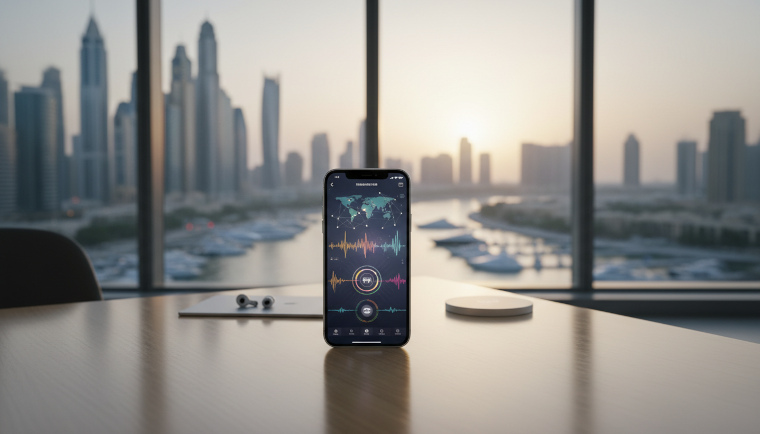
Mobile translation applications have become an indispensable tool for travellers. Google Translate supports offline mode for Arabic and English, and its camera function instantly translates texts on signs and menus. Microsoft Translator offers real-time voice translation, which is particularly useful in conversations with market traders.
The image was generated using AI technologies
The dedicated application «Speak Arabic» contains tourist phrases with correct pronunciation, whilst «Dubai Guide» includes a built-in translator that accounts for the specifics of local dialects. The application «What3Words» will help you pinpoint your location precisely, even without knowledge of Arabic street names.
Requirements for long-term residence
Expats face more serious language requirements when processing documents and seeking employment. To obtain a residence visa, knowledge of Arabic is not mandatory, as all procedures can be completed in English through certified translators.
Employment in international companies requires a confident command of English at Upper Intermediate or Advanced level. In government institutions and companies owned by local proprietors, preference is given to candidates who speak Arabic.
For conducting business, an understanding of commercial terminology in English is critical, whilst knowledge of Arabic opens up additional opportunities for working with local partners.
Educational opportunities in Dubai
Dubai offers a diverse range of language courses catering to different needs and budgets. International language schools — ES Dubai, Eton Institute, and Canadian University Dubai — run intensive English language courses with the possibility of obtaining internationally recognised IELTS and TOEFL certificates.
For learning Arabic, courses at the Arabic Language Centre at the American University of Sharjah and the Qalam wa Lawh Centre, which specialises in Modern Standard Arabic, are recommended. Online platforms Preply and iTalki offer individual sessions with native speakers on a flexible schedule.
The cost of group classes ranges from 800 to 2,000 dirhams per month; individual lessons cost between 100 and 300 dirhams per academic hour.
Non-verbal means of communication
When linguistic skills are lacking, universal methods of communication work well. Gestures in Arab culture have their own specifics: avoid giving a thumbs-up or making the «OK» sign, as these may be perceived negatively by local residents.
International pictograms and signs in Dubai conform to global standards, which simplifies navigation in the airport, on the metro, and in shopping centres. Mobile applications with maps work in English and include voice navigation.
In emergency situations, dial 999 for the emergency services, where operators speak English. If language difficulties arise with taxi drivers, show your destination address in written form — the majority of local taxi drivers speak basic English.
Frequently Asked Questions
What is the official language of Dubai?
The official language of Dubai and all the UAE is Arabic, as enshrined in the country's Constitution. All government documents, official procedures, and government correspondence are conducted exclusively in Arabic.
The image was generated using AI technologies
The judicial system and the processing of official documents also use Arabic as the primary language of record-keeping. In practice, however, the majority of official services are duplicated in English for the convenience of the international community.
Is it essential to know English before travelling to Dubai?
Knowledge of English will considerably simplify your stay in Dubai, but it is not strictly obligatory for tourist trips. Hotel, restaurant, and shopping centre staff speak English fluently and will help resolve most queries.
English is also widely used at the airport, in taxis, and on public transport. A basic level of English will be sufficient for a comfortable trip to Dubai and for managing everyday tasks.
Is it possible to get by in Dubai without knowing any languages?
It is possible to get by in Dubai without any language knowledge, but this will create certain difficulties when communicating with local residents. Many signs and menus are duplicated in English, and staff in tourist areas understand basic phrases in Arabic and other languages.
Mobile translation applications and maps will help resolve most problems with navigation and communication in Dubai. Gesturing and showing images on a mobile phone frequently prove an effective way of making oneself understood to local residents in shops and restaurants.
Is it worth learning Arabic before a trip to Dubai?
Learning Arabic before a tourist trip to Dubai is not a necessity, but knowing a few basic Arabic phrases will make a positive impression on local residents. Learning simple greetings, expressions of thanks, and apologies in Arabic will be sufficient for comfortable communication.
For a longer stay or for work in Dubai, learning Arabic will open up more opportunities for cultural integration with the local community. Classical Arabic will be of help in understanding documents and in deepening cultural ties with Arabic speakers.
Are Russian-language services available in Dubai?
Russian-language services are developing actively in Dubai, thanks to the large number of tourists and expats from Russia and the CIS countries. Many hotels provide Russian-speaking staff, and travel agencies organise tours in Russian in Dubai.
In large shopping centres, it is possible to find consultants who speak Russian, particularly in luxury brand stores. Medical centres and banks also frequently have Russian-speaking specialists available to serve clients from Russia.
Which language applications will be of help in Dubai?
Google Translate with its camera function will help you instantly translate signs, menus, and documents in Arabic. The applications Speak & Translate and iTranslate Voice will provide voice translation for live communication with local residents in Dubai.
Offline translators are particularly useful in parts of Dubai with an unstable internet connection. Arabic-learning applications such as Duolingo or Rosetta Stone will help you master basic Arabic phrases before your trip to Dubai.
Article header image was generated using AI technologies
Sea and gulf — what is the difference? The Persian Gulf — the main waterway of the UAE. Water temperature, sharks and the best seasons. Dubai's beaches and artificial islands. Activities and attractio...
Does voice communication via messengers work in the UAE? Main telecommunication operators in the UAE. 3 telecommunication operators in the UAE with eSIM support. How to activate an eSIM for communicat...
Features of the Dubai Festival City district. Daily life in Dubai Festival City. Housing in Dubai Festival City. Shopping and entertainment in Dubai Festival City. Transport accessibility of Dubai Fes...
Ciel Dubai Marina — the record-holder for height. Premium-class services and amenities. Comparison with other high-rise hotels in Dubai. Booking and accommodation prices. Frequently asked questions.
Types of Dubai visas. Entry rules to Dubai from Russia. The process of passing passport control. Dubai residence visa requirements. Frequently asked questions about the need for a Dubai visa.
What Umm Suqeim is like. Real estate in Umm Suqeim. Features of residential real estate in Umm Suqeim. What affects commercial real estate prices? Entertainment in Umm Suqeim. Frequently asked questio...
Main features of public transport in Dubai. Dubai public transport zones, rules, and tickets. Dubai metro. Dubai buses. Dubai tram. Dubai monorail. Public water transport in Dubai. Taxis in Dubai. Rul...
Advantages of studying at Dubai universities. Requirements for applicants to Dubai universities. Obtaining a visa for studying in Dubai. Top 3 universities in Dubai. Frequently Asked Questions about u...
Alcohol consumption rules in Sharjah. Bringing alcohol into Sharjah. Buying alcohol in neighbouring emirates. Fines and penalties for breaking alcohol rules. Alcohol in other UAE emirates: a compariso...



 The image was generated using AI technologies


 The image was generated using AI technologies
 The image was generated using AI technologies
 The image was generated using AI technologies