Home/Middle East/Oman population 2026: size, composition, GDP
08.09.2026
Middle East
1434
Reading time: 10 minutes
Oman population 2026: size, composition, GDP
Save the article:
What is the population of Oman in 2026? According to official estimates from the National Centre for Statistics and Information of Oman (NCSI), approximately 5.4 to 5.5 million people reside in the country in 2026. International demographic databases that use UN models (Worldometers, WorldPopulationReview, and others) give a higher estimate — around 5.67 million as of mid-2026 — so you will see different figures depending on the source.
Why do population figures for Oman differ between sources? The NCSI relies on administrative records (resident registration, visas, migration and other government registries), so its estimate is closer to the number of officially registered residents.
International organisations and aggregators based on UN data use demographic models with assumptions about birth rates, mortality, and migration, which results in a somewhat higher calculated figure and a discrepancy of several per cent between sources.
Population of Oman: Trends and Current Data
The population of Oman in 2026, based on the totality of open estimates and official data, lies in the range of approximately 5.4 to 5.7 million, and the variation is explained by the different counting methodologies, not by errors in the data.
Image source: Mr MaroX / unsplash.com
Table 1. Population of Oman in 2026 (according to estimates from different sources)
Source
Population
Date
Methodology
NCSI Oman (official government body)
~5.4–5.5 million
2026
Current estimates; Administrative registration of residents
Publications based on NCSI data
~5.4 million
First half of 2026
Monthly bulletins and summaries
UN DESA / Worldometers
~5,671,458
Mid-2026 (estimate)
UN demographic model
Trading Economics
~5.4–5.5 million
End of 2026 (forecast)
Econometric model and forecast
In brief: for practical purposes (relocation, business, applied statistics), it is more reliable to refer to NCSI data as the primary government source with regular updates. UN and international aggregator estimates are useful for comparing Oman with other countries and analysing long-term demographic trends.
How the population has changed: from the 1970s to the present day
Over recent decades, the population of Oman has grown considerably, reflecting economic modernisation, infrastructure development, and an increase in the inflow of labour.
Table 2. Dynamics of population growth in Oman (estimates based on UN and national statistics data)
Year
Population
Comment
1970
~660,000
Before large-scale modernisation and the active development of the oil sector
1980
~1,000,000
The start of the oil boom and growth in government investment
2000
~2,300,000
More than doubled over 20 years amid an inflow of labour
2010
~3,000,000
Active infrastructure development and labour migration
2020
~4,500,000
Substantial growth in the pre-pandemic period
2022
~4,700,000
Recovery following the temporary outflow of migrants in 2020–2021
2026
~5.4–5.7 million
Continued growth driven by natural increase and migration
The main driver of population growth is the combination of natural increase and the inflow of labour migrants working in construction, logistics, industry, services, and the public sector.
Forecast: how the population of Oman will change in the coming years
According to the UN forecast, the population of Oman will continue to grow, but at a slower pace.
Table 3. Forecast of population growth in Oman
Year
Population forecast
2030
~6.1 million
2035
~6.5 million
2040
~6.9 million
The slowdown in growth is linked to a gradual decline in the total fertility rate among the indigenous population and the economy's progressive shift towards a more diversified employment model.
National Composition: Omanis and Expatriates
Foreign nationals make up a significant share of Oman's population; however, unlike some neighbouring Gulf states, the indigenous citizens in Oman still constitute the majority.
The ratio of Omani citizens to foreigners
According to official statistics and publications based on NCSI summaries, Omani citizens account for approximately 55–60% of the population, while foreign residents make up around 40–45%. This is lower than in the UAE or Qatar, where expatriates form the absolute majority of residents, and this is precisely what distinguishes Oman's demographic structure within the region.
The largest groups of foreign residents are those from South and South-East Asia, with communities from India and Bangladesh being particularly prominent; citizens of Pakistan, Egypt, and other countries also have a notable presence.
Religious and ethnic composition
The state religion of Oman is Islam, and the country is known as one of the key centres of Ibadism — a moderate school of Islam that distinguishes Oman from its predominantly Sunni and Shia neighbours. Among foreign residents there are Muslims, Christians, Hindus, and followers of other faiths, reflecting the diversity of its labour migrants.
Where the majority of foreigners live
The economically active and foreign population is concentrated primarily in coastal and urbanised areas. According to local summaries and analytical data, the greatest concentration of expatriates is found in the capital region of Muscat and in a number of industrial and port zones.
Image source: SeenPotos / unsplash.com
This has a direct impact on the rental housing market and the structure of demand for services in the capital and major agglomerations, whereas in the interior governorates the share of foreigners is significantly lower.
Population Density and Geographic Distribution
The average population density of Oman is estimated at approximately 17–18 persons per km², making it one of the least densely populated countries in the region by this measure, despite steady overall population growth.
Why the average population density of Oman is misleading
Important: the averaged density figure takes into account the country's entire territory (approximately 309,500 km²), including vast desert areas and mountain ranges where population density is extremely low.
In coastal urban agglomerations, such as Muscat, Sohar, Salalah, and other centres of economic activity, the actual density is many times higher than the national average.
The greatest relative population growth in recent years has been seen in developing regions where infrastructure and industrial projects are being implemented.
The majority of Oman's population lives in cities: the level of urbanisation is approaching values of 80–90%, which is comparable with other Gulf states. The share of urban residents continues to grow as transport, social, and economic infrastructure develops and projects in new economic zones are implemented.
Characteristics of Oman's Population: Age, Composition, Indicators
Oman's population is characterised by a relatively young age structure, a notable share of working-age people, and a multinational composition owing to the presence of a large number of foreign workers.
Age structure and median age
The median age of Oman's population is estimated at approximately 29–30 years, which is considerably lower than in most European countries, where it exceeds 40 years. This means that more than half of the country's residents are young people, which affects both consumption patterns and the demands placed on the education system, the labour market, and social infrastructure.
Table 4. Birth rate, mortality, life expectancy
Indicator
Value
Total fertility rate
~2.3–2.5 children per woman
Life expectancy at birth (both sexes)
~77–81 years
Infant mortality rate
~7 per 1,000 live births
Demographic dependency ratio and what it means for the labour market
The demographic dependency ratio in Oman remains moderate, owing to the fact that a significant portion of the population consists of people of working age (15–64 years). This creates favourable conditions for the labour market and eases pressure on the pension and social systems compared with countries that have ageing populations.
Economy and Standard of Living: GDP Per Capita
Oman's GDP per capita, according to international economic organisations, stands at approximately $20,000 in nominal terms and roughly $35,000–40,000 in purchasing power parity terms. These figures differ according to the calculation methodology and must not be directly compared with one another.
Oman's GDP per capita: nominal and PPP
Important: many online sources cite only one indicator without specifying whether it refers to the nominal value or purchasing power parity, which can be misleading.
Table 5. Oman's GDP per capita
Indicator
Value (2024–2025)
What it means
GDP per capita (nominal)
~$20,000–21,000
GDP converted to US dollars at the market exchange rate
GDP per capita (PPP)
~$36,000–41,000
Accounts for differences in the cost of living and purchasing power
The PPP value is noticeably higher than the nominal figure because the cost of living in Oman is lower than in a number of developed countries, and the same amount of money goes further within the country in terms of the goods and services it can buy.
Sources of income: oil and economic diversification
Oman's economy has traditionally relied on oil and gas extraction; however, in recent years the government has been actively implementing the Oman Vision 2040 programme, aimed at diversifying the sources of growth. The priorities are the development of tourism, logistics (including major port projects), manufacturing industry, and financial services, in order to reduce the budget's dependence on the oil and gas sector.
By nominal GDP per capita, Oman occupies a more modest position among the Gulf states, trailing the UAE, Qatar, and Saudi Arabia, yet it demonstrates steady growth and is gradually diversifying its economy.
Frequently Asked Questions
How many people live in Oman in 2026?
As of 2026, the NCSI records approximately 5.4–5.5 million people residing in Oman, while UN estimates and international demographic models put the figure at around 5.67 million. The discrepancy is due to the counting methodology and the assumptions used.
Foreign residents account for approximately 40–45% of Oman's population, meaning several million people. A significant proportion of them are traditionally from India, Bangladesh, and other countries of South and South-East Asia.
What is the population density of Oman?
The average population density of Oman is around 17–18 persons per square kilometre, which reflects the country's large territory and the presence of extensive desert and mountainous areas. In cities and coastal agglomerations the actual density is significantly higher.
Can Oman be called a densely populated country?
No — by its average density figure, Oman is among the sparsely populated countries; however, individual cities and economic centres are characterised by a high concentration of population and well-developed infrastructure.
What is the GDP per capita of Oman?
The nominal GDP per capita of Oman is approximately $20,000, while on a purchasing power parity basis it is roughly $35,000–40,000. These are two different metrics and should not be directly compared.
Is Oman's population growing or declining?
The population of Oman continues to grow: the increase is driven both by natural growth among citizens and by the inflow of foreign workers. According to UN forecasts, the population may approach the figure of approximately 6.1 million by 2030.
Official currency of the UAE. 3 best ways to exchange currency in Dubai. 3 worst ways to exchange currency in Dubai. Frequently asked questions about currency exchange in Dubai.
Description of Al Sufouh. Geography and attractions of Al Sufouh. Infrastructure of Al Sufouh. Real estate and investment appeal of Al Sufouh. Frequently Asked Questions about Al Sufouh.
Benefits of starting a company in Dubai. Nuances of starting a company in Dubai. What is required to start a company in Dubai? How to start a company in Dubai as a foreigner in 2026? Relocation of exi...
Ain Dubai — a record-breaking Ferris wheel. Location and directions to Ain Dubai. Ride experience and what can be seen. Practical information for visitors. Frequently asked questions.
What makes the Jebel Ali district in the UAE attractive? Architectural features of Jebel Ali. Transport infrastructure of Jebel Ali. What real estate can be bought or rented in Jebel Ali? Jebel Ali re...
How many airports are there in Dubai? Dubai International Airport. Al Maktoum Airport in Dubai. Choosing an airport in Dubai. Services at Dubai airports. Useful tips on choosing Dubai airport. Frequen...
Qatar: essential facts before your trip. What to see in Doha: the main attractions. Attractions outside Doha. Practical tips: itineraries, food, and shopping. Frequently asked questions.



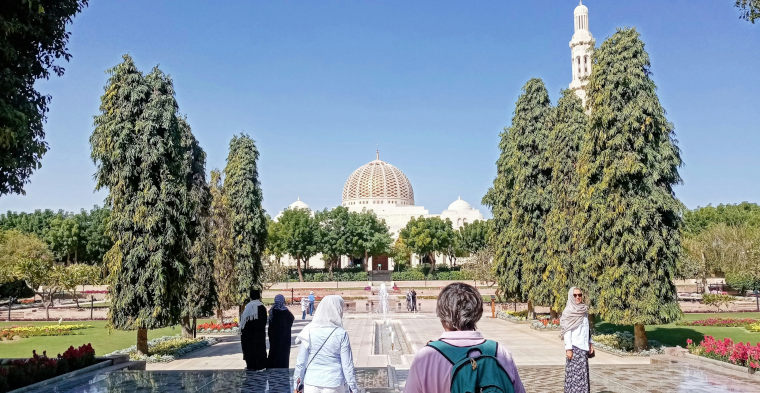 Image source: Mr MaroX / unsplash.com
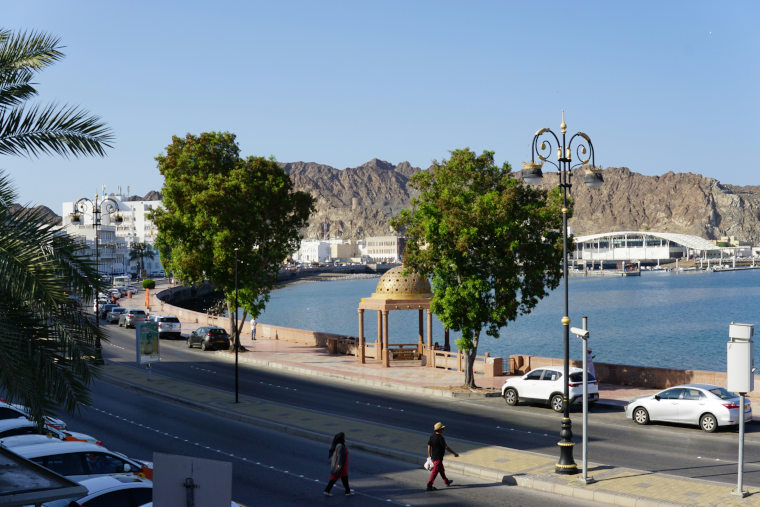 Image source: SeenPotos / unsplash.com