Home/Middle East/How to obtain Saudi Arabian citizenship in 2026: 5 grounds, points, and realistic timeframes
04.09.2026
Middle East
923
Reading time: 15 minutes
How to obtain Saudi Arabian citizenship in 2026: 5 grounds, points, and realistic timeframes
Save the article:
How can you obtain Saudi Arabian citizenship? Saudi Arabian citizenship is granted on five grounds: birth from a Saudi father, descent from a Saudi mother, marriage to a citizen (for women only), naturalisation after a lengthy period of residence in the country, and a royal decree.
Obtaining a passport through investment is not possible: money only provides temporary or permanent residency. For naturalisation, 23 points out of 33 are required, along with Arabic language proficiency and renunciation of one's previous citizenship. A breakdown of the points system can be found in section 2 of the article.
How many years does one need to live in Saudi Arabia to obtain citizenship? Obtaining Saudi Arabian citizenship through naturalisation requires a decade of lawful residence, with at least 5 consecutive years in permanent residency status. Leaving the country for more than 6 consecutive months resets the residency period.
Who Can Obtain Saudi Arabian Citizenship: 5 Lawful Grounds
The obtaining of Saudi Arabian citizenship is governed by the Saudi Arabian Citizenship System and is possible on five grounds: birth from a Saudi father, descent from a Saudi mother, marriage to a citizen (for foreign women), naturalisation after completing the required residency period in the country, and a royal decree.
Image source: Oualid Lakhrouti / unsplash.com
There is no "citizenship by investment" programme in the Kingdom. According to official information from Jawazat, each case is considered individually, and there is no unified electronic queue.
Five grounds: summary table
Practice shows that approved cases are based on family ties or profession.
Ground
Who qualifies
Timeframe
Arabic language / renunciation of previous citizenship
Birth from a Saudi father
Son, daughter
From birth
No / no
Descent from a Saudi mother
Son, daughter
From age 18
Yes / yes
Marriage
Foreign women
5 years
Conversational / yes
Naturalisation
Foreign nationals
10 years
Yes / yes
Royal decree
Talents / exceptional merit
Individual
At discretion / yes
Key point: four out of five grounds require renunciation of previous citizenship. The procedure of obtaining Saudi Arabian citizenship is one of the most difficult in the world; for any foreign national, everything begins with legalisation on the territory of the Kingdom. Although the Vision 2030 reforms have opened the market to tourism and international companies, immigration legislation has changed little.
Is it true that Saudi Arabian citizenship can be obtained for money
Saudi Arabian citizenship cannot be purchased: there is currently no "citizenship by investment" programme.
Please note. Money opens the door to Premium Residency — temporary or permanent residency, not a passport. An investor, after a decade of residence in the country, may submit a paid application under the general terms. Funds go into the state treasury and are not returned.
Online sources frequently claim the opposite: the authors confuse the premium Saudi Arabian visa, launched in 2019, with citizenship.
Is Saudi Arabian citizenship available to Russian nationals
Obtaining Saudi Arabian citizenship by Russian nationals is not restricted by law: the rules are the same for all foreign nationals, the country of origin plays no role, and an applicant from Russia goes through the same procedure as an Egyptian national. The reality is harsh: approvals are rare, with the majority granted to relatives of citizens and by royal decree.
The Russian language is not used in the procedure; documents are accepted in Arabic or English.
Naturalisation: 10 Years, 23 Points, and an In-Demand Profession
Naturalisation in Saudi Arabia requires 10 years of residence in the country, five of which must be as a permanent resident, and a minimum of 23 points out of 33 on the Saudi scale. Points are awarded for length of residence, education, and family ties to local citizens. Applications where the total falls below 23 are rejected.
Economic diversification is progressing rapidly; however, the government allocates new jobs to local personnel — this is the logic of Saudisation.
The points system: how many points for what
The assessment system is a sieve through which a case must pass before reaching the Saudi Arabian committee: the maximum is 33, the threshold is 23. Studying at schools and universities around the world does not in itself add points: what matters is the degree, not the institution.
Criterion
Points
Residence in the country
10
Doctoral degree: medicine, engineering / other sciences
13 / 10
Master's degree / bachelor's degree
8 / 5
Saudi father / Saudi wife
3 / 1
Two or more children who are citizens
2
Usually, 10 points are awarded for the required length of residence, and the remaining 13 are covered by a diploma or the presence of relatives.
Example points calculations for three profiles
People from the medical and technical fields are approved more frequently than others. Let us look at three profiles:
Petroleum engineer, PhD, full residency period in the country, Saudi wife: 10 + 13 + 1 = 24. The threshold is met.
IT specialist, master's degree, full residency period in the country, no relatives who are citizens: 10 + 8 = 18. Rejected.
Doctor, candidate of sciences, Saudi father, two children who are citizens: 10 + 13 + 3 + 2 = 28. Passes.
Check your own situation. Do you have a degree? Do you have close relatives who are citizens? Do you have the full residency period with five years of permanent residency?
The procedure is the same for all those pursuing naturalisation.
Visa. Entry into the country on a residency visa via a sponsor: an employer or a university.
Iqama. Obtaining a residence permit and renewing it; living in the country without a sponsor is not permitted.
Permanent residency. Permanent status is mandatory: 60 consecutive months of residence are included in the requirements.
Language. An Arabic language test — written and oral.
Profession. Obtaining a ministry certificate confirming the demand for the profession.
Application. The application is submitted upon reaching adulthood at the Ministerial Agency of Civil Affairs of the Ministry of Interior.
Decision. The committee counts the points, a specialist committee makes a recommendation, and the minister makes the decision.
Electronic registration is done through the Absher portal, and the history of entries and exits is obtained automatically.
Timeline by year: what to do at each stage to ensure the period does not reset
Period, years
What to do
What happens if you miss it
0–1
Enter legally via a sponsor, obtain an iqama immediately, register on Absher
Living in the Kingdom without a residence permit does not count as residence — the residency period simply will not begin
1–2
Decide whether Premium Residency is needed: it removes dependence on a sponsor
It offers convenience, but does not replace the residency period
2–7
Work in an in-demand profession — doctor, engineer, scientist, rare specialist; obtain an exit/re-entry visa via Absher before each departure
The visa term is tied to the iqama expiry date: if the iqama expired whilst abroad, both lose their validity, and a new entry visa from the employer is required
7–10
Accumulate points and study Arabic
10 years plus a bachelor's degree with no relatives is 15 points, which is below the threshold
10+
Submit a dossier to the Ministry of Interior: ten years of uninterrupted lawful residence and fluent Arabic are required
If you have at least 23 points, the case goes to the Naturalisation Committee and the minister; below the threshold, the application is not rejected but "held" without progress
What documents are required
Basic list for submitting an application:
A passport valid for at least 6 months;
Birth and marriage certificates;
A medical certificate no more than 3 months old;
A criminal record certificate no more than 6 months old;
Proof of income, insurance, and photographs.
Additionally required are a certificate confirming that the profession is in demand and declarations regarding religion, politics, and the military.
Medical certificates confirm the physical health of the applicant, copies must be officially certified, and personal data is processed in accordance with local privacy policy.
Please note. Documents in other languages must be translated and notarized; a diploma must be translated into Arabic.
Citizenship by Marriage, by Birth, and Through Parents
Obtaining Saudi Arabian citizenship through family is available to three categories: foreign women married to a Saudi national for at least five years and holding a residence permit; widows of local citizens; children of citizens. Foreign men do not receive citizenship through marriage to a Saudi woman.
Obtaining citizenship through marriage: conditions and timeframes
How many years does a woman need to be married? Five years, with a residence permit. The waiting period is reduced if there are children, close relatives in the Kingdom, or a rare profession on the husband's part. The wife renounces her previous citizenship before a judge, and the marriage must be contracted in accordance with the rules governing a Saudi national's union with a foreign woman. Family culture there is traditional, and the spouses' obligations are established in advance, either at home or before a notary.
Please note.For a foreign man obtaining citizenship through a marriage with a Saudi woman is not possible, as there is no legal basis for it. For a man, the only route remains the general one — a decade of residence and 23 points.
Children: by birth and by descent
Citizenship is inherited by a child from the father, not by place of birth.
A son or daughter of a Saudi father is a citizen from birth, wherever he or she is born.
A child of a Saudi mother and a foreign father may apply upon reaching adulthood within 12 months, provided they were born and are residing in the country, know Arabic, and have no criminal record.
Those born in the country to unknown parents are considered local citizens.
Children of naturalised men remain citizens provided they have not left the country for more than 12 months and have not obtained the father's citizenship.
Since 2023, under a decree by King Salman, children of Saudi women married to foreign nationals have the right to apply after coming of age; previously, status was determined by the father. The latest changes concern families of mixed heritage: this is a new right, and such cases most frequently receive a positive decision.
Citizenship is available to a widow, but the conditions are scrutinised strictly.
Lawful residence in the country;
A shared son or daughter with the deceased husband;
No subsequent remarriage.
If all three conditions are met, a widow may submit documents on the same basis as the wives of local citizens.
Saudi Arabian Temporary and Permanent Residency: Investment, Business, Real Estate, Talents
Investment in Saudi Arabia secures residency in the country, not citizenship. Temporary residency (SP2) costs 100,000 riyals (26,660 USD) with annual renewal; permanent residency (SP1) costs 800,000 riyals (213,300 USD) as a one-off payment. Since 2024, Premium Residency has been open to investors, entrepreneurs, real estate owners, and talented individuals.
Premium Residency: SP1, SP2
The Saudi Arabian premium visa is a fee-based residency without a sponsor: it grants the right to live, work, own real estate, and conduct business, but it does not replace citizenship.
The basic products of the programme are SP1 (permanent premium residency) and SP2 (annual).
Parameter
SP2
SP1
Fee
100,000 SAR annually
800,000 SAR once
Duration
12 months with renewal
Auto-renewal
Sponsor
Not required
Not required
The fee is non-refundable. Applications are submitted online; a decision typically takes several weeks.
Conclusion: it makes sense to obtain SP1 immediately if the goal is to establish a long-term presence in the country and accumulate the residency period; remaining on SP2 for an extended period without transitioning to permanent status may not satisfy the requirements for naturalisation.
Premium Residency categories in 2026
From 2024, in addition to SP1/SP2, category-specific Premium Residency options have appeared: for investors, entrepreneurs, highly qualified specialists, individuals with exceptional talents, and real estate owners.
All of them use a single base fee of 4,000 SAR for status of up to 5 years, but require separate confirmation of investments, income, or the value of the property.
Category
Who qualifies
Threshold / conditions
What it provides
Investor
Investors in priority projects
Investments under licence; threshold depends on the project
Residency without a sponsor, right to conduct business
A contract or confirmation of achievements; fee of approximately 4,000 SAR
Residency without a sponsor, right to work in the country
Real estate
Owners of residential property
Property valued at 4,000,000 SAR or above, without a mortgage
Residency for the period of ownership
Applications for Premium Residency are typically submitted via an online portal with document uploads, and the list of requirements and processing timeframes may change as part of programme updates.
Important: all figures and thresholds in this section are taken from open sources for 2025–2026 and are indicative, as they are regularly updated within the framework of Vision 2030. Before submitting an application, the current conditions should be verified on the official Premium Residency Center website and in the regulations of the Ministry of Investment.
Real estate in Saudi Arabia: what a foreign national is permitted to do
A foreign national is entitled to purchase property throughout the country, with the exception of agricultural, protected, and border areas. A non-Muslim may not reside in Mecca or Medina: they may only let the property out for rent, and the authorities have the right of purchase after a 99-year period.
Please note. Residency through real estate does not earn a single point: a villa in Riyadh makes its owner a resident, nothing more.
Criterion
Saudi Arabia
UAE
Entry threshold
From 1,067,000 USD
From 2 million AED (545,000 USD)
What it provides
Residency for the period of ownership
Golden Visa for a decade
Riyadh and Jeddah are actively developing their infrastructure, including the Red Sea projects and business districts. In Dubai, a property at half the price opens up residency for a decade.
Limitations, Risks, and Alternatives: What to Keep in Mind Before You Begin
Saudi Arabian citizenship requires renunciation of one's previous passport: the Kingdom does not recognise dual citizenship, and obtaining another citizenship without the permission of the Minister of Interior results in the loss of Saudi citizenship. In the first five years, the decision is annulled upon a conviction carrying a sentence of 12 months or more. Saudi citizenship does not grant a non-Muslim access to Mecca or Medina.
Renunciation of a passport, dual citizenship, and deprivation of status
The risks are set out explicitly in Saudi Arabian law.
Dual citizenship is not recognised: renunciation of citizenship of one's home country is mandatory.
A second citizenship requires the minister's permission.
Government service or military service in another country results in loss of rights.
A conviction carrying a prison sentence of 12 months or more in the first five years annuls the decision.
Please note. Renunciation is irreversible: it will not be possible to recover Russian citizenship in the event of failure.
What a passport provides, and what it does not
The advantages are real, but the limitations are numerous.
Provides
Does not provide
Healthcare and education
Residence in Mecca and Medina for non-Muslims
Subsidies and social housing
Equality with native-born residents
Interest-free loans and allowances
Visa-free access to the USA and Schengen countries
The right to work without a permit
A second citizenship
Citizens benefit from free healthcare and state housing programmes, including interest-free mortgages. Safety and healthcare are at a high level there, although personal freedoms are limited.
Briefly on the strength of the document. In the Immigrant Invest Passport Index ranking, the Saudi Arabian passport occupies 76th place out of 196 countries.
Conclusion: who is suited to a Saudi passport, and who is not
It will suit you if you are:
A doctor, engineer, or scientist with a degree and Saudi relatives;
The wife or widow of a citizen of the country;
The child of a Saudi national;
An award recipient by royal decree.
Image source: MO B.H / unsplash.com
It will not suit you if you are:
An investor without relatives who are citizens (money does not earn points);
A specialist without a degree: 18 points instead of 23;
A man counting on marriage to a Saudi woman.
Becoming part of the Kingdom's society is a matter of identity, not money. For nine out of ten people, Saudi citizenship is a dream, not a tool. The tool in the Gulf is residency: the same zero taxes, but achievable within months and without renouncing one's first citizenship.
Brief answers to frequently asked questions
Can Saudi Arabian citizenship be purchased through investment?
Obtaining Saudi Arabian citizenship for money is not possible: there is no "passport by investment" programme. Money opens the door to residency: 100,000 riyals for temporary residency, 800,000 for permanent residency. Citizenship is only possible after ten years of residence in the country. Read more in the article.
How many years does one need to live in Saudi Arabia to obtain citizenship?
Obtaining citizenship is possible after 10 years of residency in the country, five of which must be as a permanent resident. Leaving the country for more than six months resets the period. Figures of 5–7 years are incorrect. Full details can be found in this article.
The application will be rejected without consideration. The shortfall can be made up with a degree or with relatives who are citizens. Calculations can be found in this article.
Can a man obtain citizenship through marriage to a Saudi woman?
No. Citizenship through marriage is available only to foreign women who have married a citizen of the country. For a man, naturalisation remains the only option: a decade of residency in the country and 23 points. Further details are in the article.
Is it necessary to renounce Russian citizenship?
Yes, renunciation is mandatory: Riyadh does not recognise dual citizenship. Wives of local citizens declare their renunciation before a judge. A second citizenship without the minister's permission results in loss of residency rights. A breakdown of the risks is in this article.
What is easier: Saudi Arabian citizenship or UAE residency?
UAE residency is considerably easier. A Golden Visa is valid for 10 years and can be obtained after a real estate investment of at least AED 2 million; the visa is issued within 2–3 months, without renouncing one's first citizenship.
Article header image source: MO B.H / unsplash.com
Education in Dubai is available for preschoolers, schoolchildren, and university students. The educational structure is similar to the Russian one: nurseries, kindergartens, schools, colleges, and hig...
The most expensive hotel in Dubai — Burj Al Arab. Atlantis The Royal — a palace on Palm Jumeirah. Four Seasons Resort Dubai at Jumeirah Beach. Mandarin Oriental Jumeira, Dubai. One&Only The Palm — exc...
What a flying taxi is and how it works. From the first flights to the present day: who is developing the flying taxi. Where air taxis are already flying: Dubai and other cities around the world. Why f...
What the UAE flag looks like. The meaning of the UAE flag's colours. The history of the UAE flag's creation. The use of the flag in the modern UAE. Frequently asked questions.
11 official festivals in Dubai and the UAE. Non-muslim festivals celebrated in the UAE and Dubai. Other festival celebrations in Dubai and the UAE. Frequently asked questions about festivals in Dubai.
Benefits of starting a company in Dubai. Nuances of starting a company in Dubai. What is required to start a company in Dubai? How to start a company in Dubai as a foreigner in 2026? Relocation of exi...
What does UAE citizenship provide? Advantages of UAE citizenship. How to obtain UAE citizenship? Conditions for obtaining UAE citizenship. Procedure for obtaining UAE citizenship. Loss of UAE citizens...
Nuances of living with children in Dubai. Advantages and disadvantages of relocating to Dubai with children. Requirements for relocation to Dubai. Expenses related to relocation to Dubai. Best areas f...
UAE Banking System. Reasons to open a bank account in the UAE. Best UAE banks for opening accounts. Types of accounts offered by UAE banks. How to open a personal account in the UAE? How to open a cor...



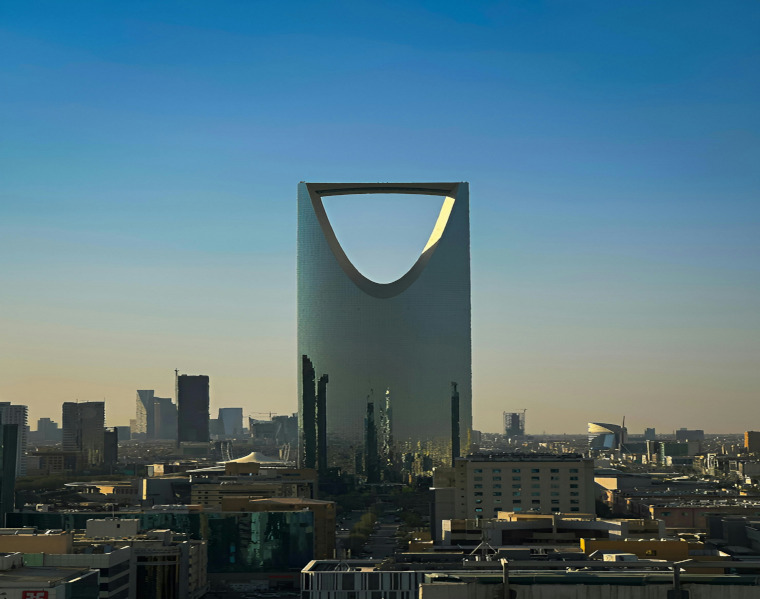 Image source: Oualid Lakhrouti / unsplash.com


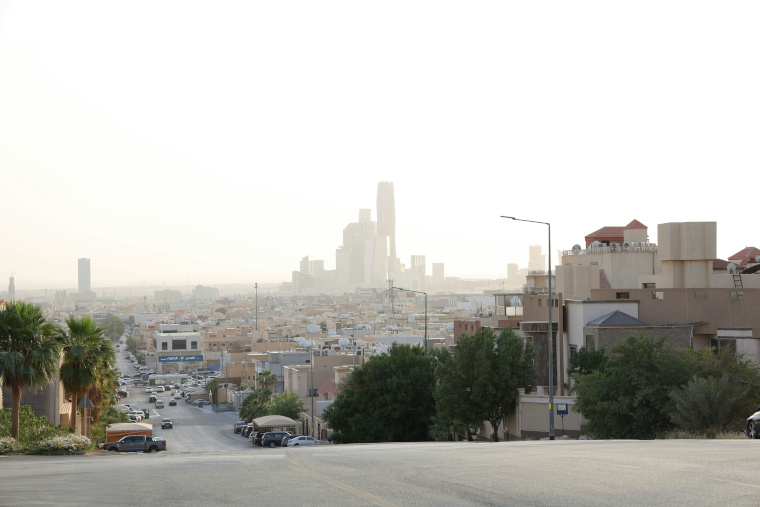 Image source: MO B.H / unsplash.com