Home/Middle East/Qatari Citizenship: How to Obtain a Qatari Passport and Become a Citizen
14.08.2026
Middle East
1243
Reading time: 15 minutes
Qatari Citizenship: How to Obtain a Qatari Passport and Become a Citizen
Save the article:
What challenge have you encountered when you began researching Qatari citizenship? Investors are looking for an official investment programme, expats are trying to work out how many years one actually needs to have lived in the country, and lawyers are finding a shortage of up-to-date information.
Qatar is one of the few Gulf states where the naturalisation of foreigners remains an exception rather than an established mechanism. Unlike its GCC neighbours, there is no citizenship-by-investment programme comparable to those of Turkey or Malta, and the granting of a passport is governed by the Law No. 2 of 1961 on the Qatari Nationality, as amended in 2005 and 2018.
What will you gain from reading this article?You'll learn the actual terms and conditions of naturalization, understand which categories of applicants are eligible for a Qatari passport, and appreciate how Qatari citizenship differs from residency status or holding a permanent residence visa.
The material is based on verifiable legislative provisions and practical guidance for three audiences: high-net-worth investors, long-term expats working in the country, and professionals who support such applications in a professional capacity.
Qatari Citizenship: General Characteristics and Nuances
Qatari citizenship is a legal status that is granted extremely rarely and almost exclusively by decision of the highest official of the state. Qatar is among the countries with the most closed naturalisation system in the world; even when an applicant formally meets the requirements, there can be no guarantee of a positive outcome.
This strictness has a straightforward explanation — the state enjoys enormous revenues from oil and gas extraction, and Qatari citizenship automatically confers access to free healthcare, education, public-sector positions and a share of the national wealth.
The Qatari authorities are not prepared to share these resources with large numbers of new citizens, as the state consistently seeks to maintain a balance between the interests of the indigenous population and those of incomers.
The standard of living in Qatar remains one of the highest on the planet, with per-capita income exceeding that of most European countries. At the same time, Qatari society itself is small in number: native Qataris make up only 10–20% of the population, whilst the remaining 80–90% are foreign workers, professionals and their family members, who may reside in the country for decades yet never obtain a Qatari passport.
The image was generated using AI technologies
This disproportion is the defining feature of the country's demography and the principal reason why the authorities are so cautious about expanding the circle of citizens.
Qatar's citizenship law
The main document governing citizenship matters in Qatar is the Law on the Qatari Nationality, enacted in 1961 and substantially revised by the amendments of 2005 and 2018.
The law establishes strict selection rules, sets a limited annual quota of new citizens (estimated by various sources at no more than a few dozen per year) and defines the priority categories of applicants: children of mixed marriages, persons with long records of public service, and citizens of other Gulf Cooperation Council (GCC) countries.
The final decision on each application is made personally by the Emir of Qatar: the head of state approves the lists of candidates by decree. This procedure makes the process in Qatar effectively opaque; the formal requirements of the law are met, but the right of final selection rests with the Emir, and a refusal need not be accompanied by any explanation of the reasons.
For lawyers and consultants, this means that even a flawlessly prepared set of documents cannot guarantee a favourable outcome, as the decision is discretionary in nature. Detailed rules and up-to-date guidance on the procedure can be found on the official website of the relevant Qatari authority.
The absence of dual citizenship in Qatar
Qatar does not, as a general rule, recognise dual citizenship, and the requirements regarding renunciation of one's previous citizenship depend on the specific case and the decision of the authorities. Dual citizenship is regarded as a threat to loyalty to the state, and accordingly the law requires a complete severing of the legal bond with the country of origin.
Exceptions exist but are extremely rare and are applied by special decision of the authorities — for instance, in relation to specific individuals whose status has been recognised by the state as being of strategic importance.
This practice is characteristic of other countries in the region as well: in the UAE and Saudi Arabia, dual citizenship is likewise not permitted as a general rule, although the process of naturalisation is different there.
For prospective applicants, it is precisely the requirement to renounce their current citizenship that represents one of the most painful aspects of the decision. The risk of being left permanently without the legal protection of one's home country, in the absence of any guaranteed approval of the application, deters many at the document-preparation stage.
Before submitting an application, it is worth carefully examining the rules on the official website and consulting specialists who are familiar with the particularities of Qatari legislation.
Grounds and Ways for Obtaining Qatari Citizenship
Qatari legislation provides for four main routes to Qatari citizenship, each governed by its own selection logic. Before submitting an application, it is important to understand that formally meeting the criteria is not equivalent to receiving a positive decision.
The annual quota of approvals in Qatar is extremely limited, and the rejection rate, according to expert assessments, remains one of the highest in the world among countries where naturalisation is provided for by law.
The general list of grounds is as follows:
naturalisation on the basis of a period of permanent residence in the country;
marriage to a Qatari citizen;
investment in the country's economy or special services rendered to the state;
descent (for children of naturalised Qataris and persons from mixed families).
Not every foreigner may be eligible for any of these routes: the law requires lawful status of residence in Qatar, a clean legal history, and, for certain categories, additional confirmation of professional or financial merit.
The image was generated using AI technologies
At the initial stage of the application, regardless of the chosen route, a passport, proof of current residency, a certificate of no criminal record, a medical report, and documents proving residency, marriage, or investment—depending on the specific route—are typically required.
Naturalisation on the basis of period of residence
The main and most common route is naturalisation through long-term residence in Qatar. For the majority of foreign applicants, the minimum period is 25 years of continuous residence in Qatar, whereas for citizens of other GCC states this period is reduced to 15 years.
The critical requirement is continuity itself: extended absences from the country interrupt the period and may reset the accumulated years of residence.
Throughout the entire period, one must reside in Qatar on a lawful basis, such as a work visa or residence permit, without any violation of immigration rules. Any gap in lawful status, even a brief one, may serve as grounds for refusal when applying for citizenship.
A practical recommendation for those planning to live in Qatar for decades with naturalisation in mind: keep a personal archive of documents from the very first year (copies of visas, tenancy agreements, employment contracts, and entry and exit stamps). This will simplify the task of demonstrating continuous residence at the final stage after twenty-five years have passed.
Citizenship through marriage
Marriage to a Qatari citizen is another way to obtain citizenship, but the conditions differ considerably for men and women. A foreign woman who marries a Qatari man may apply for citizenship after several years of officially registered marriage, which is quicker than the standard naturalisation route.
For men who marry Qatari women, the conditions are considerably stricter: usually, separate approval by special decision is required, and no standard simplified mechanism is available to them.
An obligatory condition in both cases is the spouse's consent and compliance with the requirements regarding the duration of marriage as established by Qatari law. It is important to understand that the fact of marriage does not in itself guarantee the granting of citizenship; the final decision rests with the country's authorities, and an application may be rejected even where all conditions have been met.
Two additional routes stand apart from classical naturalisation. The first is the investment route: substantial investment in Qatar's economy, real estate or significant business projects in the country is taken into consideration.
The estimated amounts that could be taken into account by the authorities as grounds are in the millions of US dollars; however, this is not a guarantee, as there is no formalised citizenship-by-investment programme in Qatar of the kind that exists in Cyprus or Vanuatu.
The second route is through special merit, such as a significant contribution to science, sport, culture or the country's economy, officially recognised by the authorities. Such decisions are often made on a case-by-case basis, targeting specific individuals with high salaries and unique qualifications whose expertise is of strategic value to the state.
Both the investment route and the merit-based route require the personal approval of the Emir. Before preparing such an application, it is advisable to consult lawyers who specialise in international relocation — this reduces the risk of expending resources and years without a desired result.
The image was generated using AI technologies
Citizenship for children of naturalised Qataris
Children whose father is a Qatari citizen typically acquire citizenship through the paternal line. For children born outside the country, timely registration of the birth at Qatari consular establishments is required; otherwise, confirming entitlement to citizenship becomes considerably more complicated.
As for the children of naturalized citizens, rather than native Qataris, when confirming their status, the Qatari authorities may impose additional requirements, including scrutiny of the history of how the parent themselves obtained citizenship.
How to Obtain Qatari Citizenship: A Step-by-Step Guide
For those who have already decided on the basis for their citizenship — whether it's long-term residence, marriage, investment, or special achievement — it's important to understand the process itself: how to obtain Qatari citizenship step by step, where to submit an application and what happens after documents are submitted in Qatar.
Below is a sequential process that applies regardless of the chosen basis, with adjustments for the specifics of the particular case and the characteristics of the country.
The general path for an applicant is as follows:
verifying compliance with the established requirements;
gathering and legalising the set of documents;
submitting the application to the relevant government agency;
attending an interview;
awaiting the decision;
the ceremony of taking an oath of allegiance to the state.
The entire process, from the first step to receiving a passport, may take anywhere from several months to several years. This variation is explained by the fact that the consideration of applications is not subject to a fixed timetable, and the final decision is discretionary in nature.
In practice, specialists recommend engaging legal consultants familiar with the procedure in Qatar well in advance, preparing translated and apostilled documents long before submission, and bearing in mind the requirement of knowledge of the Arabic language — three factors that significantly influence the ultimate outcome.
Requirements for the applicant and knowledge of Arabic
Before submitting an application, the candidate must make sure that they meet the basic selection criteria: a clean criminal history with no convictions in Qatar or abroad, financial solvency, and the absence of any factors that the authorities might regard as a threat to national security.
One of the strictest additional conditions is knowledge of the Arabic language — the applicant must either pass an official test or otherwise demonstrate proficiency at a level sufficient for everyday communication and an understanding of official documents.
In addition to Arabic language, the immigration authorities pay attention to the candidate's general familiarity with the culture, traditions and way of life in Qatar. This is an important factor that is taken into account when an application is considered.
Those who are only beginning their journey towards Qatari citizenship should systematically and early on study the Arabic language and the country's cultural characteristics; courses, language practice and participation in local events improve the chances of a positive decision and make it easier to pass the interview at a later stage.
The standard set of documents includes a passport, proof of income, a certificate of no criminal record, documents confirming the period of lawful residence in Qatar, medical certificates and fingerprints. All documents issued outside Qatar require notarisation and legalisation by apostille; without this, the documents will not be accepted for consideration.
The submission of an application requires the payment of government fees — both for the receipt of documents and for the subsequent consideration of the case; the exact amounts should be verified immediately before submission, as the fees are periodically revised.
Assembling the complete set of documents often takes several months, and sometimes more than a year, especially if some of the documents need to be obtained in other countries; it is therefore sensible to begin preparations well in advance, ideally with the involvement of legal specialists familiar with the requirements of the Qatari authorities.
The interview and the oath-of-allegiance ceremony
After the documents have been accepted, the applicant is invited to attend an interview with representatives of the immigration authorities. At this stage, the level of proficiency in Arabic, knowledge of the country's culture and an understanding of the purposes of continued residence in Qatar are all assessed.
Following the interview, the case is forwarded for further consideration, and the final decision is approved personally by the Emir — this step concludes the procedure on the part of the state.
The image was generated using AI technologies
In the event of a positive outcome, the applicant takes part in the ceremony of swearing an oath of allegiance to the state, after which they officially become a citizen of Qatar. It is worth keeping in mind the timeframes: a decision may take several years, and in the event of a refusal, the applicant is not always informed of the specific reasons — this is a characteristic of the closed naturalisation system that one must be prepared for from the start.
Cost and timescales of the process
The overall expenditure consists of several components: government fees for the submission and consideration of the application, costs of legalisation and apostilling of documents, and, where necessary, the fees of legal firms providing support throughout the procedure in Qatar.
The timeframes for consideration vary considerably depending on the ground for obtaining citizenship, from several months in simplified cases (for instance, certain marriage situations) to several years under standard naturalisation on the basis of period of residence.
Engaging professional legal firms that specialise in immigration matters in the GCC countries usually makes it possible to reduce timeframes by virtue of a correctly and first-time-accurately assembled set of documents, and also reduces the risk of refusal on account of errors in the preparation of paperwork. This approach is particularly justified for those who plan to relocate to Qatar for many years and are interested in a predictable outcome.
Rights, Privileges and Alternatives to a Qatari Passport
A Qatari passport provides access to social benefits that are denied even to long-term residents of the country. The difference between the status of a citizen and that of a holder of a residence permit in Qatar is felt not so much in everyday life as in access to state resources, property rights and participation in the governance of the country.
For those who are assessing the realistic prospects of relocating to Qatar, it is important to understand that citizenship is more of an exception, while a residence permit is a viable and achievable form of legal residency.
Rights and privileges of Qatari citizens
Qatari citizenship entitles citizens to free medical care in public hospitals and free education, including higher education; many Qataris study at the expense of the state even at foreign universities.
Citizens are entitled to subsidised housing or land plots for development, regular social payments and utility subsidies. There is no income tax in the country, and per-capita income remains one of the highest in the world, noticeably above the global average.
A passport also confers the right to hold public-sector positions and to participate in elections to the Consultative Council — an opportunity that is closed to residents at any level, including permanent residents. Another distinct privilege is the right to own a business with 100% ownership, without the requirement of a local partner-sponsor, whereas foreign investors in most sectors are not granted such a right.
As regards freedom of movement, a Qatari passport affords visa-free or simplified entry to a number of countries, although in global passport rankings it does not feature in the top ten.
Residence permit and permanent residency as alternatives to citizenship
For the vast majority of foreigners, the path to Qatar begins not with thoughts of a passport but with the question of how to obtain a visa and a residence permit through an employer.
The image was generated using AI technologies
A temporary resident is a foreigner who has obtained a work visa under the sponsorship of an employing company: the sponsor arranges the residence permit, renews it annually and bears responsibility for the employee's status before the immigration authorities. This is how the majority of expats enter the country — from engineers in the oil and gas sector to service-industry workers.
Qatar recently introduced permanent residency, which provides greater stability than a standard work visa, as well as access to certain public services, the right to own certain types of property and the absence of annual dependency on a sponsor.
The conditions for obtaining this status include a lengthy period of lawful residence in the country, confirmed stable income and the absence of any violations. For most expats, it is permanent residency, rather than citizenship, that should be considered the realistic and achievable goal for long-term presence in Qatar.
Comparison with GCC countries
In the GCC region, the naturalization and residency situation differs more significantly than might initially appear. The UAE has special mechanisms for granting citizenship to certain categories of applicants, making that country more flexible by comparison with its neighbours. In Saudi Arabia, Oman and Bahrain, naturalisation likewise remains limited and selective, and dual citizenship is universally discouraged.
At the same time, Qatar is considered one of the most closed countries in the region when it comes to the granting of a passport — quotas are minimal, and the decision is always discretionary. In other Gulf Council countries, conditions may differ in terms of required periods of residence and applicant requirements, but the underlying logic is similar: citizenship is protected as a limited resource.
Those choosing between Gulf states for long-term residence would do well to take a clear-eyed view of the prospects of obtaining a passport specifically in Qatar and to regard a residence permit as the more practical route.
Frequently Asked Questions
Can a foreigner obtain Qatari citizenship?
In theory, yes, Qatari law provides for several grounds: long-term residence, marriage to a citizen, investment or special services rendered to the state.
In practice, the chances are slim, as the annual quota of approvals is minimal, and the decision is made personally by the Emir without any explanation of the reasons for refusal. Formally meeting the requirements does not guarantee a positive outcome. A foreigner would do well to regard Qatari citizenship as an unlikely prospect rather than a realistic short-term goal.
Is it necessary to convert to Islam in order to obtain citizenship?
Qatar's citizenship law contains no direct requirement to convert to Islam as a condition of naturalisation. However, knowledge of the Arabic language, cultural traditions and the country's way of life is taken into account during the interview and genuinely influences the decision of the immigration authorities.
Religious affiliation is not formally a selection criterion, but deep integration into local society increases the trust placed in an applicant. In practice, the majority of successful candidates have long been living according to local customs and are well acquainted with Qatari culture.
How many years does one need to have lived in Qatar to obtain citizenship?
The standard period of continuous lawful residence in Qatar for the majority of foreigners is 25 years, and for citizens of other GCC states — 15 years. Continuity is of the essence: extended absences from the country interrupt the period and may reset the accumulated record of residence.
Throughout this entire period, one must be present in Qatar on a lawful basis, such as a work visa or residence permit, without any violation of immigration rules. This is one of the longest naturalisation periods among the Gulf states and the world at large; in many other countries, a passport may be obtained after 5–10 years.
Does purchasing property confer the right to citizenship?
The purchase of property does not in itself confer the right to Qatari citizenship; there is no formalised citizenship-by-investment programme in Qatar of the kind that exists in Cyprus, Turkey or Vanuatu. Substantial investment in real estate or business projects in Qatar may be taken into account by the authorities as a factor when an application is considered, but not as an independent legal ground.
The final decision in any case remains discretionary and is made by the Emir after years of consideration. Investors counting on this route would be wise to consult lawyers in advance, rather than viewing the purchase of property in Qatar as a guaranteed means of obtaining a passport.
Article header image was generated using AI technologies
Types of Dubai visas. Entry rules to Dubai from Russia. The process of passing passport control. Dubai residence visa requirements. Frequently asked questions about the need for a Dubai visa.
How the UAE economy functions: from oil dependency to diversification. Which production sectors are most developed in the UAE? Why the UAE attracts foreign investors? How to set up a manufacturing com...
What cuisines are represented in Dubai restaurants? 5 best restaurants in Dubai according to MICHELIN Guide 2024. Fine dining restaurants in Dubai. 3 most expensive restaurants in Dubai. 10 inexpensiv...
What Umm Suqeim is like. Real estate in Umm Suqeim. Features of residential real estate in Umm Suqeim. What affects commercial real estate prices? Entertainment in Umm Suqeim. Frequently asked questio...
Does voice communication via messengers work in the UAE? Main telecommunication operators in the UAE. 3 telecommunication operators in the UAE with eSIM support. How to activate an eSIM for communicat...
Nuances of living with children in Dubai. Advantages and disadvantages of relocating to Dubai with children. Requirements for relocation to Dubai. Expenses related to relocation to Dubai. Best areas f...
Specifics of property rights types in the UAE. What is freehold? What is leasehold? Usufruct and musataha. Pros and cons of different forms of ownership in the UAE. Frequently asked questions about ty...
Smoking laws in Dubai and the UAE. Where you can smoke in Dubai. E-cigarettes and vapes in Dubai. Rules on importing tobacco products. Practical advice for smokers. Frequently asked questions.
UAE Oil Industry. What makes Arab oil famous? Major oil deposits in the UAE. Current state of the oil and gas industry in the UAE. Frequently asked questions about oil in the UAE.



 The image was generated using AI technologies

 The image was generated using AI technologies

 The image was generated using AI technologies

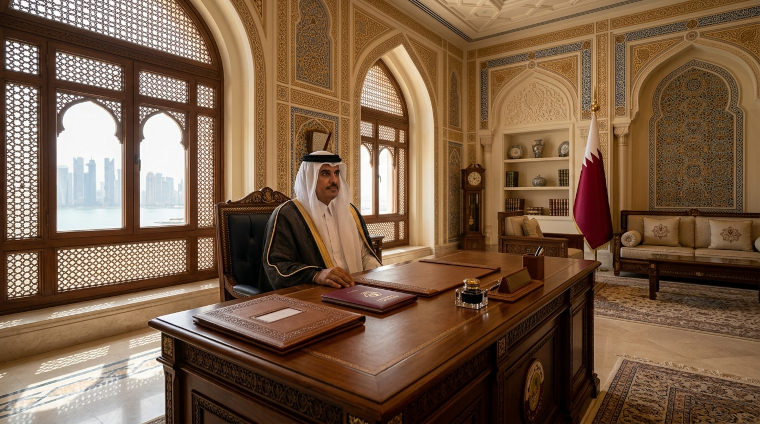 The image was generated using AI technologies

 The image was generated using AI technologies