Natural Resources of the UAE: Key Wealth and Its Impact on the Country's Economy
Save the article:
What problem have you encountered? You need to quickly understand which natural resources of the UAE define the country's economy, yet most sources are either too superficial or written in dry academic language. Students struggle to find reliable data for essays, teachers lack a comprehensive analysis, and investors need specific figures on the prospects of the extractive industry.
What will you gain from reading this? This article brings together up-to-date information on the main natural resources of the UAE — from the enormous reserves of oil and gas on the Persian Gulf coast to renewable energy and the rich marine life of coastal waters. You will learn how the natural wealth of the United Arab Emirates shaped one of the most dynamic economies in the world, why the country is actively diversifying its revenues beyond hydrocarbons, and how many years the current reserves will last at the present rate of extraction.
General Overview of the UAE's Natural Resource Potential
The United Arab Emirates is situated in the east of the Arabian Peninsula. The country is bordered by the Persian Gulf to the west and north, and by the Gulf of Oman to the east. The total area is approximately 83,600 km² — roughly the size of two Switzerlands. Despite its modest size, the UAE occupies a strategically important position in the world in terms of hydrocarbon volumes and exports.
The country's wealth is distributed unevenly. Approximately 80% of the territory is covered by desert — predominantly sandy dunes and rocky plains. An arid climate with summer temperatures reaching 50°C significantly limits agricultural development and access to fresh water. Yet it is beneath these seemingly lifeless sands that colossal deposits of oil and gas lie hidden.
What the UAE's natural resource potential consists of
The main natural and subsoil wealth of the emirates can be divided into several groups:
Hydrocarbons: oil and natural gas — the country's main economic asset.
Water resources: extremely limited; the country has virtually no rivers or lakes.
Agricultural land: suitable for farming only in oasis areas and coastal zones.
Biological resources: marine ecosystems of the Persian Gulf coast and fish stocks.
Mineral raw materials: limestone, gypsum, marble — in the mountainous areas of the emirate of Ras al-Khaimah.
This composition of the resource base is typical of Persian Gulf countries. By comparison, Saudi Arabia and Qatar also possess a similar structure of wealth, in which hydrocarbons occupy a dominant position.
Where the main hydrocarbon deposits are concentrated
Oil and gas fields are distributed unevenly among the emirates. Abu Dhabi controls approximately 94% of all the country's oil deposits. Dubai has significantly smaller volumes — its fields have been gradually depleting since the 1990s. The remaining five emirates have virtually no hydrocarbon resources.
The oases of Al Ain and Liwa represent rare zones with soils that are relatively suitable for farming. It was there that the population was historically concentrated before the oil era began.
What the UAE's economy looked like before oil
Before the discovery of oil in the late 1950s and early 1960s, the economy of the territories that now make up the UAE rested on three pillars: pearl diving, fishing, and transit trade. The shores of the Persian Gulf provided rich catches and served as the base for the pearl-fishing industry, which was the primary source of income for local tribes throughout the 19th and early 20th centuries.
The discovery of oil in Abu Dhabi in 1958 and the commencement of commercial extraction in 1962 changed everything. Within a few decades, the region was transformed from one of the poorest regions of the Arabian Peninsula into one of the wealthiest in the world.
Understanding this transformation helps one appreciate how profoundly the raw material potential of the emirates has defined not only the economy but the entire character of the modern state. The following sections of the article examine each group in greater detail.
Oil and Natural Gas — The Foundation of the UAE's Economy
The main natural resources of the UAE are, above all, hydrocarbons. It is oil and natural gas that turned a small Persian Gulf state into one of the wealthiest countries in the world within a matter of decades. To grasp the scale, one need only look at the figures.
Oil reserves: how much and where
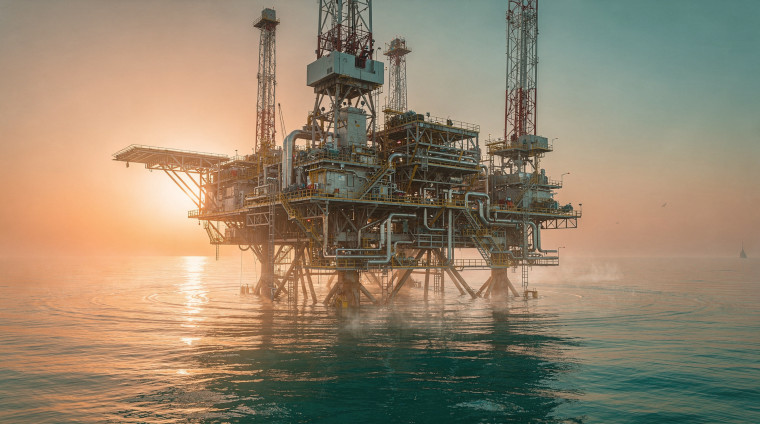
The UAE's confirmed oil reserves amount to approximately 97–98 billion barrels. This places the country 7th in the world and represents roughly 6% of global reserves. By comparison, Saudi Arabia holds approximately 267 billion barrels and ranks second in the world. Qatar, the closest neighbour in the region, falls significantly short of the UAE in terms of oil, although it leads in liquefied gas.
The image was generated using AI technologies
The main oil deposits are concentrated in the emirate of Abu Dhabi, which controls approximately 94% of the country's total oil reserves. The key fields are:
Zakum — one of the largest in the world, located on the Persian Gulf shelf.
Umm Shaif — an offshore field with a long history of production.
Bu Hasa — the UAE's largest onshore field.
The remaining emirates — Dubai, Sharjah, Ras al-Khaimah — hold significantly smaller reserves. Dubai, for instance, began experiencing the depletion of its fields as early as the 1990s, which prompted the emirate to pursue economic diversification at an early stage.
Production and exports: key figures
The UAE's daily oil production stands at approximately 3–4 million barrels. The country is one of the largest producers within OPEC+ and regularly agrees on production quotas with other members of the cartel.
Revenues from oil exports constitute a significant portion of the country’s budget. According to recent data, the export of oil and petroleum products brings the UAE approximately 80–100 billion dollars annually. At the same time, the share of hydrocarbons in the country's GDP is around 25–30% — noticeably lower than in Saudi Arabia, where this figure exceeds 40%. This is the result of a deliberate diversification policy that the UAE has been pursuing for several decades.
ADNOC — the main operator of the oil industry
The central role in hydrocarbon production is played by the Abu Dhabi National Oil Company, better known as ADNOC. This state-owned company was founded in 1971 and today ranks among the top five largest oil companies in the world by the volume of reserves under management.
ADNOC controls the entire chain: from exploration and extraction to processing and export. The company manages more than 50 subsidiaries and joint ventures with international partners — ExxonMobil, Shell, TotalEnergies, BP. This model allows the company to attract foreign technologies and investment whilst retaining state control over a strategic resource.
In recent years, the Abu Dhabi National Oil Company has been investing heavily in the decarbonisation of its own operations. The goal is to reduce the carbon footprint of production without cutting volumes. This is significant in the context of the global energy transition.
Natural gas: the second most important resource
The UAE's natural gas reserves are estimated at approximately 6 trillion cubic metres. This also places the country 7th in the world. The bulk of the gas reserves are concentrated in Abu Dhabi.
Paradoxically, the UAE has historically imported gas from Qatar via the Dolphin pipeline, despite holding significant reserves of its own. The reason is the high sulphur content of the local gas, which complicates and increases the cost of processing. The country is now actively developing the infrastructure to increase its own gas production and reduce dependence on imports.
The role of hydrocarbons in the economy: dependence and its limits
Oil and natural gas remain the foundation of the UAE's economy. However, the country is deliberately reducing this dependence. Whereas in the 1970s hydrocarbons accounted for over 70% of GDP, today that figure has fallen to approximately 25–30%.
By comparison, in Kuwait oil accounts for around 40–45% of GDP, and in Iraq for over 50%. Against this backdrop, the UAE stands out as the most diversified economy in the region after Bahrain.
The main natural resources of the UAE in the form of oil and gas continue to finance the development of non-extractive sectors: tourism, finance, logistics, and technology. This is the classic "resource springboard" model — using revenues from extraction to build an economy that will outlast the oil era.
According to current estimates, at the present rate of extraction, the UAE's confirmed oil reserves will last for more than 70–80 years. This gives the country sufficient time to complete its economic transformation, provided the diversification policy remains consistent.
Water, Land and Biological Resources of the UAE
Oil and gas are the UAE's main hydrocarbons, but they are far from the country's only wealth. Beyond the hydrocarbons there are three groups of resources that shape the country's everyday life and determine its long-term sustainability.
Water resources: scarcity and a technological response
The UAE is among the most water-scarce countries on the planet. Renewable fresh water reserves amount to less than 150 m³ per person per year — against a global benchmark of approximately 1,700 m³. Underground aquifers that took millennia to form are being depleted faster than they can be replenished.
At the same time, per capita water consumption in the UAE is among the highest in the world: approximately 550 litres per person per day. By comparison, in Germany this figure stands at around 120 litres.
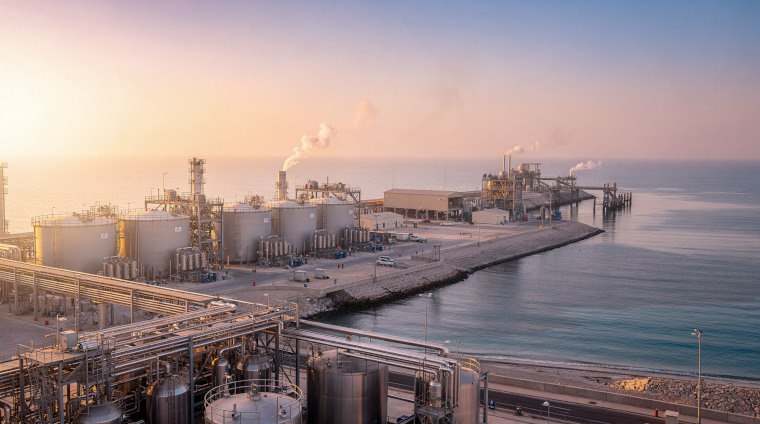
The response to this scarcity has been large-scale seawater desalination. The UAE produces more than 14% of the world's desalinated water and ranks among the top three global leaders in the industry. The largest facilities are:
The Jebel Ali plant in Dubai, one of the largest desalination complexes in the world;
The Taweelah plant in Abu Dhabi, which uses reverse osmosis technology;
The Shuweihat complex, which combines power generation and desalination.
The image was generated using AI technologies
The country's water supply is essentially created artificially. This makes the UAE vulnerable to disruptions in energy supply, but at the same time positions it as a world leader in water treatment technologies.
Land resources: desert with oases
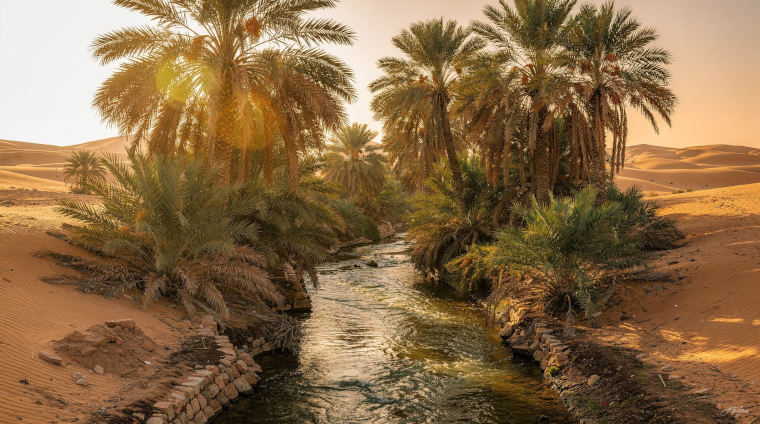
The greater part of the UAE's territory is desert. The sands of the Rub' al Khali in the south and the rocky plateaux account for over 80% of the country's area. Land suitable for agriculture amounts to less than 5% of the total territory.
The traditional centres of farming have historically been the oases. Al Ain — the largest of them — is included on the UNESCO World Heritage List. The ancient falaj irrigation system, more than 3,000 years old, has been preserved there.
The image was generated using AI technologies
Modern agriculture in the UAE relies on artificial irrigation. The country produces:
Dates — the UAE ranks among the top ten producers in the world;
Vegetables and greens — tomatoes, cucumbers, peppers;
Fodder crops for livestock.
Despite the limited agricultural land, the state is investing actively in agri-technologies: vertical farms, hydroponics, and climate-controlled greenhouses are gradually transforming the agricultural sector.
Biological resources: sea, desert and coastline
The Persian Gulf has historically fed the coastal population long before the oil era. Fish, prawns, and molluscs formed the basis of both diet and trade. Pearl diving was the region's main export industry until the 1930s, when Japanese cultured pearls displaced natural ones from global markets.
Today, marine fishing remains significant, although inferior to the oil sector. The annual catch amounts to approximately 90,000 tonnes.
The desert fauna of the UAE includes gazelles, Arabian oryx (restored from the brink of extinction in the wild), camels, and a variety of birds, including migratory species that use the coastline as a stopping point on their migration routes.
The mangrove forests deserve special mention. Their area in the UAE exceeds 60 km²; these are vitally important ecosystems that protect the coast from erosion and serve as spawning grounds for marine species. The majority of new mangrove planting projects are being carried out in Abu Dhabi as part of the climate agenda, and this emirate accounts for the greatest share of the coastal greening effort overall.
Thus, the UAE's wealth beyond hydrocarbons constitutes a complex system in which scarcity is offset by technology, and modest potential is supplemented by state investment.
Mineral Resources of the UAE
The main resources of the UAE are not limited to oil and gas. The country possesses small but significant deposits of minerals, predominantly in the mountainous areas to the east and in coastal zones.
Limestone and building materials: the main non-oil resource
The largest limestone deposits are concentrated in the emirate of Ras al-Khaimah. This is one of the few emirates where the mining industry actively operates and generates revenue. Limestone is extracted on an industrial scale and used extensively in construction, both domestically and for export.
In addition to limestone, the UAE extracts:
gypsum — predominantly in the Ras al-Khaimah and Fujairah areas;
marble — small quarries have been opened in the mountainous areas in the east of the country;
silica sand — used in the glass and construction industries.
Ras al-Khaimah exports cement and building materials to countries across the Persian Gulf. According to local authorities, the annual volume of limestone extraction exceeds 10 million tonnes.
Metal ores: copper, gold and traces of uranium
In the east of the country, in the Hajar Mountains, geologists have recorded small deposits of copper ore. These mountains run along the border with Oman and are geologically similar to the copper-bearing areas of Oman, where copper has been mined since ancient times.
Industrial copper mining in the UAE has yet to be developed, as the main ore volumes are assessed as negligible by global standards. Nevertheless, geological surveys continue.
Traces of gold have also been recorded in the rock formations of the Hajar range. These are dispersed inclusions rather than full-scale deposits. By comparison, Saudi Arabia produces approximately 323 tonnes of gold per year — a scale the UAE is far from reaching.
The traces of uranium ore discovered in the eastern areas of the country deserve separate mention. They hold no industrial significance as yet, but in the context of the UAE's development of nuclear energy, this fact is of scientific interest.
Chromite and the prospects for the mining industry
In the mountainous areas in the east of the country, minor deposits of chromite have been found — a mineral used in metallurgy and the production of refractory materials. The main volumes of chromite in the region are concentrated in Oman, whereas in the UAE they are localised.
The mining industry of the UAE (beyond the oil and gas sector) is poorly developed. This is understandable: why invest in copper when there is oil? However, within the framework of economic diversification, interest in solid minerals is gradually growing. The government regards the mining sector as one of the reserve sources of income for the future.
The Role of Natural Resources in the UAE's Economy and the Drive for Diversification
The natural resources of the UAE — mainly oil and gas — laid the foundation for one of the most dynamic economies in the world. But today the country is moving along a fundamentally different path: away from raw material dependence towards a multi-sector growth model.
A macroeconomic portrait: figures that speak for themselves
The UAE's GDP amounts to approximately 500 billion dollars. This is comparable to the economy of Austria — a country with centuries of industrial history. GDP per capita is in the range of 43,000–48,000 dollars, placing the UAE on a par with Germany and Australia.
The share of the oil and gas sector in GDP stands at approximately 30–35%. This is a significant figure, but it is already noticeably lower than it was in the 1970s, when hydrocarbons accounted for almost the entire economy. Each year this figure declines, and not because production is falling, but because other sectors are growing faster.
How oil revenues built the country
Oil revenues financed large-scale infrastructure construction. Dubai Airport is one of the busiest in the world by passenger traffic. The Port of Jebel Ali is among the ten largest container ports on the planet. The skyscrapers of Dubai and Abu Dhabi have become symbols of how the natural resources of the UAE have been transformed into the urban character of the country.
Education and healthcare developed in parallel. The state subsidised universities, built hospitals, and attracted foreign specialists. This created the human capital without which diversification would have been impossible.
The drive for diversification: from oil to a multi-sector economy
The main natural resources of the UAE provided the country with its starting capital. But the country's leadership understood that oil is finite. For this reason, a systematic drive towards diversification began as early as the 2000s.
Key areas:
Tourism. Dubai is actively developing as an international tourism hub. In 2023, the city welcomed more than 17 million foreign tourists.
The financial sector. The Dubai International Financial Centre (DIFC) is the leading financial hub in the Middle East region.
Trade and logistics. Free economic zones — the Jebel Ali Free Zone and the Dubai Multi Commodities Centre — attract thousands of companies from around the world.
Technology. The UAE is investing in artificial intelligence, blockchain, and renewable energy.
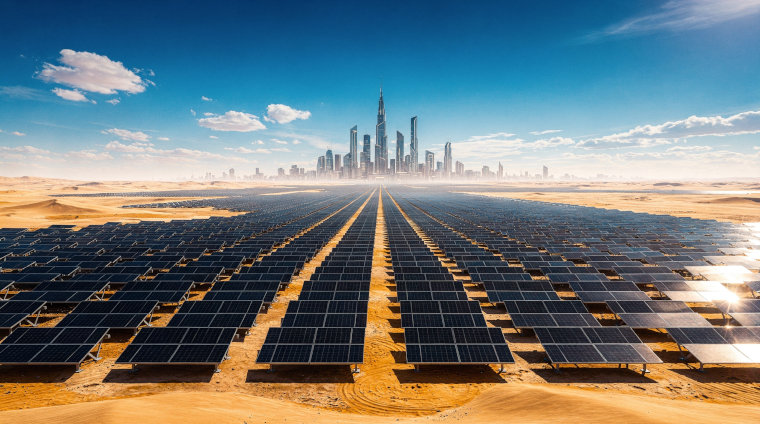
The Mohammed bin Rashid Solar Park in Dubai is set to become the world's largest solar generation facility, with a capacity of 5,000 MW by 2030. This is a vivid example of how the country is transitioning from the extraction of resources to their replacement.
The image was generated using AI technologies
Vision 2030 and UAE Centennial 2071: the strategic horizon
The UAE operates within the framework of two long-term strategies. Vision 2030 aims to reduce dependence on oil and grow non-extractive sectors of the economy. UAE Centennial 2071 is a more ambitious project: by the centenary of the state, the country is to become a world leader in education, the economy, and quality of life.
By comparison, Saudi Arabia is implementing a similar Vision 2030 programme, yet the share of oil in its GDP still exceeds 40%. The UAE has advanced considerably further in diversification, which is acknowledged by international analysts.
Foreign investment: the UAE as a magnet for capital
The UAE is the largest recipient of foreign direct investment (FDI) in the Middle East. According to UNCTAD data, the inflow of FDI into the country exceeds 20 billion dollars annually. Free economic zones, low taxes, and a stable legal environment make the UAE attractive to global business.
Frequently Asked Questions
What are the main natural resources of the UAE?
The main natural resources of the UAE are oil, natural gas, limestone, chromite, copper, and gold. The country also has significant solar energy potential: more than 300 sunny days a year make it one of the world leaders in solar irradiation. The marine resources of the Persian Gulf — fish, pearls, and seafood — historically played an important role before the discovery of oil.
How much oil does the UAE have, and what is the country's global ranking?
The UAE's confirmed oil reserves are estimated at approximately 97–98 billion barrels, which corresponds to sixth place in the world. This represents around 6% of total global proven reserves. At the current rate of extraction, the reserves will last for more than 100 years, making the country a strategically significant player in the global energy market.
The UAE is situated in a hyperarid climatic zone: average annual precipitation does not exceed 100–120 mm. Underground aquifers are replenished extremely slowly and are gradually being depleted through intensive use. This is precisely why the country has become a world leader in seawater desalination — today this method supplies approximately 42% of the population's drinking water needs.
How do natural resources affect the UAE's economy?
Oil and gas revenues have historically formed the basis of the state budget and made it possible to build modern infrastructure from scratch within a matter of decades. Today the share of oil in GDP has fallen to approximately 30%, whilst tourism, finance, and trade are actively increasing their contribution. The natural resources of the UAE remain the foundation upon which the country's economic diversification is being built.
In which emirate is the bulk of the UAE's oil concentrated?
Abu Dhabi controls approximately 94–95% of all the federation's oil reserves, making it the economic centre of the country. Dubai, by contrast, holds very modest hydrocarbon reserves and has made a deliberate choice to focus on trade, tourism, and finance. The remaining five emirates — Sharjah, Ras al-Khaimah, Fujairah, Ajman, and Umm al-Quwain — possess minimal oil resources or none whatsoever.
Are there any mineral resources in the UAE besides oil and gas?
Yes, the mountainous areas in the east of the country, primarily in the emirates of Fujairah and Ras al-Khaimah, contain deposits of chromite, copper, iron ore, and traces of gold. Limestone is extracted on an industrial scale and used in the construction industry. These resources are not comparable in scale to hydrocarbons; however, they provide raw materials for a number of local industries and reduce dependence on imports of building materials.
Article header image was generated using AI technologies
UAE and Saudi Arabia: what they have in common and their key differences. Culture, laws and way of life: what is the difference? Economy, business and employment opportunities. Tourism and expat life:...
The best places to go shopping in Dubai. What is worth buying in Dubai. Gifts and souvenirs from Dubai. Practical shopping tips. Frequently asked questions.
Description of Dubai Outlet Mall. Location and opening hours of Dubai Outlet Mall. Shops in Dubai Outlet Mall. Frequently asked questions about Dubai Outlet Mall.
What is a UAE resident? Types of visas for UAE residents. Benefits of UAE resident status. Frequently asked questions about obtaining UAE residency status.
What was before the beginning of the history of the UAE? Territories of the UAE in the 19th century. History of economic development of the UAE. The scandalous story of the UAE emir. Top 5 interesting...
Specifics of working in Abu Dhabi. Popular industries in Abu Dhabi. Places to search for jobs in Abu Dhabi. Obtaining a work visa in Abu Dhabi. Salary range in Abu Dhabi. Frequently asked questions ab...
The Arabian Peninsula before the formation of the Saudi state. The first and second Saudi states. The creation of the modern Kingdom of Saudi Arabia. The development of Saudi Arabia in the 20th–21st c...
Alcohol consumption rules in Sharjah. Bringing alcohol into Sharjah. Buying alcohol in neighbouring emirates. Fines and penalties for breaking alcohol rules. Alcohol in other UAE emirates: a compariso...
What Bur Dubai is like. Pros and cons of the Bur Dubai district. Living amenities in Bur Dubai. Accommodation options in Bur Dubai. How to get around Bur Dubai. Frequently asked questions about Bur Du...



 The image was generated using AI technologies

 The image was generated using AI technologies
 The image was generated using AI technologies


 The image was generated using AI technologies