Home/Middle East/Do Russians Need a Visa for Qatar in 2026: Entry Rules
25.08.2026
Middle East
1443
Reading time: 13 minutes
Do Russians Need a Visa for Qatar in 2026: Entry Rules
Save the article:
Do Russians need a visa for Qatar, or can they simply pack their bags and go? This question is on the mind of anyone planning their first trip to this Gulf state. We are pleased to reassure you: since 2024, Russian citizens may enter Qatar without a visa for short-term visits.
However, the entry rules contain nuances that are important to know in advance, so as not to encounter unpleasant surprises at the border. This applies to tourists, transit passengers, and business travellers alike, as there are different specifics for each category when passing through border control.
What will you gain from reading this article? We shall cover all aspects of entry: from the duration of visa-free stay to the list of documents you need to bring. We shall also address transit through Hamad Airport in Doha separately, including whether you can go into the city during a long layover and how much time to allow for passport control.
Business travellers will learn what requirements apply to accompanying persons and whether additional insurance is needed. After reading, you will have a clear plan for preparing for your trip, free of unnecessary anxiety.
Do Russians Need a Visa for Qatar in 2026
The answer is: Russians do not need a visa for Qatar for tourist trips of up to 90 days within any 180-day period. Citizens of the Russian Federation benefit from a visa-free regime introduced specifically to simplify travel between the two countries.
Upon arrival at the airport, a permit to stay is issued within the terms of the current visa-free period. No application forms, additional fees, or advance visa processing through an embassy are required. An important caveat: this rule applies only to tourism, visiting relatives, and business visits not involving employment.
The image was generated using AI technologies
If the purpose of the trip is to work officially in Qatar, a work visa and a permit from a local employer, arranged in advance, will be required.
Duration of visa-free stay in Qatar
Russian citizens may remain in Qatar without a visa for up to 90 days within any 180-day period. The period of stay is counted from the date of arrival at the airport, as marked by a stamp in the passport, to the date of actual departure from the country. In some cases, the period of visa-free stay may be limited to 30 days with the possibility of free extension, but this must be done in advance, before the expiration of this period.
If a longer trip is planned — for example, for an extended holiday or to accompany relatives — you should contact the Expatriates Affairs Department in Doha, the capital of Qatar. They will clarify the list of documents required for an extension: a foreign passport, a migration card, proof of accommodation, and a return ticket.
Specialists advise not to delay in approaching the authorities in Doha, as processing an application may take several working days. Those planning to spend more than a month in the country would be wiser to plan their route across the country's cities in advance and to confirm with the consulate what information is relevant to their particular situation, so as not to violate immigration legislation and to avoid fines upon departure from the airport.
Visa regime between Russia and Qatar
The visa-free regime between the two states came into effect in 2024. The agreement was the result of an intergovernmental arrangement and provides for the mutual abolition of visas for short-term visits by citizens of both countries. That is to say, not only can Russians freely visit Doha and other cities in Qatar, but Qatari citizens have also been granted a simplified entry procedure to Russia.
This policy reflects a broader trend among Gulf states: similar arrangements are in place between Russia and the United Arab Emirates, and with certain other states in the region as well.
As a result, Qatar has become an even more attractive destination for Russian tourists, as there is no need to gather documents and wait for a visa, and the trip itself to this small yet vibrant country becomes more accessible and simpler to plan.
Prior to the introduction of the visa-free regime, Russian citizens were required to submit documents for a visa in advance through the consulate or to apply online, and then to wait for approval for several days (sometimes longer, with the process occasionally stretching to a couple of weeks). Now the process has been reduced to a minimum: a passport, a ticket, and a readiness to travel to Qatar.
Nevertheless, the terms of international agreements may be revised, so it is worth checking up-to-date information on the official website of the Qatari embassy or on the Russian Ministry of Foreign Affairs portal before travelling.
Such information is updated regularly and helps to avoid misunderstandings when crossing the border. This takes only a couple of minutes, yet it will spare you any surprises at the airport and make travelling around the country's cities more comfortable from the very outset of your acquaintance with this destination.
Entry Rules for Qatar: Documents and Requirements
The entry rules for Qatar for Russian citizens are straightforward and clear, provided you prepare the necessary set of documents in advance. Even under the visa-free regime, Qatar's border service is entitled to request a full set of papers confirming the purpose of the visit and financial means.
Let us examine in detail what travellers heading to Qatar must have with them, so that passport control passes quickly and without delays.
List of required documents
The list of documents for entry into Qatar is the same for the majority of tourists and includes several mandatory items. The foreign passport must be valid for no less than 6 months from the date of entry into Qatar — this is a standard requirement common to many countries in the region. In addition to the passport, travellers should have the following set of documents with them:
return ticket or a ticket to a third country;
hotel booking confirmation or an invitation from the host party;
medical insurance for the entire duration of the trip;
proof of financial means, for example, a bank card statement, if requested.
The return ticket and hotel booking confirmation may be presented either in printed form or in electronic format on a smartphone. The foreign passport, however, must be the original — no copy or photograph of the document will serve as a substitute when passing through passport control in Qatar.
Medical insurance
Medical insurance is required for a trip to Qatar if you plan to spend more than 30 days in the country, although it is not always checked at the border. The policy must provide coverage of medical expenses for the entire period of stay in Qatar, including emergency hospitalisation and medical evacuation.
The recommended minimum coverage amount is 30,000 US dollars, which is sufficient for most situations involving outpatient treatment or emergency care.
When choosing an insurance company, pay attention not only to the cost of the policy but also to the terms of coverage. It is important to check:
the geographical scope of the insurance — it must include the territory of Qatar;
the list of exclusions — some policies do not cover injuries sustained during extreme leisure activities;
limits for individual types of assistance — dental care, hospitalisation, evacuation;
contact details for round-the-clock support in English or Russian.
A good insurance company provides an electronic policy immediately after payment, which is convenient to keep on your phone alongside your other travel documents for Qatar. Compare the offerings of several companies to choose the optimal combination of price and coverage terms: different companies offer different limits and support services.
Travelling with a child
If a child is travelling to Qatar together with their parents, no particular complications usually arise. A birth certificate and a separate foreign passport for the minor will be required; it is no longer possible to include a child's details in a parent's passport, as was formerly the case. The validity of the child's document must also be at least 6 months from the date of entry.
Special attention should be paid to situations where a child is travelling with only one parent or in the company of third parties. In this case, the child must also have a separate foreign passport; when travelling with one parent, it is advisable to check the airline's requirements in advance, as well as any possible requirements regarding the consent of the other parent. It is better to have the document prepared well in advance, several weeks before the trip, to avoid any last-minute rush.
If the child is flying without accompanying family members, a full set of permissions from both parents will be required and, possibly, a covering letter from the airline; many airlines and travel companies assist in preparing such letters in advance.
A practical tip for all categories of travellers heading to Qatar: make copies of all documents in advance and keep them separately from the originals — in your email, cloud storage, or with accompanying persons. This will simplify the recovery of data in the event of loss of a passport or tickets and will spare you unnecessary anxiety during the trip.
Transit Through Doha: Is a Visa Required
Many travellers are concerned about whether a visa is needed for Doha, Qatar, if it is merely a stopover between flights. The good news is that in the majority of cases no visa for Qatar is required at all, because if a passenger remains in the transit zone of Hamad Airport and does not pass through passport control, no visa is needed.
Transit rules at Hamad Airport
Hamad Airport in Qatar is designed so that transit passengers can remain in a dedicated zone between flights without passing through passport control. Whilst you remain within this zone, none of Qatar's visa rules apply to you — no visa, no stamp, no additional documents are required.
The moment of entry into the country occurs only when a passenger physically passes through passport control and leaves the transit zone. It is from that moment that the general visa-free or visa entry rules for Qatar, discussed in the previous sections, come into effect.
The image was generated using AI technologies
Passengers may remain in the transit zone for practically unlimited periods without additional formalities — this is the standard international territory of the airport, which does not require a visa for Qatar. The only restriction is the timetable of your next flight. The zone has shops, cafés, rest areas, and even sleeping rooms, making long waits for flights comfortable even without venturing into the city.
What to do during a long layover
If there are more than 6–8 hours between flights, it may be worth going into the city and seeing Qatar for yourself. Thanks to the visa-free regime for Russian citizens, a brief excursion from the airport does not require obtaining a visa for Qatar; the same conditions apply as for a regular entry into the country. Here is how to plan your time correctly:
Passport control and luggage — allow 40–60 minutes for passport control and baggage collection, if your luggage has not been checked through to your final destination.
Journey to Doha city centre — a taxi will take approximately 20–30 minutes depending on traffic.
Sightseeing — allow at least 2–3 hours for a walk around the city or for lunch.
Return to the airport — the return journey and repeated security checks before departure will also take around an hour.
In total, if you have fewer than 6 hours to spare, it is not worth taking the risk — it is better to remain in the transit zone and await your next flight. With a layover of 8 hours or more, however, you can confidently take a taxi and set off to explore the capital of Qatar, the Museum of Islamic Art, or the Corniche waterfront.
The main thing is to keep the return time to the airport firmly in mind, with a good margin, so as not to worry about traffic or security queues before boarding.
How to Obtain a Visa for Qatar if Necessary
The visa-free regime does not apply to all situations. If a trip goes beyond the scope of tourism or a short holiday in the country, a visa must be obtained in advance. Let us examine when this is necessary and how to go through the procedure without unnecessary difficulty.
A visa will be required if the trip exceeds 90 days within any 180-day period, or if the purpose of the trip requires a separate permit, for example, official employment with a Qatari employer or study at a local educational institution. A separate procedure is also required for business trips involving extended work on Qatari territory, rather than short-term negotiations.
A tourist visa can be obtained online on the official website of the country's visa service or through the Qatari embassy in Moscow — both options are official and equally reliable.
Types of visas for extended stays
A work visa is issued for employment purposes and requires a sponsor — namely, an employer registered in the country of residence. The company submits documents for the permit before the employee arrives, so the process begins whilst still in Russia.
A student visa is required for those admitted to universities or colleges in the country; in this case, the sponsor is the educational institution, which sends an official invitation and confirmation of enrolment. A business visa is suitable for extended business trips and negotiations, where the host company in the country acts as the sponsor and arranges the invitation.
Each type of visa requires a different set of documents: for a work visa, an employment contract and a medical certificate are needed; for a student visa, a letter from the university and confirmation of payment of tuition fees; for a business visa, a letter from the partner company and a programme of the visit. Unlike tourist trips, where documentation is minimal, the process in this country is more formalised and requires the involvement of the host party at every stage.
Cost and processing time for a visa
The cost of a visa depends on the type and period of validity. A tourist visa for 30 days costs approximately 100 Qatari riyals, which at the current exchange rate amounts to around 2,500–2,700 roubles.
Work and business visas are more expensive — from 200 to 500 riyals, that is from 5,000 to 13,000 roubles, depending on the length of stay in the country and the category of permit. The exact cost is best confirmed on the official website before submitting an application, as the riyal-to-rouble exchange rate fluctuates.
Processing times also vary. A tourist visa submitted online is approved within 3–5 working days. A work visa takes longer to process — from 1 to 3 weeks, as it requires coordination between the employer and the country's immigration service. A student visa is usually ready within 7–10 days when a complete set of documents has been submitted.
The image was generated using AI technologies
The recommendation is straightforward: submit your application at least a month before your planned departure date, to allow time for any requests for clarification or additional paperwork.
Methods of application: online or through a visa centre
There are two routes for obtaining a visa. The first is independent submission through the official website; the second is applying to the Qatari embassy in Moscow or to a visa centre in Qatar.
Comparison of methods:
Online application — faster, accessible from home, suitable for a tourist visa, requires confident completion of the application form in English.
Through the embassy — convenient for work and student visas; staff check documents in person, which reduces the risk of errors.
Visa centre — a paid service, but saves time and assists with document translation.
Step by step, the process looks as follows: completing the application form with personal details, uploading scans of the passport and supporting documents, paying the fee by bank card, awaiting the decision, and receiving the visa electronically by email. This procedure applies both to online submissions and to applications made through the country's embassy.
Useful Tips BeforeYour Trip to Qatar
Before travelling to Qatar, there are a few important things to check to ensure the trip goes smoothly. The main rule is simple: your foreign passport must be valid for at least 6 months from the date of entry, a return ticket is mandatory, and medical insurance will protect you against unforeseen expenses.
Let us address the remaining nuances of preparation, including the rules on bringing currency into the country and local customs that are important to respect during your visit.
Currency and financial matters
The rules on bringing cash currency into the country should be verified against the official regulations before travelling. Before your trip, it is useful to check the current exchange rate so as to understand the real cost of goods and services.
The national currency of the country is the Qatari riyal, and the majority of hotels, restaurants, and shopping centres accept Visa and Mastercard bank cards. Cash will come in handy for taxis, smaller markets, and tips, so it is sensible to bring a modest amount of riyals or dollars to exchange upon arrival.
Alcohol and prohibited goods
Alcohol is prohibited from being brought into the country, which often comes as a surprise to tourists. Alcoholic beverages are sold only in hotels and in specially designated locations, such as licensed bars and restaurants. Outside these areas, the consumption and purchase of alcohol is not permitted, and violation of this rule may result in a fine.
It is also worth knowing that printed publications, audio and video content containing material that contravenes local cultural and religious norms are prohibited from being brought into the country. This applies to imagery depicting violence, explicit content, and any material that is offensive to Islam.
Rules of conduct and local traditions
Qatar is a Muslim country, and respect for local customs is essential for a comfortable stay. Here are a few practical recommendations:
Clothing should cover the shoulders and knees, particularly in shopping centres, mosques, and government institutions.
In public places, avoid overt displays of affection between partners.
Photographing local residents, especially women, without permission is inadvisable, as it is considered disrespectful.
During Ramadan, eating and drinking in the street during daylight hours is not recommended.
Observing these simple rules will help you avoid misunderstandings and demonstrate respect for the culture of the country. Before your trip, it is worth reading more about the local traditions, which takes little time, yet will make for a calm and enjoyable journey.
Frequently Asked Questions
Do Russians need a visa for Qatar in 2026?
No, a visa is not required for tourist and business trips to Qatar of up to 30 days in duration. The visa-free regime has been in effect since 2024 and applies to all citizens of the Russian Federation without age restriction.
Upon entering Qatar, it is sufficient to present a foreign passport, a return ticket, and hotel booking confirmation. It is always a good idea to check up-to-date information on the official website of the Qatari embassy before departure.
The image was generated using AI technologies
What validity period is required for a foreign passport?
A foreign passport must be valid for at least 6 months from the date of entry into Qatar. This is a standard requirement of the country's border service, and failure to meet it may result in refusal of entry at passport control.
Check the validity of your document in advance — a month or two before your trip to Qatar — so that, if necessary, you have time to renew it. The rule applies to both adults and children who hold a separate foreign passport.
Is a transit visa required at Doha airport?
If a passenger remains in the transit zone of Hamad Airport in Qatar and does not pass through passport control, no visa is required at all. The transit zone is considered international territory, and the waiting time there is not subject to Qatar's visa rules.
A visa will only be needed if you wish to go into the city, but thanks to the visa-free regime for Russian citizens, entry into Qatar is possible without any additional processing. It is important to plan your time so as to return to the airport with a good margin before your next flight departs.
Which bank cards are accepted in Qatar?
Visa and Mastercard cards are accepted in virtually all hotels, restaurants, and shopping centres in Qatar. Mir payment system cards do not work on Qatari territory, so it is worth obtaining a card from an international payment system in advance.
Cash Qatari riyals will be useful for taxis, smaller markets, and tips, so it is sensible to bring a small amount of cash for travelling around Qatar. Currency can be exchanged directly at Qatar's airport or at banks in the country's major cities.
Article header image was generated using AI technologies
Main attractions of Dubai. Entertainment for families with children. Evening entertainment and nightlife. Free and budget-friendly entertainment. Practical information for tourists. Frequently asked q...
Main features of Sharjah City Centre. What’s for sale at Sharjah City Centre? Entertainment for children at Sharjah City Centre. Restaurants at Sharjah City Centre. Cultural events at Sharjah City Cen...
The best entertainment for families with children. Free entertainment in Dubai. Dubai's iconic landmarks and attractions. Practical tips for budget-conscious travellers. Frequently asked questions.
Migrant, emigrant, immigrant: meanings and origins of terms. How a migrant differs from an emigrant and an immigrant. Types and causes of population migration. How to use the terms correctly. Frequent...
Significance of import and export in the UAE. Main items of UAE export and import. Specifics of UAE import and export with Russia. Rules for export from the UAE to Russia. Rules for import from Russia...
Qatar: essential facts before your trip. What to see in Doha: the main attractions. Attractions outside Doha. Practical tips: itineraries, food, and shopping. Frequently asked questions.
Pros and cons of an autumn holiday in Dubai. Autumn weather in Dubai. Which autumn month is best for visiting Dubai? Dubai's beaches. Dubai's sights. Entertainment events in Dubai in autumn 2026. How ...



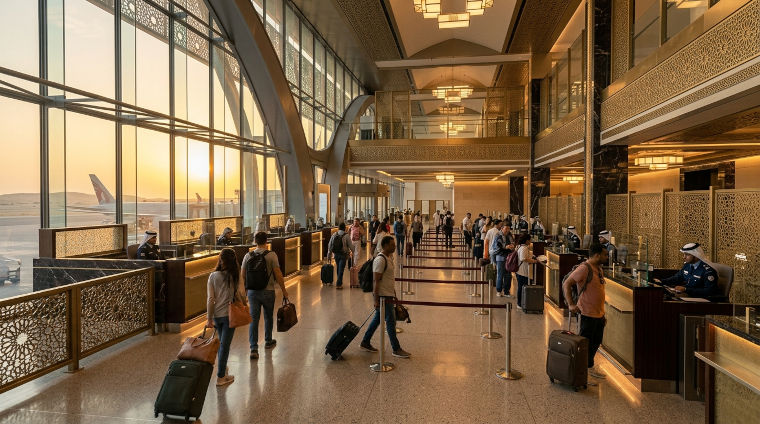 The image was generated using AI technologies


 The image was generated using AI technologies

 The image was generated using AI technologies

 The image was generated using AI technologies