Arabic Dialects: Classification, Characteristics and Main Varieties
Save the article:
What is this about? Arabic exists in several forms simultaneously. There is a literary variety that is taught in schools and used in the media, and there are living spoken dialects used in everyday life. There are several dozen dialects, and they sometimes diverge so markedly that speakers from different countries struggle to understand one another.
Who is this for? This article offers a comprehensive overview of the main dialect groups of the Arabic language, their distinguishing features, their historical origins, and their current status. It will be of interest to those who are just beginning to learn Arabic, are planning a trip to an Arab country, or wish to gain a better understanding of the linguistic landscape of the Arab world.
Why Arabic Is Not a Single Language
Arabic occupies a unique place among the world's languages. On the one hand, it unites hundreds of millions of people from Morocco to Iraq. On the other, the single name conceals a multitude of linguistic forms that sometimes differ from one another more than Spanish differs from Portuguese.
The gap between written and spoken Arabic is neither an exception nor a shortcoming. It is a historical feature that has been developing for more than a thousand years.
Literary Arabic and spoken dialects: what is the difference
Modern Standard Arabic (MSA) is the written and official form of the language. It is used in newspapers, on television, in official documents, and in the education system. MSA derives from the Classical Arabic of the Quran, although over the centuries it has undergone changes in vocabulary and certain grammatical structures.
Image source: 86 media / unsplash.com
Spoken dialects exist in parallel. They are not taught in schools, they have no single written form, and yet they are the medium of everyday life. One and the same educated native speaker switches effortlessly between them: at work with colleagues they speak closer to Standard Arabic, whilst at home with their family they shift to the dialect.
The difference between MSA and the dialects affects every level of language: pronunciation, vocabulary, grammar, and syntax. For instance, the word for "now" in Classical Arabic is al-ān, in Egyptian colloquial it is dilwaqti, and in Moroccan it is dāba. This is not a matter of accent or colloquialism — these are different linguistic systems.
What diglossia is and why it is important to understand
Linguists refer to the situation described above as diglossia. The term denotes the coexistence of two forms of a single language: a "high" variety and a "low" variety. The "high" variety is used in formal, written, and public contexts. The "low" variety is used for everyday, informal communication.
Arabic diglossia is one of the most thoroughly studied examples of this phenomenon in world linguistics. A child in an Arab family speaks the dialect from birth. At school they encounter for the first time an entirely different linguistic system — Literary Arabic. For many children, this feels almost like learning a foreign language.
This is not a shortcoming. Diglossia reflects the richness of Arab linguistic culture and its historical depth. Understanding this phenomenon is important for anyone who works with the Arabic language or with an Arabic-speaking audience.
There is no precise number, nor can there be. Dialects form a continuous linguistic continuum: from country to country, from city to city, from village to village, speech changes gradually. Even specialists find it difficult to draw a clear boundary between a "dialect" and a "subdialect."
Five main dialect groups are commonly distinguished: Egyptian, Levantine, Maghrebi, Mesopotamian, and Arabian. Each of these comprises several subdialects and local varieties. In total, the count of varieties of Arabic runs into the dozens.
How Arabic Dialects Arose — A Brief History
The modern diversity of Arabic dialects is the result of a long historical journey. The language spread in waves, mixed with local languages, and adapted to new geographical and cultural conditions. Each of these processes left its mark on the spoken language.
Tribal dialects before Islam and the role of the Quran
Even before the advent of Islam, the Arabian Peninsula was not linguistically homogeneous. Different tribes spoke closely related but noticeably distinct dialects. Trade routes, inter-tribal alliances, and poetry competitions created a kind of "common space" for linguistic exchange, but no unified standard existed.
With the emergence of the Quran in the 7th century, the situation changed. The sacred text was written in one of the dialects of the Hejaz — the central part of the Arabian Peninsula. This variety of the language gained a high religious and cultural status. It was studied, copied, and commented upon throughout the Muslim world. It was this variety that formed the basis of Classical Arabic — the form that still defines the written norm to this day.
The Islamic conquests and the Arabisation of new territories
In the 7th–11th centuries, the Arabic language spread far beyond the confines of the Peninsula. The Islamic conquests brought it to Egypt, North Africa, the Levant, Mesopotamia, Persia, and Central Asia. Arabic became the language of administration, religion, and culture across vast territories.
In each of these territories it encountered local languages. In Egypt — Coptic. In North Africa — the Berber languages. In the Levant — Aramaic. In Iraq — Aramaic and Persian.
Arabic did not simply displace these languages — it mixed with them. Local vocabulary, phonetics, and grammatical constructions penetrated the spoken speech of both the conquerors and the conquered. This mixing became the main cause of regional differences.
How the modern dialect groups took shape
The formation of dialect groups continued throughout the Middle Ages. Migrations of nomadic Bedouin tribes carried linguistic features to new territories. Trade routes created zones of linguistic contact; the influence of neighbouring languages never ceased.
Maghrebi Arabic took shape differently from Levantine: the Berber substrate was considerably more powerful there, and later the influence of Turkish, Spanish, and French was added. The Mesopotamian dialect developed in the midst of Persian and Kurdish linguistic traditions. Each group followed its own path.
In the 19th–20th centuries, during the era of the Arab world's cultural renaissance — the Nahda — a process of modernisation of Literary Arabic began. Academies of the Arabic language were established in Cairo, Damascus, and Baghdad. They set about developing new terminology and standardising the written norm. The spoken dialects were unaffected by this process: they continued to develop independently.
The Main Groups of Arabic Dialects — Where They Are Spoken and How
Arabic dialects are commonly divided into two broad branches: the eastern (Mashriqi) and the western (Maghrebi). These branches differ from one another to such an extent that speakers at the extreme ends of the dialectal continuum struggle to understand each other without switching to Standard Arabic.
Below is a comparative table of the main dialect groups.
Dialect group
Countries where spoken
Key features
Intelligibility to other dialects
Egyptian
Egypt
Simplified phonetics, rich media tradition
High
Levantine
Syria, Lebanon, Jordan, Palestine
Soft pronunciation, influence of Greek and Ottoman
Moderate
Maghrebi
Morocco, Algeria, Tunisia, Libya
Berber substrate, French and Spanish loanwords
Below moderate
Mesopotamian
Iraq
Influence of Aramaic and Persian, division into Gelet and Qeltu varieties
Moderate
Arabian
Saudi Arabia, UAE, Kuwait, Qatar, etc.
Proximity to Classical Arabic, differences between Bedouin and urban varieties
Moderate
Yemeni
Yemen
Archaic features, close to pre-Islamic forms of the language
Below moderate
Sudanese
Sudan
An independent group with several subdialects
Moderate
Although this division provides a general sense of the geographical and structural diversity of Arabic dialects, there is considerable internal variation within each group. Mutual intelligibility between speakers depends on historical contacts, media influence, and the degree of proximity to Standard Arabic; it is therefore advisable to take local substrate and borrowed elements into account when comparing dialects.
Egyptian dialect — the most widely understood in the Arab world
The Egyptian dialect holds a special place among all varieties of Arabic. It is understood by speakers of the most varied dialects — from Morocco to Iraq. The reason is not linguistic but cultural: for decades Egypt has been the leading producer of Arabic-language cinema, television series, and popular music. Egyptian speech has been heard in every home across the Arab world.
In and of itself, the Egyptian dialect is characterised by a relatively simplified phonetics compared with Classical Arabic; some of the sounds typical of the written language have changed or disappeared. Its vocabulary includes a considerable number of loanwords from Coptic, Greek, and French. Within Egypt there are also regional variations: the speech of a Cairene and that of someone from Upper Egypt differs noticeably.
The Levantine, or Shami, dialect is not a single variety of the language but a group of closely related varieties. The Syrian, Lebanese, Jordanian, and Palestinian variants resemble one another, but each has its own specifics of pronunciation and vocabulary. Speakers understand one another without particular difficulty.
The Levant region has historically been a zone of active cultural exchange. Greek, Aramaic, Persian, and Ottoman influences have left their mark on the dialect's vocabulary. In Levantine music and poetry, this dialect has attained a high artistic status; its soft cadences are regarded as among the most aesthetically appealing in the Arab world.
Maghrebi dialects: why Moroccan is so difficult to understand
The Maghrebi group encompasses the dialects of Morocco, Algeria, Tunisia, and Libya. These dialects are the ones most likely to pose difficulties for speakers of eastern Arabic varieties. The Moroccan dialect — Darija — is especially unlike Standard Arabic.
There are several reasons for this. The Berber languages have left a powerful imprint on phonetics and vocabulary. Later, a strong influence of French was added, and in the case of Moroccan, Spanish as well. Grammar has been simplified in some respects and has become more complex in others. As a result, a speaker of the Egyptian dialect, finding themselves in Casablanca, will often have the impression of hearing an almost unfamiliar language.
Within the Maghrebi group there are also differences. Tunisian Arabic is considered more intelligible to speakers of eastern dialects than Moroccan Arabic. Algerian occupies an intermediate position.
Mesopotamian and Arabian dialects
The Mesopotamian, or Iraqi, dialect took shape in the midst of powerful linguistic traditions. The Aramaic and Persian languages have left a noticeable mark on its vocabulary and phonetics. Within the Iraqi dialect, two main varieties are distinguished: Gelet (widespread among the Muslim population) and Qeltu (preserved in parts of Christian and Jewish communities). These varieties differ primarily in phonetics.
The dialects of the Arabian Peninsula — Saudi, Kuwaiti, Emirati, Qatari, and several others — are regarded by many Arabs as possessing a special prestige. This is linked to their historical proximity to the region where Islam was born. The Arabian dialects are not homogeneous: Bedouin varieties differ noticeably from urban variants that developed in trading centres and port cities.
Image source: freepik / magnific.com
Special cases: Yemeni, Sudanese, and Maltese
The Yemeni dialect stands out for its archaism. It has preserved features that have been lost in most other dialects — elements that go back to pre-Islamic forms of the Arabic language. To the outside listener, Yemeni speech sounds unusual; to a linguist, it is particularly fascinating.
Sudanese Arabic forms an independent group with several subdialects. Its development was influenced by Nilotic and other African languages of the region.
Maltese is a unique case. It is the only Arabic dialect recognised as an independent language. It has the status of official language of Malta, uses the Latin alphabet, and over the centuries has actively absorbed Italian, Sicilian, and English. Maltese has changed so much that mutual intelligibility with other Arabic dialects is virtually non-existent.
Do Arabs from Different Countries Understand One Another
This is one of the most frequently asked questions about Arabic. The answer is: it depends on the situation. The degree of mutual intelligibility is determined by several factors simultaneously: the geographical proximity of the dialects, the subject of the conversation, and the level of education of the interlocutors.
What affects mutual intelligibility between speakers of different dialects
The closer the dialects are geographically, the greater the mutual intelligibility. A resident of Damascus and a Beiruti will understand each other with almost no effort. An Egyptian and a Jordanian will understand each other with a little difficulty, but quite successfully. An Egyptian and a Moroccan will understand each other with considerable difficulty, especially if the conversation concerns everyday topics, where dialectal vocabulary manifests itself most prominently.
Context also matters. When discussing socio-political or professional subjects, speakers instinctively gravitate towards more standard forms of the language that are closer to MSA. In everyday conversation they sink deeper into the dialect, and the barrier grows accordingly.
Education plays a role too. A person with a university degree has a stronger command of Standard Arabic and can switch to it if necessary. This makes communication possible between virtually any Arabic speakers, provided both parties are willing to shift towards a neutral form of the language.
The role of media and culture in forming a common language
Arab television and cinema have played the role of a spontaneous linguistic standardiser. Pan-Arab satellite channels, which appeared in the 1990s, gave speakers of the most varied dialects the opportunity for the first time to hear one another on a daily basis.
Egyptian cinema has existed since the 1930s. Decades of mass production of films and television series made the Egyptian dialect recognisable throughout the Arabic-speaking world.
Lebanese popular music performed a similar function for Levantine. Thanks to this cultural influence, Egyptian and Levantine dialects today possess the greatest "passive intelligibility" — they are understood even by those who have never specifically studied them.
Arabic Dialects Today — Status, Challenges and Prospects
Arabic in the modern world is not merely a linguistic but also a political, religious, and cultural phenomenon. It is the official language of a large number of countries, serves as the language of the Quran for Muslims throughout the world, and ranks among the most widely spoken languages on the planet.
At the same time, the internal tension between Standard and colloquial Arabic has not disappeared. It has simply taken on new forms in the context of globalisation and the digital environment.
Language policy: which Arabic is considered official
In all Arab countries, MSA (Modern Standard Arabic) is enshrined as the official language. Constitutions, legislation, judicial proceedings, and the education system all function in it. State media use it in news programmes and official broadcasts.
The dialects, meanwhile, have no official status anywhere — with the exception of Malta and its Maltese language. Dialects are not taught in schools. Literary fiction is traditionally written in MSA, although dialogue in novels frequently reproduces colloquial speech.
This creates a specific tension. A child comes to school and finds that the language being taught there differs substantially from the language back at home. Mastering written Arabic requires considerable effort even for native speakers. Linguists and educators have long debated how to make this learning process more effective, but no consensus answer has yet been found.
The Arabic language and national identity
The Arabic language is not merely a tool of communication. For the Arab world it is a symbol of cultural and historical unity. The language of the Quran carries religious significance for Muslims far beyond the Arab countries: it is studied in madrasas from Indonesia to Nigeria.
The dialects, meanwhile, carry a different identity — a local, regional one. A Moroccan takes pride in their Darija. An Egyptian recognises a compatriot by their speech even in a foreign country. The Lebanese dialect is associated with a certain cultural refinement. This regional identity coexists with the pan-Arab one, and at times enters into tension with it.
The influence of globalisation and digital technologies
The internet and social media have changed the position of dialects. Previously, dialects were primarily oral: people wrote in MSA and spoke in dialect. Today, millions of people write in messengers, comments, and posts in the dialect itself. A mass written dialectal content has emerged — a phenomenon that would have been unthinkable just a few decades ago.
Image source: senivpetro / magnific.com
At the same time, the pressure of English and French has intensified. In a number of countries, young people are increasingly switching to English for professional correspondence. The Academies of the Arabic language are responding: they are developing new terminology in the fields of technology, medicine, and business, striving to preserve MSA as a working instrument in these domains.
Arabic is adapting. Its dialects are alive, changing, and finding new spaces in which to exist. History continues.
Frequently Asked Questions about Arabic Dialects
How many dialects of Arabic exist?
There is no precise number. Five main dialect groups are commonly distinguished, each of which comprises several subdialects and local varieties. In total, the count runs into the dozens of varieties. The boundary between a "dialect" and a "subdialect" is a fluid one: dialects form a continuous linguistic continuum that changes gradually from region to region.
Which Arabic dialect is the most widespread?
The Egyptian dialect leads in terms of reach and recognisability. Large-scale production of cinema and television content has made it intelligible to speakers of other dialects throughout the Arab world. In terms of number of speakers, it is also among the most widely spoken varieties of Arabic.
Is it possible to communicate in Literary Arabic in Arab countries?
Educated native speakers understand MSA, but it is not used in everyday speech. Speaking in Literary Arabic in a colloquial context is perceived as formal and unusual. For tourist trips it is more useful to acquire at least a basic vocabulary of the local dialect, which will considerably ease everyday interaction.
Will an Egyptian and a Moroccan understand one another?
Most likely with difficulty. Maghrebi dialects — especially Moroccan — differ substantially from eastern Arabic varieties in vocabulary, phonetics, and a number of grammatical structures. If both parties switch to Modern Standard Arabic, mutual intelligibility will improve significantly.
Which Arabic dialect is best to learn?
The choice depends on one's goal. For travel to Egypt — Egyptian dialect. For Syria, Lebanon, or Jordan — Levantine. For business and official contacts in any Arab country — MSA. For understanding religious texts — Classical Arabic. There is no universal option: each form of the language serves its own purpose.
Article header image source: 86 media / unsplash.com
Significance of import and export in the UAE. Main items of UAE export and import. Specifics of UAE import and export with Russia. Rules for export from the UAE to Russia. Rules for import from Russia...
Moving to and living in Dubai attracts many people. This is not surprising: high level of comfort and almost absolute security, first-class healthcare and excellent education system, low taxes.
Sockets in Dubai: standards and specifications. Adaptors and converters for sockets in Dubai. Specifics of sockets in Dubai's hotels. Where to buy an adaptor in Dubai. Practical tips for travellers. F...
Types of taxis in Dubai. Ways to book a taxi in Dubai. Cost of taxis in Dubai. Protection against taxi fraud in Dubai. Frequently asked questions about taxis in Dubai.
Main features of apartments in Dubai. 10 freehold zones for buying an apartment in Dubai. Main trends in the Dubai real estate market in 2024. Frequently asked questions about the cost of apartments i...
A reason to contact a real estate agency in Dubai. Regulation of real estate agencies in Dubai. How to choose a real estate agency in Dubai? Specifics of real estate agencies' work in Dubai. Risks of ...
Specifics of Dubai developers. Criteria for choosing a developer in Dubai. Top 10 Dubai developers. Russian developers in Dubai. Frequently asked questions about Dubai developers.



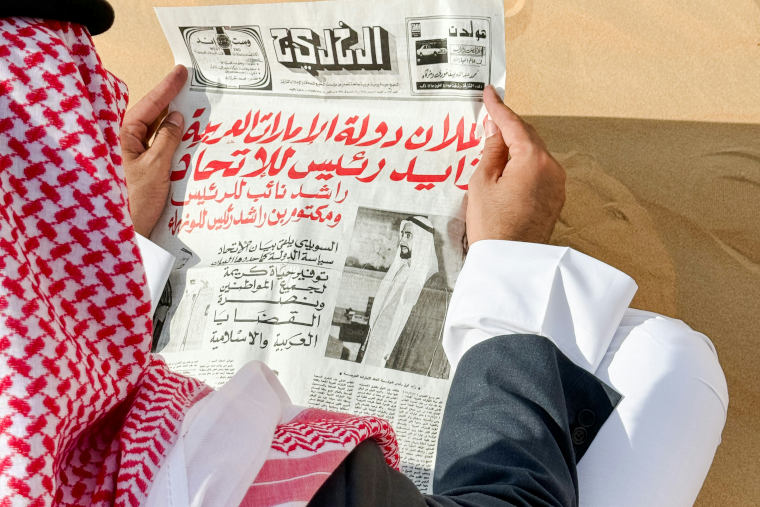 Image source: 86 media / unsplash.com


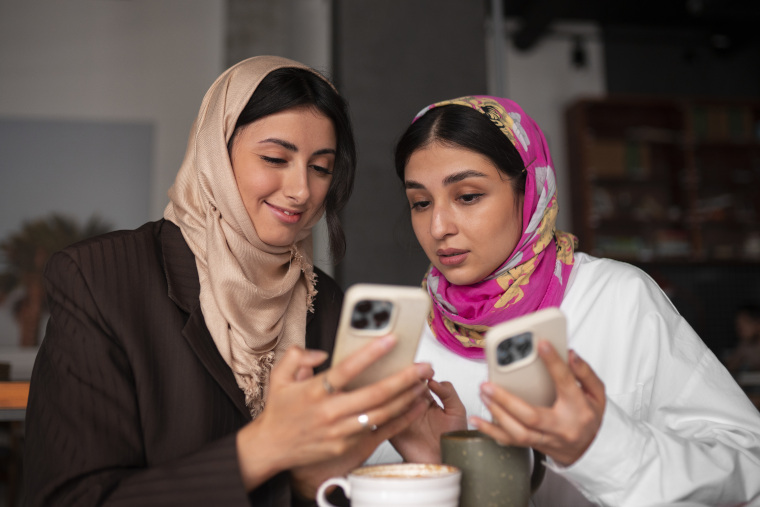 Image source: freepik / magnific.com


 Image source: senivpetro / magnific.com