Home/Middle East/Nicosia, Cyprus: A Guide to the Divided Capital with Photos and Tips
19.10.2026
Middle East
909
Reading time: 14 minutes
Nicosia, Cyprus: A Guide to the Divided Capital with Photos and Tips
Save the article:
Planning to explore Nicosia in Cyprus for the first time and not sure where to start?The capital of Cyprus stands apart from other European cities; it is unique and deserves careful study before your trip.
Nicosia is often called Europe’s last divided capital: the UN buffer zone runs through the historic centre and in places is just a few metres wide, and a line drawn decades ago still shapes the look and atmosphere of the city. For tourists, this means not only an unusual experience but also a number of practical questions: how to plan your route, where the crossing point is and how many days to set aside for exploring both parts of the island.
What will you get from reading this guide? We will explain the history of the city’s division in simple terms, show you how to cross the border safely and without unnecessary hassle, point out the most photogenic spots and tell you which sights are worth seeing in each part of Nicosia.
You will find out how much time you really need to get to know the capital, what to take with you for the crossing and why this divided capital of the island deserves special attention on your Cyprus itinerary.
Nicosia: The Capital of the Republic of Cyprus and a City of Two Worlds
Nicosia on Cyprus lies in the centre of the island, far from the coastline; the nearest sea is around 50 kilometres away in any direction.
The capital of Cyprus does not have access to the coast, but it occupies an advantageous position at the crossroads between all the island’s major towns. Nicosia’s population depends on whether only the municipality or the suburbs as well are counted; nevertheless, it is the largest urban centre on the island.
The capital of the Republic of Cyprus is at once the political, business and cultural centre of the country. It is home to the Presidential Palace, the parliament, government ministries and the main administrative institutions. But Nicosia is not just about officials’ offices. The narrow streets of the Old Town, museums, galleries and craft workshops make it the true cultural heart of the island, drawing history enthusiasts from all over Europe.
The image was generated using AI technologies
Over its history, the city has passed through the Byzantine period, Venetian rule and Ottoman domination, and each era has left a visible mark on the city’s streets.
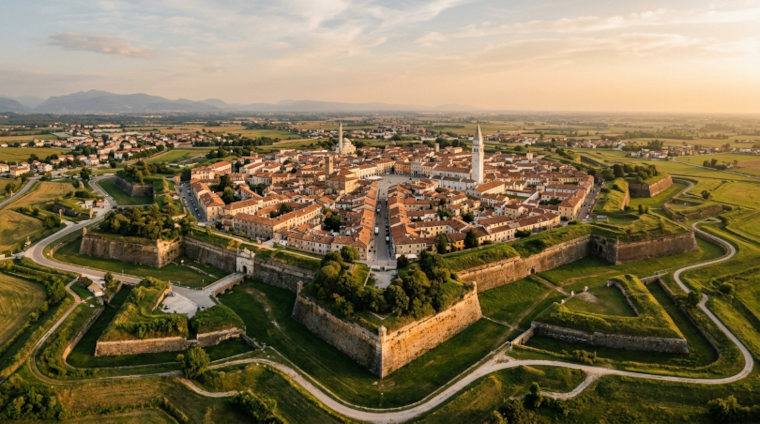
The Venetians surrounded the city with mighty star-shaped fortress walls, which have survived to this day and become Nicosia’s calling card. Ottoman architecture gave the city mosques, hammams and caravanserais, while the Byzantine heritage can be seen in the old churches and in the icons kept in local museums.
History and origin of the name
The Greek name of the city is Lefkosia and the Turkish name is Lefkoşa; both derive from the name of an ancient settlement of Ledra, which existed there as early as the Bronze Age. The first references to the city as a significant centre date back to antiquity, but it truly flourished during the Byzantine era, when it became the administrative centre of the island.
In the Middle Ages, Nicosia came under Venetian control, and the Venetians turned it into a powerful fortress with imposing defences. However, the fortifications did not save the city: in 1571, the army of the Ottoman Empire invaded Nicosia, and after a prolonged siege the city fell. This marked the start of a new chapter in Nicosia’s history; Turkish rule lasted for more than three centuries and significantly changed the cultural character of the capital.
Over the centuries, the city’s role has changed: from trading hub to military outpost and administrative centre. Today, these historical layers can be seen literally on neighbouring streets: Byzantine frescoes sit alongside Venetian walls, and Ottoman minarets rise above quarters built centuries later.
Division into Greek and Turkish parts
Modern Nicosia is a city that has been physically divided in two for more than fifty years. The division took place in 1974 following dramatic political events that led to the de facto split of the island into two administrative entities.
The southern part of the city is governed by the Republic of Cyprus and is recognised by the international community, including the European Union. The northern part is controlled by the authorities of the Turkish Republic of Northern Cyprus, which is recognised only by Turkey.
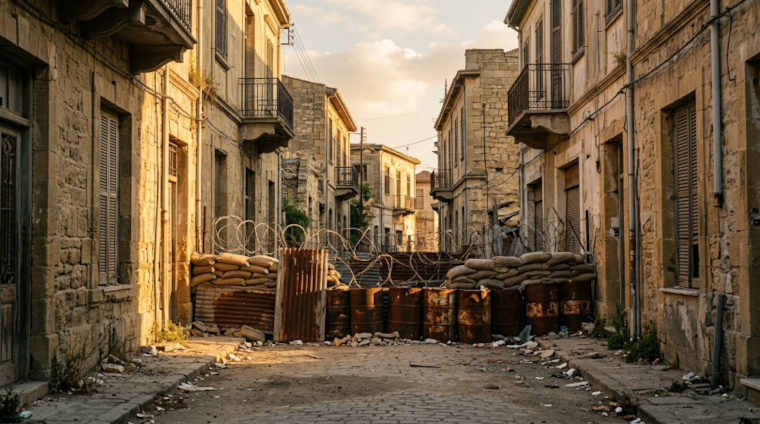
Between the two parts of the island runs a buffer zone — a narrow strip of neutral territory patrolled by UN forces. It stretches not only through Nicosia but across the whole of Cyprus, separating the Greek south from the Turkish north. Within the city, the buffer zone runs straight through the historic centre, and in some places the neutral strip is only a few metres wide, meaning that literally a single street separates a southern quarter from a northern one.
This situation has remained largely unchanged for decades, and Nicosia is still the only capital in the world divided in this way. For tourists, this means a chance to see two different cultural worlds within one city, but it also requires an understanding of the rules for crossing the border and the particular features of each side, which are covered in more detail in the following sections.
Nicosia, Northern Cyprus: What to See on the Turkish Side
As soon as you step across the buffer zone, Nicosia seems to transport you to another era. Nicosia in Northern Cyprus greets you with a more pronounced Eastern flavour: narrow quarters with overhanging balconies, the aroma of coffee and spices from small shops and the call to prayer from the minarets.
There is less tourist polish there but more authenticity: the peeling plaster of old houses sits alongside bright carpets laid out at the entrances to workshops. The architecture of the Turkish side bears the strong influence of Ottoman culture — squat stone buildings, domed mosques and covered markets built centuries ago and still used for their original purpose.
The main street for orientation is Girne Caddesi, which runs from the Kyrenia Gate deep into the Old Town and leads to almost all the key points on the route. It is hard to get lost there: the historic centre is compact, and most of the sights, including a couple of small museums with exhibitions on the city’s history, are within walking distance of each other.
Visitors usually allow three to five hours to explore the Turkish part, but if you would rather not rush and want to visit every craftsman’s shop, it is better to set aside a whole day.
The main architectural landmark of northern Nicosia is the former Saint Sophia Cathedral, built in the Gothic style in the thirteenth and fourteenth centuries as the island’s main Catholic church. Construction dragged on for decades, and the building witnessed the Byzantine period, the rule of the Lusignans and the Venetian era.
After the Ottomans conquered the city in the sixteenth century, the cathedral was converted into the Selimiye Mosque: the interior decoration was removed, the building was orientated towards Mecca and two slender minarets were added, which today can be seen from various points across the old town.
The result is unusual: austere Gothic vaults and lancet windows sit alongside a minbar and prayer rugs, while from the outside the building’s silhouette resembles a European cathedral with Eastern touches. The mosque is open to visitors daily except during prayer times, and admission is free. You must take off your shoes before entering, and women should cover their head and shoulders; wraps are usually provided on site.
The mosque stands in the very heart of the historic centre, next to Büyük Han, so both sites can easily be seen on a single walk.
Büyük Han and Büyük Hamam
Büyük Han is an old caravanserai — an inn built in the sixteenth century for merchants and travellers, who stopped there to rest along with their animals and goods. The two-storey building, with a courtyard and a small mosque in the centre, has retained the classic layout of an Ottoman inn.
Today the caravanserai has been restored, and instead of cloth and spice merchants, it houses art workshops, a small crafts museum, cafés and souvenir shops.
Inside you can find ceramics, handmade jewellery, paintings by local artists and textiles — an excellent choice for souvenirs and gifts to bring home from your trip. Nearby is Büyük Hamam, an old Turkish bath that still operates today, offering visitors a classic scrub and massage in the atmosphere of an authentic Ottoman hammam.
Both sites are open during the day; entry to the Büyük Han is free, while a visit to the baths is paid for separately according to the price list.
Sights in the Southern Part: What to See in the Old Town
If the Turkish part of Nicosia on Cyprus surprises you with its Eastern flavour, the southern side greets you with a completely different mood. You can feel a European rhythm there: restored façades, well-kept pavements and the signs of fashionable brands mixed in with old churches and museums.
The city reflects two eras at once — the tourist infrastructure is far more developed than in the north, but the historic quarters of the old town have not gone anywhere and still serve as the perfect setting for a leisurely stroll. It is worth setting aside a whole day to explore the southern part — on foot, at a leisurely pace, with stops at cafés and museums.
Ledra Street and Laiki Geitonia
The main pedestrian street of southern Nicosia is Ledra Street. This is where most of the shops, cafés and restaurants are concentrated, and in the evening this part of the city becomes very lively with musicians and street traders. Ledra Street is home to one of the crossing points between the two parts of the city, so many tourists start or finish their route between southern and northern Nicosia there.
The surrounding infrastructure is designed with tourists in mind: bureaux de change, coffee shops, clothes shops and souvenir shops are found literally at every turn.
Within a couple of minutes’ walk from Ledra lies the hidden quarter of Laiki Geitonia — a small but very atmospheric neighbourhood with traditional Cypriot architecture. Narrow cobbled lanes and low houses with wooden shutters and inner courtyards create the feeling of having stepped into a Cypriot village in the middle of the capital.
It is worth lingering there to sample the local cuisine — meze, halloumi, Cypriot wine — at one of the tavernas, and to pick up some handmade souvenirs while you are at it (ceramics, lace and olive oil soap). An hour to an hour and a half is usually enough to explore the quarter.
Shacolas Tower and viewing platform
Shacolas Tower is one of the most popular spots for a first introduction to the city, and for good reason. The viewing platform is on the eleventh floor of a modern building in the very centre of the old town, and it is from there that you get a view of both parts of divided Nicosia at once — the rooftops of the southern quarters, the minarets of the Turkish side and the buffer zone between them.
Admission to the platform is charged but is a token amount — minimal by the standards of European capitals — and visiting hours are limited to the building’s opening hours, usually from morning until early evening. Inside there is a small exhibition of photographs and historical information about the city, which helps you get your bearings quickly before continuing your walk.
Experts recommend beginning your exploration of the southern part from this tower: in fifteen to twenty minutes you will get a general idea of the scale and geography of the divided city, and then you can decide where to head next.
Museums and galleries
Southern Nicosia is rich in museums, with something to suit every taste. The Byzantine Museum holds one of the largest collections of icons in Cyprus — from early examples to works of the later period — and will be of particular interest to those keen on religious art and the history of Christianity on the island. Allow about an hour and a half for a thorough look at the collection.
The Cyprus Museum is the country’s main archaeological venue, bringing together artefacts from the Neolithic to the Roman era: pottery, statues and jewellery found during excavations all over the island. It is a must for anyone interested in the ancient history of Cyprus; allow one to two hours for a visit, depending on how deep your interest goes.
Lovers of fine art will enjoy the Leventis Gallery, which features both European paintings and works by local artists. It is compact, so forty minutes to an hour is enough time to explore it. Such a variety of museums allows every visitor to choose a route to suit their interests without overloading the day with unnecessary information.
On the whole, the old town and its surroundings offer enough to fill an entire day with a packed programme: stroll through the shopping streets, visit the museums, have lunch at a traditional taverna and round off the evening with a sunset panorama of the city from Shacolas Tower.
Venetian walls and Famagusta Gate
The Venetian-era fortress walls encircle Nicosia’s Old Town in a ring about five kilometres long and include eleven star-shaped bastions. The fortifications were built in the sixteenth century as protection against the Ottoman threat and, despite their centuries-old history, the walls have survived surprisingly well; today you can walk along them and appreciate the scale of the engineering ingenuity of the time.
One of the main historical entrances to the city is the Famagusta Gate, a massive stone structure with an arched passageway that served as the main route into the old town from the east coast.
Today the gate building houses a small museum, and the gate itself remains an important landmark on the tourist route and a convenient place to start or finish a walk around Nicosia. Sections of the fortress walls have survived nearby and make for a pleasant stroll at sunset; the view of the bastions in the evening light is considered one of the most photogenic in the city.
How to Cross the Buffer Zone Between the Two Parts of Nicosia
Many tourists planning a route around Nicosia, Cyprus, imagine crossing the buffer zone to be something complicated, almost like real border control between different countries. In reality, the procedure takes only a few minutes and requires no special preparation; the important thing is to know in advance which documents to take with you and where the nearest crossing point is.
There are several checkpoints across the buffer zone in the city, but tourists most often use the Ledra Street crossing; it is located right in the centre of the old town and is convenient because the main sights of both parts are concentrated nearby.
There are several crossing points through the buffer zone in Nicosia; before your trip, check the current list and locations of open checkpoints. However, it is the Ledra crossing that remains the most popular thanks to its location and the easy-to-navigate infrastructure around it.
Documents and crossing rules
The only mandatory requirement for crossing the buffer zone is to have your passport with you. This rule applies to everyone without exception, and without a passport there is no point even approaching the checkpoint. Document and entry requirements depend on your nationality; before your trip, check the current rules for your passport and the conditions for crossing the buffer zone.
The procedure is simple: you go up to the window, an officer checks your passport and, in most cases, issues a small entry slip or stamps a separate sheet of paper, so the passport itself is left unmarked.
For certain nationalities, additional documents may be requested, or they may be questioned about the purpose of their visit, so when planning your trip it is worth checking the entry rules for your nationality in advance. Waiting times depend on how busy the crossing point is; allow for a possible queue before crossing.
The image was generated using AI technologies
On the way back from the northern part to the southern part, the procedure is repeated in reverse — you show your passport and, if necessary, hand in your entry slip. You can return through the same crossing point or any other open checkpoint; you are not tied to a single crossing.
Safety and tips for tourists
Nicosia remains one of the calmest cities in the Mediterranean, and crossing the buffer zone adds no risks. Locals on both sides of the line are used to tourists and are generally friendly towards visitors, happy to give directions and share tips about the city.
Before your trip, check the latest safety advice and take the usual precautions; the situation and crossing conditions may change.
To make your walk between the two parts of Nicosia as comfortable as possible, bear in mind a few practical points:
check the opening hours of the Ledra crossing point — the checkpoint is usually open from early morning until late evening, but it is best to check the exact times before your trip;
take cash in two currencies with you — the euro is used in the south, while payments in the north are more often made in Turkish lira, although many places accept euros too;
wear comfortable shoes and light clothing — the cobbles of the old town and the heat call for comfortable gear for long walks;
keep your passport to hand rather than deep in your bag, so as not to hold up the queue at the checkpoint.
If you follow these simple rules, you can easily fit a crossing of the buffer zone into your route around the city and see both sides of the divided capital in a single day without unnecessary hassle or worry.
Taking Photos in Nicosia, Cyprus: A Visual Tour of the City
If you are looking for photos of Nicosia, Cyprus, before your trip, be prepared to be surprised: the city undeservedly remains in the shadow of the coastal resorts, even though visually it is far more interesting than a typical beach landscape. In Nicosia you can find a rare contrast of architectural styles within a single quarter — Venetian walls sit alongside Ottoman minarets, with modern bank and office façades close by.
The narrow lanes of the old town with their overhanging balconies, the brightly coloured façades of the houses and the cracked plaster of the buffer zone all create a unique visual contrast that you will not find in any other Mediterranean city.
Best spots for photos
The list of places in Nicosia worth getting your camera out for is quite long. The Shacolas Tower viewing platform offers a panorama of both parts of the city at once — from the eleventh floor you can see the rooftops of the southern quarters, the minarets of the north and the strip of buffer zone between them; it is one of the few places from which the city’s division is as clearly visible as it would be on a map.
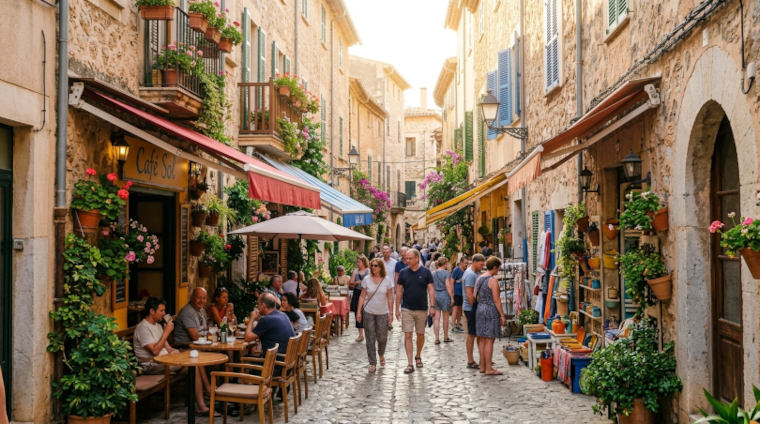
Ledra Street is beautiful with its colourful shop and café façades, especially in the morning before the crowds of tourists gather. The Famagusta Gate and the section of the Venetian walls next to it look superb at sunset, when the stonework takes on warm hues.
The image was generated using AI technologies
The courtyard of Büyük Han, with its arched galleries and small mosque in the centre, is a ready-made composition for a shot with no extra effort.
The buffer zone deserves special attention: abandoned buildings with smashed windows and overgrown courtyards create an atmosphere of frozen time that is hard to put into words but easy to capture in a photo. The best time for photography is early morning or sunset; the summer heat makes the middle of the day uncomfortable both for walking and for sharp shots.
Route and tips for planning your visit
The ideal one-day route goes like this: start in the southern part, walk along Ledra Street and visit one or two museums, then cross the buffer zone and continue on the northern side — Saint Sophia Cathedral, Büyük Han and the Kyrenia Gate. One packed day is usually enough to see both parts in full, with breaks for photos, but if you would rather not rush, it is better to allow two days.
A guided tour suits those who want to hear the historical context as they go, while a self-guided walk gives you more freedom to linger wherever you want to take more photos. The compactness of the old town means you can cover the whole route on foot without transport.
Frequently Asked Questions
Can you see both parts of Nicosia in one day?
Yes, the compactness of the old town lets you fit it into one packed day if you start in the morning and follow a clear route. Three to four hours is enough for the southern part, with a walk along Ledra Street and one or two museums, and the same amount of time is needed for the Turkish side with Saint Sophia Cathedral and Büyük Han.
However, if you would rather not rush, want to photograph architectural details and visit every craftsman’s shop, it is better to set aside two days. Many tourists note that it is more comfortable to split the visit over two days, especially in the hot season.
For most nationalities, including people from Russia, Ukraine, EU countries and North America, no separate visa is required for a day trip to the northern part. At the crossing point, you simply show your passport, after which you are issued a small entry slip that does not affect the passport itself.
Some nationalities may be asked questions about the purpose of their visit, so it is best to check the entry requirements in advance. Crossing the buffer zone is free and takes just a few minutes.
Is it safe to travel around Nicosia?
Nicosia is considered one of the calmest cities in the Mediterranean, and crossing the buffer zone poses no additional risks for tourists. Locals on both sides of the city are friendly and used to visitors, and the police and UN forces keep order in the buffer zone area.
Thousands of people pass through the checkpoints every day without any incidents. The standard precautions you would take in any large city still apply, but no heightened safety measures are needed there.
Which currency should you use in different parts of the city?
In the southern part, which belongs to the Republic of Cyprus and the European Union, the euro is used, and most cafés, shops and hotels accept only this currency. In the north, the main currency is the Turkish lira, although many establishments and markets are happy to accept euros at the current exchange rate.
It is more convenient to take small amounts of cash in both currencies so as not to depend on bureaux de change. Bank cards are accepted in most modern establishments on both sides, but it is better to have cash on hand when visiting older districts or markets.
Article header image was generated using AI technologies
What was before the beginning of the history of the UAE? Territories of the UAE in the 19th century. History of economic development of the UAE. The scandalous story of the UAE emir. Top 5 interesting...
Benefits and features of Cyprus citizenship. Ways to obtain Cypriot citizenship. Cypriot citizenship by investment: programme, costs and requirements. Step-by-step guide to the citizenship application...
General information about the UAE. Form of government in the UAE. Historical specifics of governance in the UAE. The structure of the UAE's government. Frequently asked questions about the form of gov...
How the postal system works in the UAE. What to enter instead of a postcode when filling in forms. P.O. Box as an alternative to a postcode. Area and emirate codes in the UAE. Delivery of parcels and ...
Sea and gulf — what is the difference? The Persian Gulf — the main waterway of the UAE. Water temperature, sharks and the best seasons. Dubai's beaches and artificial islands. Activities and attractio...
How many mosques are there in Dubai and which ones are open to tourists? Jumeirah Mosque in Dubai: the main mosque for tourists. Sheikh Zayed Mosque in Abu Dhabi: the most famous mosque in the region...
Salalah: location and when to visit. How to get to and where to stay in Salalah? What to see and do in Salalah? What to eat and what to bring back from Salalah? Tips for tourists: safety and rules of ...
Why Dubai is the gastronomic capital of the Middle East. Dubai restaurants by cuisine type. Restaurants with panoramic views and unusual formats. Michelin-starred and the most expensive restaurants in...
Healthcare system in Dubai. Access to medical care for UAE citizens. Access to medical care for residents and expats. Access to medical care for tourists and short-term visitors. Medical tourism in Du...


 The image was generated using AI technologies


 The image was generated using AI technologies
 The image was generated using AI technologies